

Fruit · Organic farm, Bresela
Rambutan, the Hairy Red Fruit of the Rainy Season
Soft red hairs, a thin shell, and a sweet white fruit inside.
- English and Indonesian
- Rambutan
- Balinese
- Buluan
- Botanical
- Nephelium lappaceum Sapindaceae
The rambutan at a glance
- Taste
- Sweet and mild, close to lychee, sometimes with a light sour note.
- Texture
- Juicy, translucent flesh, firm enough to bite.
- How to eat
- Pinch the shell with a thumbnail or twist it apart, pop out the fruit and eat around the seed.
- In the kitchen
- Eaten fresh, chilled, or added to fruit ice and fruit salads.
- Season
- In Bali, usually the rainy months, roughly November to February.
The name is the description
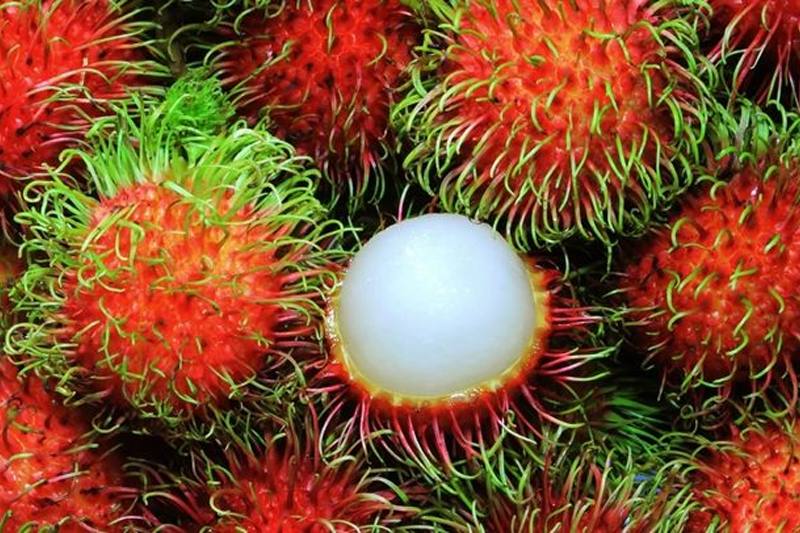
Rambut means hair in Indonesian, and the rambutan wears its name. The shell is covered in soft, bending hairs, red when ripe and tipped with yellow or green.
In Balinese the fruit is called buluan. In the rainy season the roadsides around Ubud fill with bunches tied together and hung from stalls.
How to peel one
Press a thumbnail into the shell, or hold the fruit in both hands and twist. The shell splits and the white fruit slides out.
Eat the flesh and leave the seed. In some varieties the flesh comes away cleanly; in others it clings, and you nibble around it.
Taste and texture
The flesh is translucent and juicy, sweet with a faint tartness, close to its cousins the lychee and the longan. A fresh rambutan is firm, a tired one turns soft and dark.
Indonesian growers prize varieties whose flesh lets go of the seed easily, such as binjai and rapiah.
Chilled for an hour, rambutan becomes one of the best things to eat after a walk in the heat. Children tend to finish a bunch before the adults have opened their second.
On the tree
Rambutan grows on a spreading tree with glossy leaves. The fruit hangs in heavy bunches and colours from green to red as it ripens.
Once picked, rambutan keeps for only a few days, which is why it tastes best close to the tree.
Rambutan at Sanggraloka
Rambutan grows in the tropical garden at Bresela, about 25 minutes north of Ubud. The farm guide names it among the trees our kitchens draw from.
Ask us when you book and we will tell you whether the bunches are ripe that week.
Taste it on the farm
The Thursday harvest walk follows the fruit trees. What is ripe changes week to week.

Organic Fruits
A morning walk through the fruit trees to harvest what is ripe that week and taste it fresh.

Farm Taster
A walk through the farm with a goodie bag of herbal drinks, snacks, nuts and cookies, and a guidebook to carry along.

Cooking Class
Three hours that begin with a harvest walk on the farm, then Balinese dishes with our chef. Up to ten guests.
Planning a visit
Come in the morning if you can. The paths are cooler and the leaves still hold dew.
- Who can visit
- Ask us on WhatsApp
- Entry
- Ask us on WhatsApp
- Opening hours
- Ask us on WhatsApp
- Find us
- Jl. Raya Bresela, about 25 minutes north of central Ubud and 63 km from the airport.
- What to bring
- Closed shoes, since the paths are soft after rain, and a hat.
- Booking
- Through the activity booking page, or send your date and number of guests on WhatsApp.
Questions about rambutan
What does rambutan taste like?
Rambutan tastes sweet and mild, close to lychee, with juicy, translucent flesh around a single seed. A fresh one is firm and bright red; once the hairs turn dark and dry, the fruit has passed its best.
When is rambutan season in Bali?
Rambutan in Bali usually ripens in the rainy months, roughly November to February. Ask us when you book and we will tell you whether the trees in our garden are fruiting that week.
How do you eat a rambutan?
Pinch the shell with a thumbnail or twist it open with both hands, slide out the white fruit and eat around the seed. The seed itself is not eaten.
A morning among the fruit trees
Book a farm experience, or send us your date and we will tell you what is ripe that week.