A flash of bright orange cruising along a sunny path is a sign of the Malay Cruiser. The male and the female look like two different species, a difference known as sexual dimorphism. You may meet one and not recognise the other.
Orange-brown males glide. Olive-brown, white-banded females hide in the shade.
Recognising the Malay Cruiser
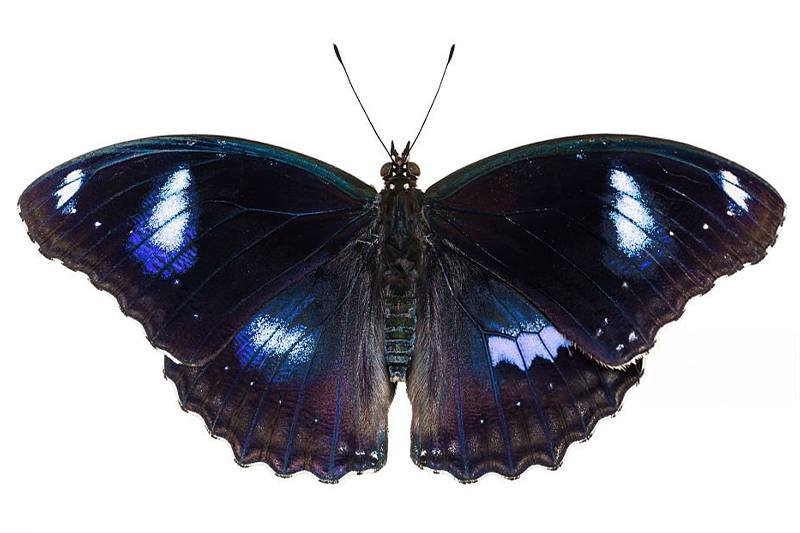
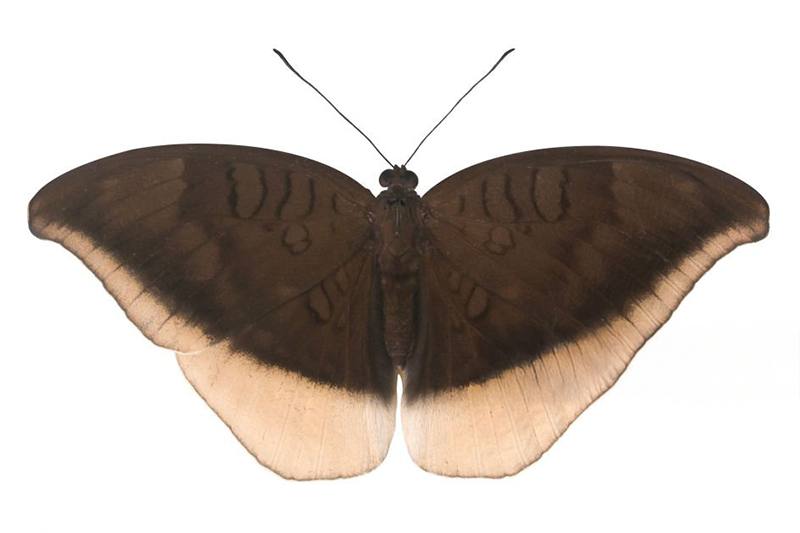
The male is a bold, confident orange-brown, often seen gliding through the sunny patches of the garden.
The female is a dusky olive-brown with a bold white band across her wings. In the dappled light under the trees she blends in almost perfectly.
Because they look so unlike each other, new visitors often count them as two species.
Both sexes are medium-sized, with long, broad wings, and both are strong, graceful fliers.
Passion vines and the caterpillars
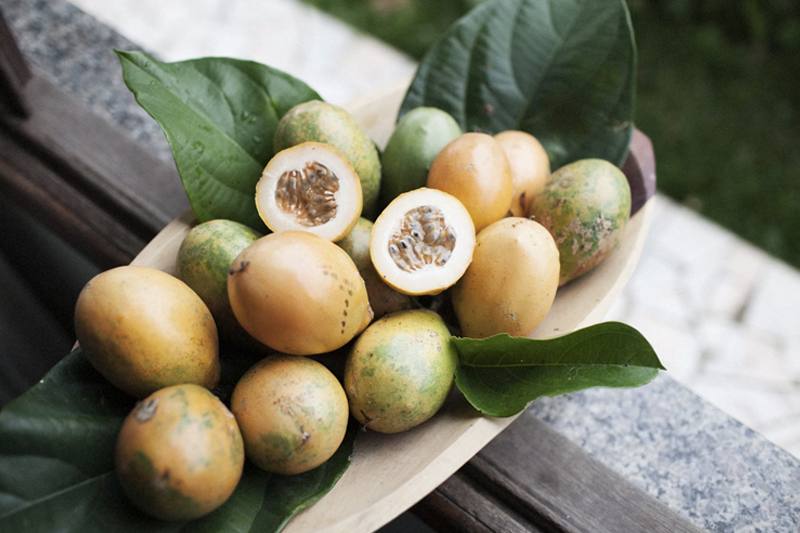
The caterpillars feed on plants of the Passifloraceae family, which includes the passionflower. We keep a wild and organic garden so that these vines can grow.
The female looks for the right vine and lays her eggs in the shade, away from the eye of a predator.
The vines are not always easy to spot. Passionflower family plants climb through shrubs and trees, and many have lobed leaves and small tendrils. Ask your guide to show you one.
The Cruiser earns its name. It glides along a path, turns, and glides back, rarely flapping hard.
Its presence tells us the garden is varied enough to hold a vine, a flower and a patch of sun close together.
Two butterflies in one
Sexual dimorphism, the plain difference in appearance between male and female, is common in butterflies. The Cruiser shows it clearly. Seen apart, the male and the female could be taken for different species.
The orange male glides through sunny patches in the open, so he is the one most people notice. The female keeps to the shade, which is where she looks for vines. A day's walk may show you only one of the pair.
If you find an olive butterfly with a pale band in the dappled light, ask your guide. You may have found the other half.
Where to look at Sanggraloka
Walk the sunny paths slowly for the male. Look into the dappled shade under the trees for the female, and near the passion fruit.
The Cruiser comes and goes as it likes, so a visit may show you the male, the female, or neither.
The walk is slow, so there is time to watch a path for ten minutes and see what passes. With some luck you may see both the male and the female before you leave.
Questions about the Malay Cruiser
Why do male and female Malay Cruisers look so different?
This is called sexual dimorphism. The male is bright orange-brown, while the female is dusky olive-brown with a white band, which hides her in dappled light.
What does the Malay Cruiser eat?
The caterpillars eat plants of the passionflower family, which includes the passion fruit we grow on the farm. The adults drink nectar from garden flowers, usually in sun.
Is the Malay Cruiser common?
It is a regular visitor in warm, sunny gardens in the region. We cannot say you will see one, because every butterfly here is wild.


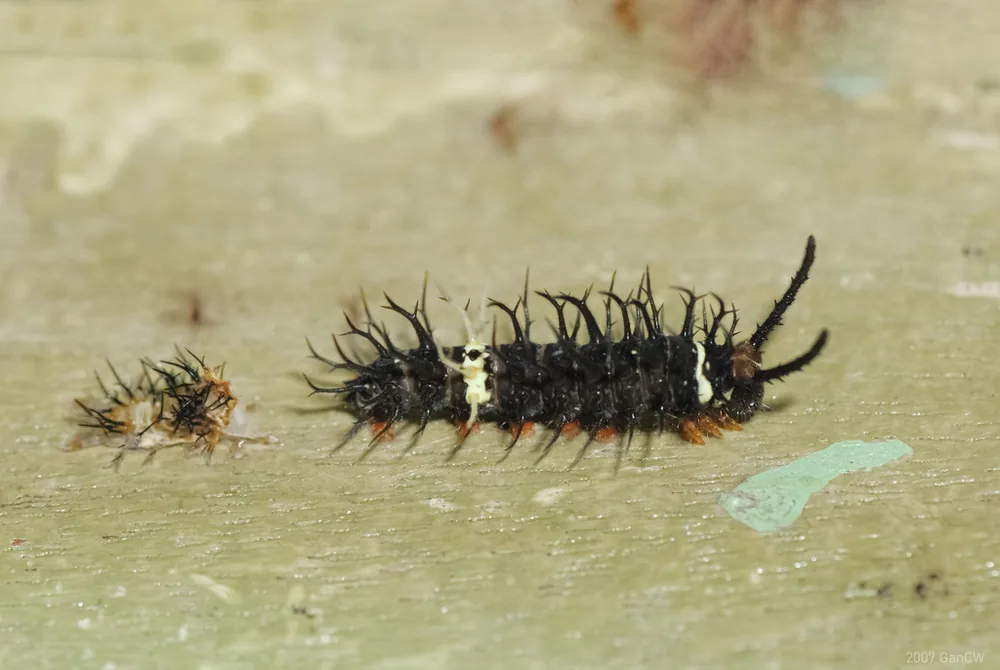 Caterpillar
 Chrysalis
 Adult butterfly
 Brush-footed
 Brush-footed
 Brush-footed