

Field card · Butterfly Conservatorium at Sanggraloka
Great Eggfly (Hypolimnas bolina)
Also called the Blue Moon butterfly
One of the showiest butterflies in the sunny parts of the garden is the Great Eggfly, sometimes called the Blue Moon butterfly. The male and the female look dramatically different. One flashes blue and violet, and the other copies a poisonous crow.
The plant comes first
The life of the Great Eggfly
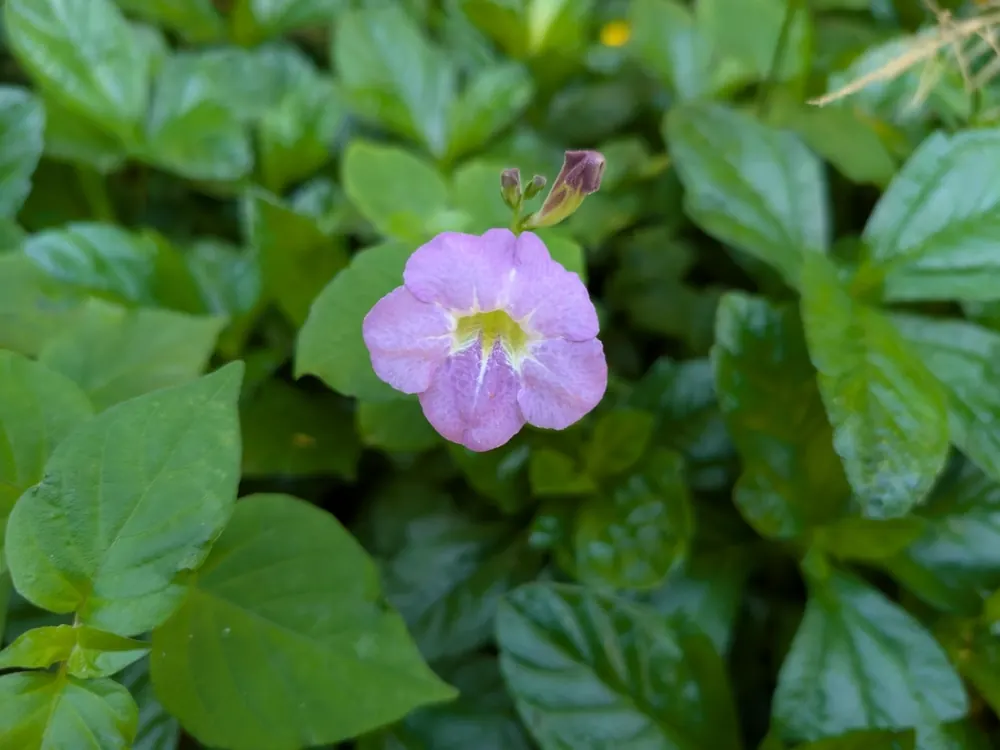 Host plant
Common plants, including Asystasia (Acanthaceae)
Photographed in United States. Damien Wallace, iNaturalist, CC0
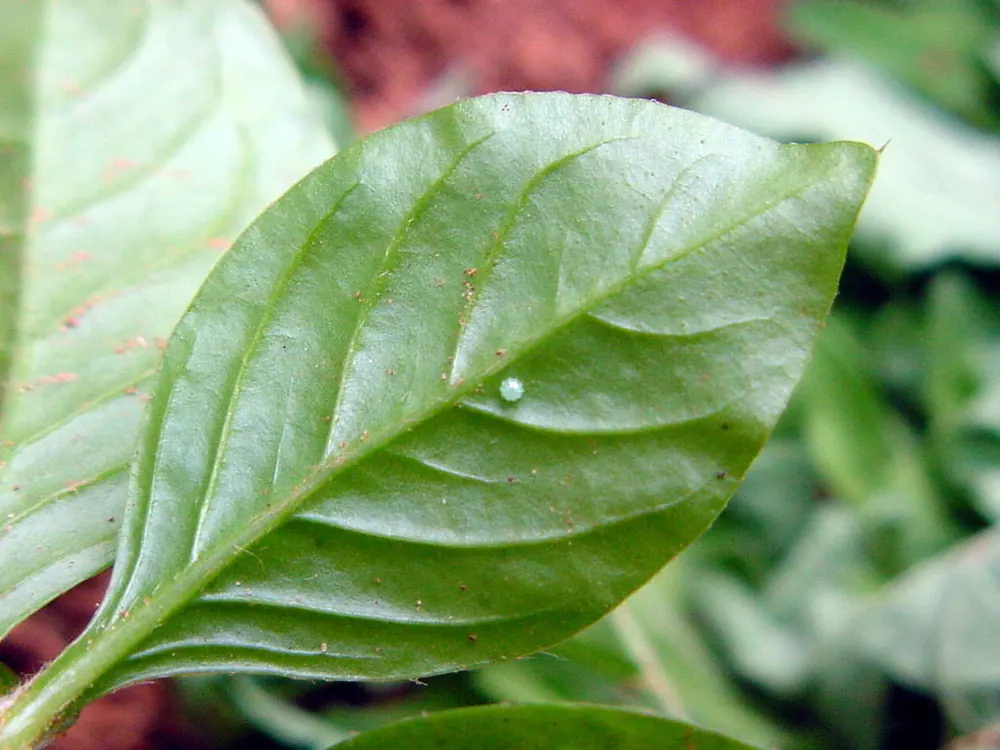
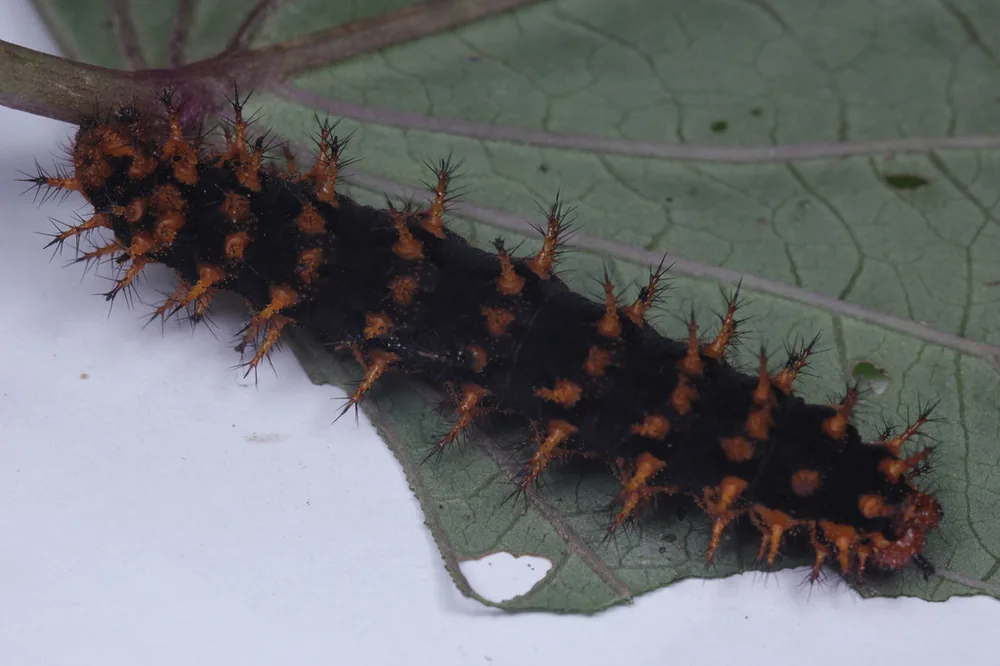 Caterpillar
Feeds on low, weedy host plants.
Photographed in Indonesia. Franz Anthony, iNaturalist, CC BY 4.0
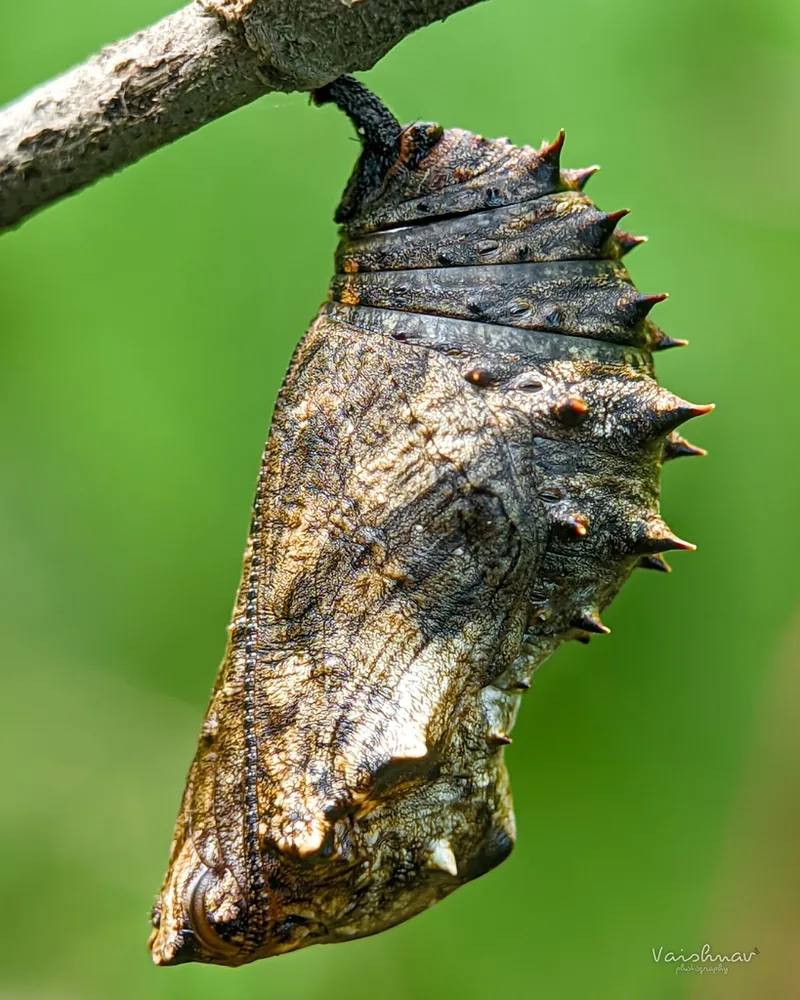 Chrysalis
Hangs head down from a stem or leaf.
Photographed in India. Vaishnav K V, iNaturalist, CC BY-SA 4.0
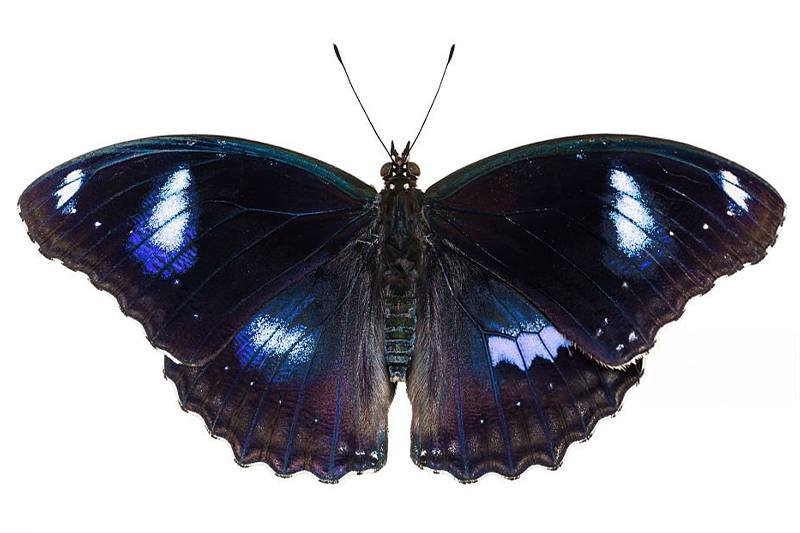 Adult butterfly
Blue-flashing males; females that copy poisonous crows.
Recognising the Great Eggfly
The male is velvet black, with three large white spots on each wing. In the sunlight those spots flash an incredible, iridescent deep blue or purple.
The female is often larger and varies in appearance. She frequently copies the toxic crow butterflies, Euploea, appearing brownish-black with white markings.
The male's blue flash is brief. It appears when the sun strikes the wing at the right angle, and it disappears as the butterfly turns.
Weeds and the caterpillars
The caterpillars feed on a range of common plants, including species of the Acanthaceae family, such as Asystasia. These plants grow on their own around the garden, at the edges and along the paths.
A garden that leaves some of its weeds alone feeds butterflies like this one without being asked.
Because the caterpillars eat common garden plants, the Great Eggfly is one of the butterflies best able to live close to people. It can be found in towns as well as in forests.
How it lives
The Great Eggfly thrives in varied habitats, including forest edges and gardens. The male is territorial, and he will perch in a sunny spot and challenge any butterfly that crosses his patch.
Watch the sunlight on his wings as he turns. The blue appears, and then it is gone.
The eggfly and the crow
The name eggfly is thought to come from the large white spots, which look like eggs. The male is the easy one to name.
The female deserves a second look. She varies a great deal in colour and pattern, and in some places she looks so much like a poisonous crow butterfly that careful observers mistake her.
To tell them apart, watch the flight. Crow butterflies fly slowly and steadily, and the Eggfly is quicker and more restless, with broader wings.
Where to look at Sanggraloka
Look in the sunny, open parts of the garden, on a perch at the edge of a path, and around the low plants that grow there.
We cannot promise the Great Eggfly on the day. It is wild, but it often chooses to stay where the sun is.
Look for a perch in the sun at the edge of a path. A male may choose the same one more than once, and he may return to it after chasing off a rival.
Questions about the Great Eggfly
Why is it called the Blue Moon butterfly?
In the sun the white spots on the male's wings flash deep blue or violet. The effect comes from the structure of the scales and shifts with the angle of the light.
Do male and female Great Eggflies look the same?
No. The male is black with large white spots, while the female is larger and variable, and often copies the pattern of poisonous Euploea butterflies.
What do the caterpillars eat?
They eat common plants, such as Asystasia of the Acanthaceae family, that grow wild around the edges of the garden. This is one reason the Great Eggfly lives so well near people.
Visiting the conservatorium
- Not staying with us?
- Ask us on WhatsApp
- Ticket
- Ask us on WhatsApp
- Opening hours
- Open daily. Ask us on WhatsApp
- How long
- Ask us on WhatsApp
Related species
Same family or the same host plant.
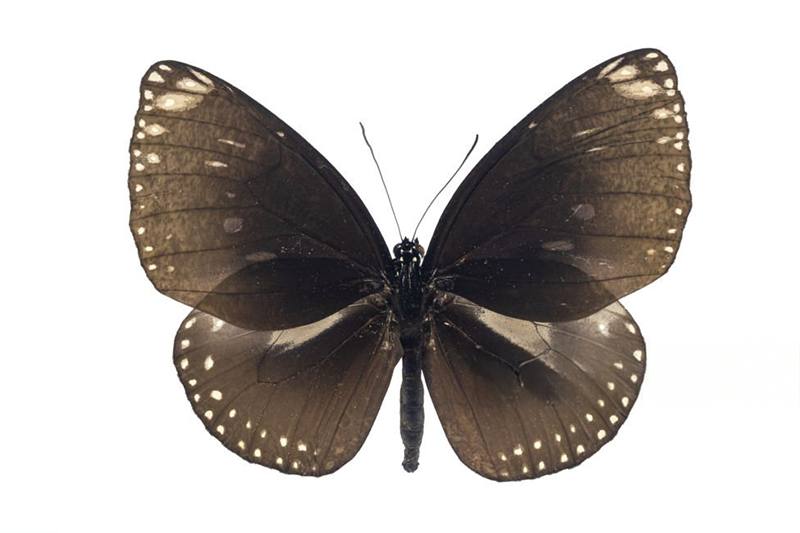 Brush-footed
Giant Crow
Euploea phaenareta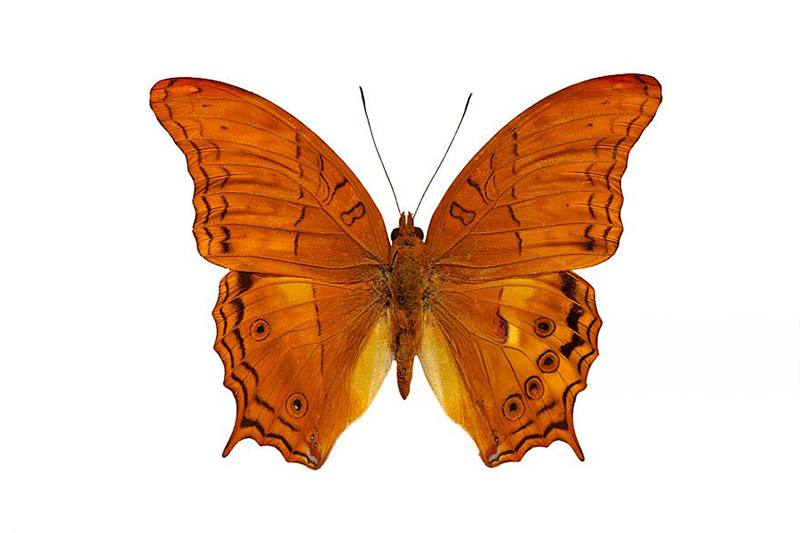 Brush-footed
Malay Cruiser
Vindula dejone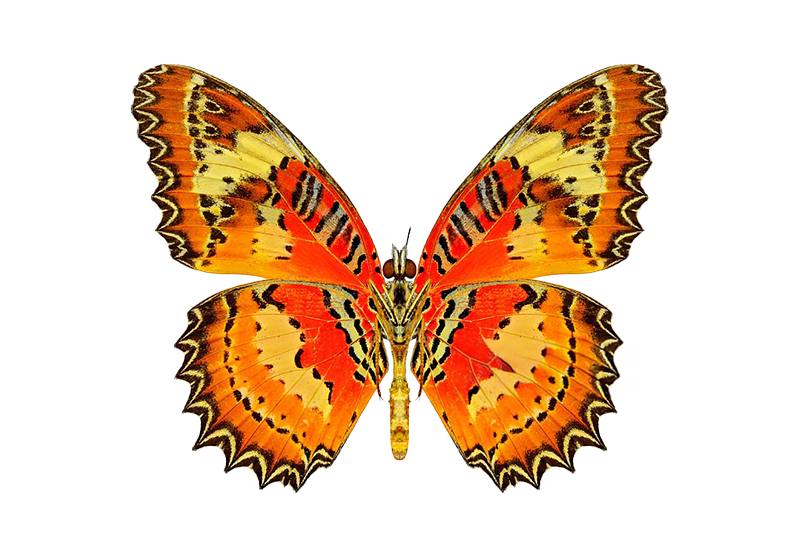 Brush-footed
Malay Lacewing
Cethosia hypsea
See the conservatorium yourself
The Butterfly Conservatorium is open daily at Sanggraloka, Bresela. Walk slowly with a guide and see who visits the garden today.