

Vegetable · Organic farm, Bresela
Kepeduh Leaves, a Creeping Herb from Our Garden
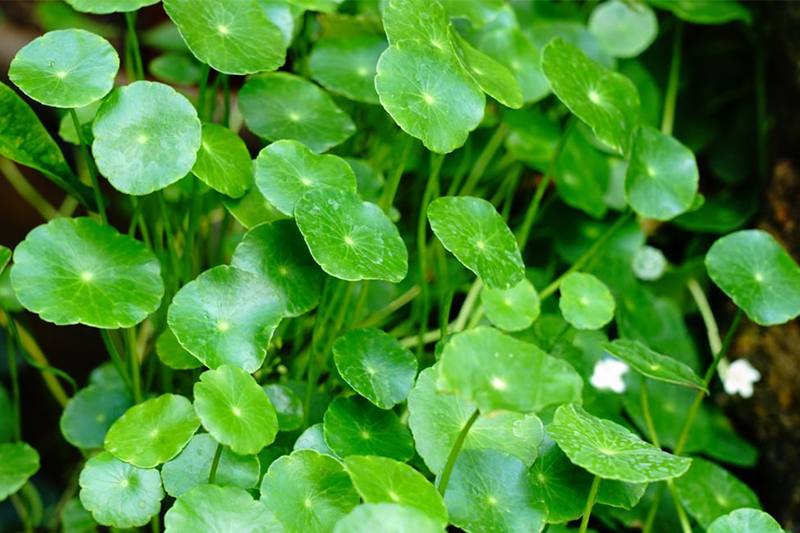
Small, round, scalloped leaves on a creeper that spreads low over damp ground.
- English
- Kepeduh leaves
- Indonesian
- Pegagan
- Balinese
- Kepeduh
- Botanical
- Centella asiatica Apiaceae
The kepeduh leaves at a glance
- Taste
- Fresh and green, with a clean herbal edge and a faint bitterness.
- Texture
- Soft and thin, with a slight crunch in the stalks when raw.
- How to eat
- Wash well and eat raw in salads, or add the leaves to a drink. They can also be blanched briefly.
- In the kitchen
- Mixed into fresh salads with grated coconut and chili, eaten raw beside rice, or blended into a green drink.
- Season
- Grows all year in moist, partly shaded ground and spreads quickly in the rainy months.
One plant, three names
In Bali it is kepeduh. In Indonesian it is pegagan, and in English it is often called Asiatic pennywort or gotu kola. All of these are Centella asiatica, one low creeping herb.
The photo on our old page is filed under both names, and they describe the same plant.
What the plant looks like
Each leaf is a small, rounded fan with a scalloped edge, held on a thin stalk. The stems creep along the ground and root wherever a joint touches damp soil.
Left alone, it forms a soft green mat along paths, ditches and the edges of rice terraces.
Eating it raw
Young leaves and stalks are picked whole and washed well, since the plant grows close to the soil. Many Indonesian cooks serve them raw as lalapan, beside rice and sambal.
The taste is clean and slightly bitter, so it pairs well with sweet, salty or sour dressings.
In a salad or a glass
Shredded leaves go into fresh salads with grated coconut, shallot and chili. A little lime juice softens the bitter edge.
The leaves can also be blended with water and palm sugar into a cold green drink.
Kepeduh at Sanggraloka
Kepeduh grows low in the damp, shaded ground of our organic garden at Bresela, 25 minutes north of Ubud.
Ask on a garden walk and we will point out the fan-shaped leaves.
Taste it on the farm
The Tuesday harvest walk follows the vegetable beds. What is ready changes week to week.

Organic Vegetables
A morning in the vegetable beds to harvest what is ready that week and learn how it is grown.

Farm Taster
A walk through the farm with a goodie bag of herbal drinks, snacks, nuts and cookies, and a guidebook to carry along.

Cooking Class
Three hours that begin with a harvest walk on the farm, then Balinese dishes with our chef. Up to ten guests.
Planning a visit
Come in the morning if you can. The paths are cooler and the leaves still hold dew.
- Who can visit
- Ask us on WhatsApp
- Entry
- Ask us on WhatsApp
- Opening hours
- Ask us on WhatsApp
- Find us
- Jl. Raya Bresela, about 25 minutes north of central Ubud and 63 km from the airport.
- What to bring
- Closed shoes, since the paths are soft after rain, and a hat.
- Booking
- Through the activity booking page, or send your date and number of guests on WhatsApp.
Questions about kepeduh leaves
Is kepeduh the same as pegagan?
Yes. Kepeduh is the Balinese name and pegagan is the Indonesian one. Both mean Centella asiatica, a low creeping herb with small round leaves, also called Asiatic pennywort in English.
Can kepeduh leaves be eaten raw?
Yes. In Indonesia the young leaves are often eaten raw as lalapan or in salads. Wash them well, since the plant grows close to the soil, and expect a clean, slightly bitter taste.
What does kepeduh look like?
It is a low creeper with small, rounded, scalloped leaves on thin stalks. The stems spread along damp ground and root at the joints, forming a soft green mat.
A morning in the vegetable garden
Book a farm experience, or send us your date and we will tell you what is ready to pick that week.