


Vegetable · Organic farm, Bresela
Pandan Leaves, Cut Fresh from Our Garden
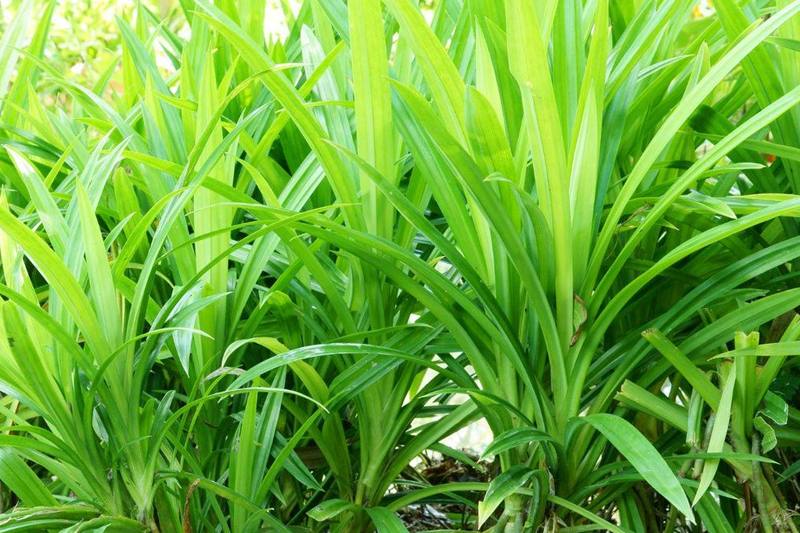
Long glossy blades that smell of warm rice, vanilla and fresh hay.
- English
- Pandan leaves
- Indonesian
- Daun pandan
- Balinese
- Pandan
- Botanical
- Pandanus amaryllifolius Pandanaceae
The pandan leaves at a glance
- Taste
- Sweet, nutty and grassy, a little like vanilla and basmati rice.
- Texture
- Long, tough blades. The leaf is used to flavour a dish and is not eaten itself.
- How to eat
- Tie into a knot and simmer in rice or drinks, or pound and squeeze the leaves for juice. Lift the leaf out before serving.
- In the kitchen
- Simmered with rice and coconut milk, tied around sweets, wrapped around chicken, and added to sweet drinks and syrups.
- Season
- Grows all year in warm, moist, lightly shaded ground. Blades are cut as the clump spreads.
The scent of the kitchen
Pandanus amaryllifolius is the pandan of Southeast Asian kitchens, and it is not grown for fruit. The leaves release a sweet, warm scent as soon as they are bruised.
In Bali it is called pandan, the same as in Indonesian.
A clump of blades
The plant forms a low, spreading clump of long, narrow blades, each as long as an arm. Unlike its wild relatives, this species rarely flowers.
It is grown from cuttings, and cut leaves are replaced by new ones from the centre.
How it is used
A leaf is knotted and added to rice as it cooks, or simmered in coconut milk or syrup. The scent moves into the liquid and the leaf is lifted out.
Pounded with a little water and squeezed, the leaves also give a pale green juice.
In Balinese sweets
Pandan flavours many jaje, the traditional Balinese sweets, and goes into drinks, sticky rice and coconut dishes. For a deeper green colour, cooks often add suji leaf juice as well.
It is also used in savoury cooking, where chicken or fish is wrapped in a leaf before steaming.
Pandan at Sanggraloka
Pandan grows in clumps in our organic garden at Bresela, 25 minutes north of Ubud.
It scents rice and sweets in the kitchen.
Taste it on the farm
The Tuesday harvest walk follows the vegetable beds. What is ready changes week to week.

Organic Vegetables
A morning in the vegetable beds to harvest what is ready that week and learn how it is grown.

Farm Taster
A walk through the farm with a goodie bag of herbal drinks, snacks, nuts and cookies, and a guidebook to carry along.

Cooking Class
Three hours that begin with a harvest walk on the farm, then Balinese dishes with our chef. Up to ten guests.
Planning a visit
Come in the morning if you can. The paths are cooler and the leaves still hold dew.
- Who can visit
- Ask us on WhatsApp
- Entry
- Ask us on WhatsApp
- Opening hours
- Ask us on WhatsApp
- Find us
- Jl. Raya Bresela, about 25 minutes north of central Ubud and 63 km from the airport.
- What to bring
- Closed shoes, since the paths are soft after rain, and a hat.
- Booking
- Through the activity booking page, or send your date and number of guests on WhatsApp.

Questions about pandan leaves
What does pandan taste like?
Sweet, nutty and grassy, often compared to vanilla and basmati rice. The leaf is used to flavour rice, drinks and sweets, and it is lifted out of the dish before serving.
Do you eat pandan leaves?
No. The leaf is tough, so it is knotted and simmered to pass its scent to the dish, then removed. It can also be pounded and squeezed to give a pale green juice.
What is the difference between pandan and suji?
Pandan gives scent, while suji leaf is used mainly for a deep green colour. Cooks often use them together in Indonesian sweets such as klepon and dadar gulung.
A morning in the vegetable garden
Book a farm experience, or send us your date and we will tell you what is ready to pick that week.