

Field card · Butterfly Conservatorium at Sanggraloka
Common Mormon (Papilio polytes)
Papilionidae (swallowtails)
The Common Mormon is a swallowtail with a secret. The male is velvet black with a band of white patches across the hindwings. The female may look like him, or she may look like a poisonous butterfly of another species.
The plant comes first
The life of the Common Mormon
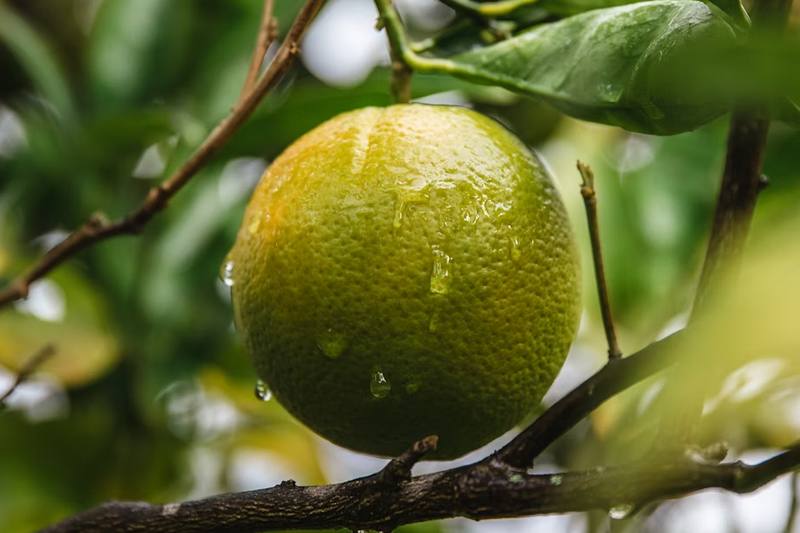 Host plant
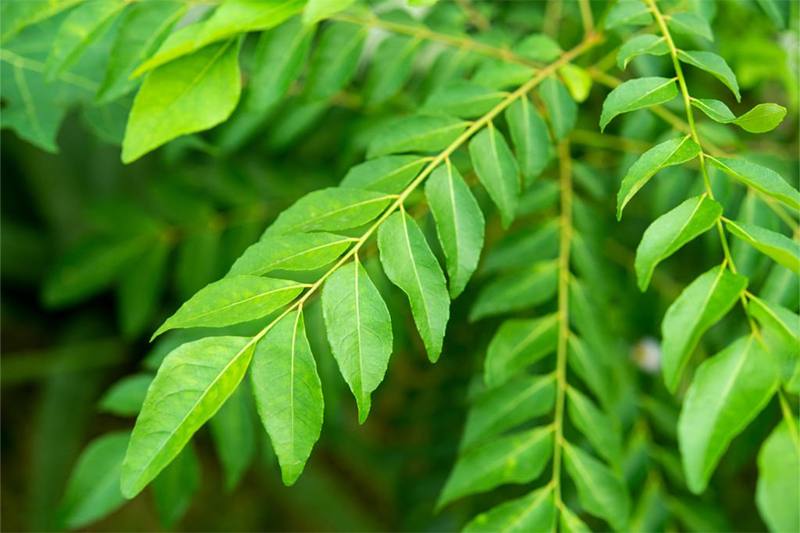
Citrus family: kaffir lime, pomelo, curry leaf
On our farm: Lime, Curry leaf
From the Sanggraloka farm
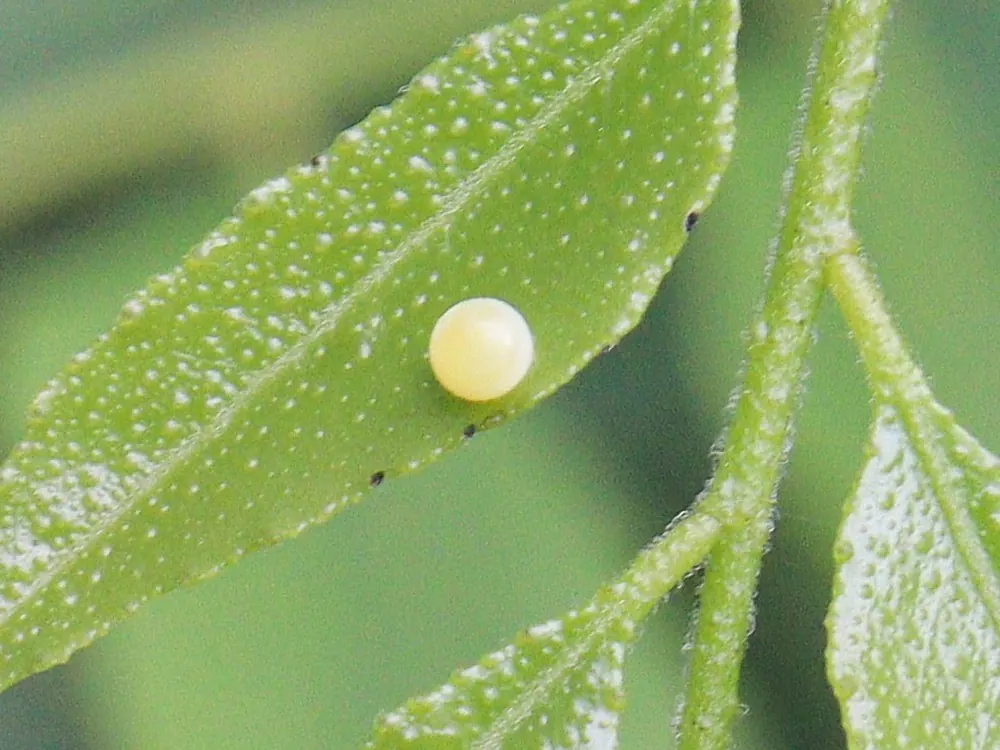 Egg
Laid on young leaves of citrus and curry leaf.
Photographed in India. Devin, iNaturalist, CC BY 4.0
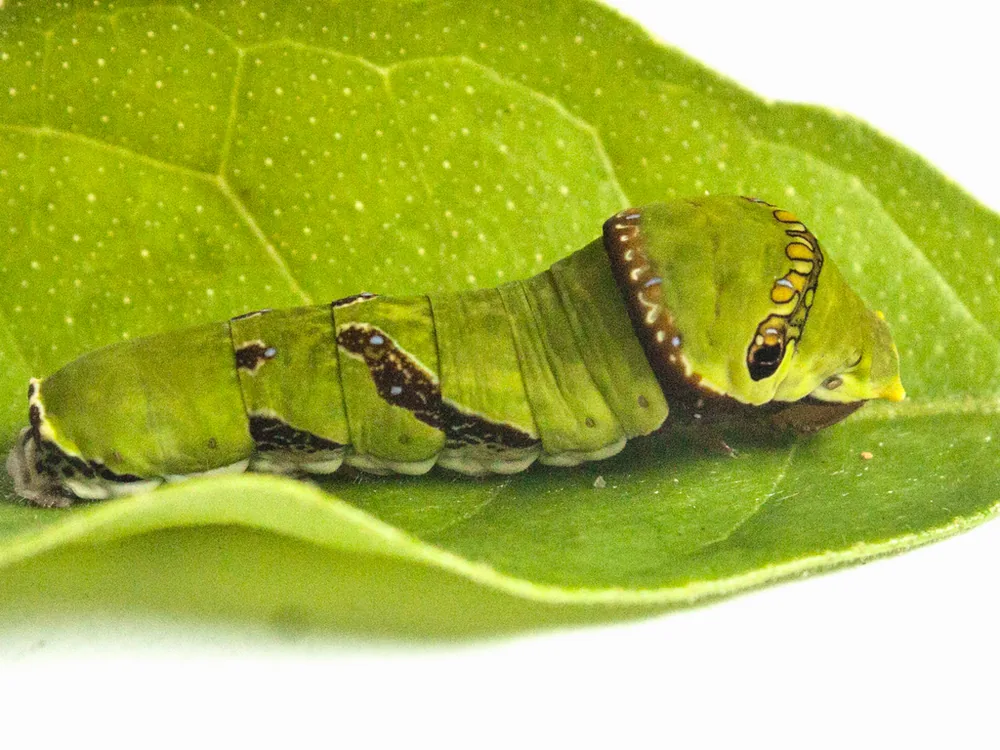 Caterpillar
Looks like a bird dropping at first, then turns leaf green.
Photographed in Cambodia. Gerard Chartier, iNaturalist, CC BY 4.0
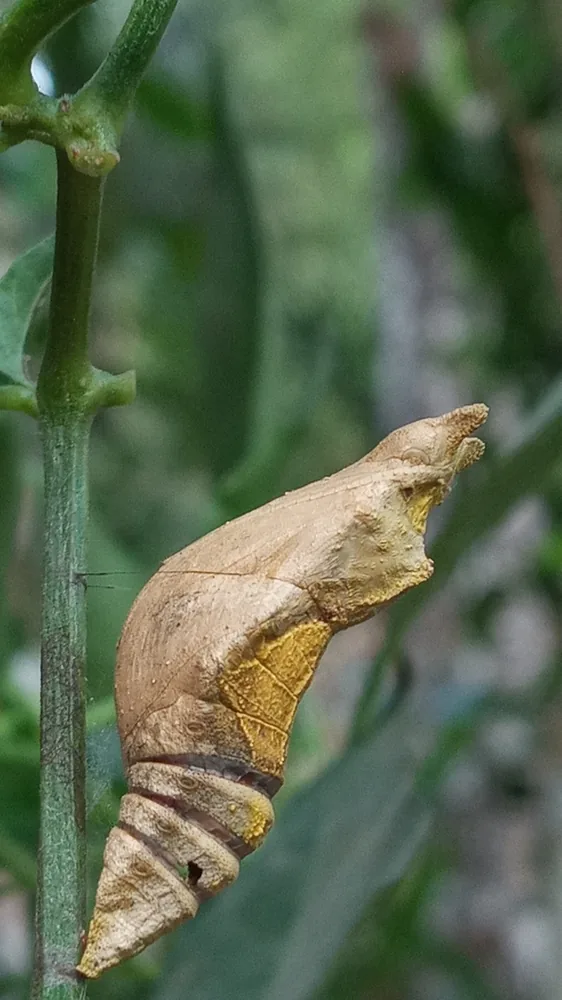 Chrysalis
Held upright by a silk girdle, coloured like a twig or leaf.
Photographed in India. R K, iNaturalist, CC BY 4.0
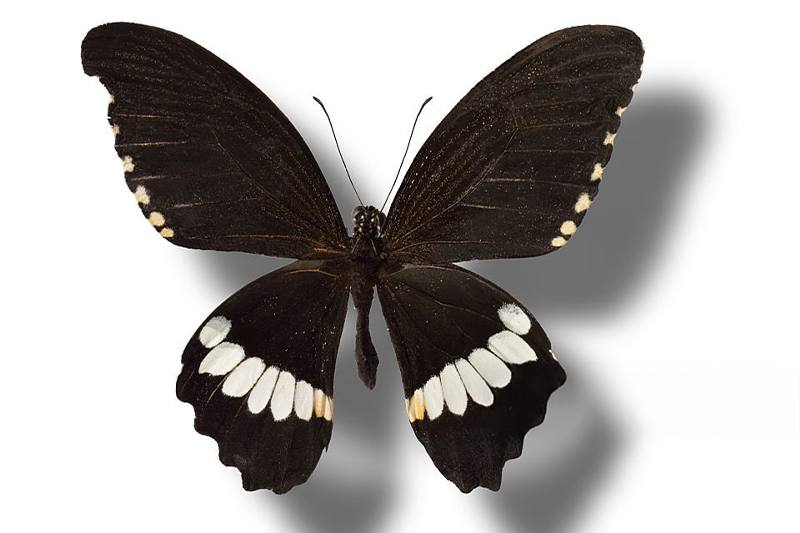 Adult butterfly
Black males with white patches. Females in more than one form.
Recognising the Common Mormon
The male is the easy one: velvet black, with a bold band of white patches across the hindwings and a short tail at the end of each.
The female is polymorphic, which means she comes in more than one form. One form looks much like the male. Another copies the Common Rose, with red and white on a black ground, so predators that avoid the Rose avoid her too.
The copy and its model fly in the same garden, so it pays to look twice at any black butterfly with red on it.
Citrus and curry leaf
The caterpillars eat plants of the citrus family, and we grow plenty of them. Kaffir lime, pomelo and curry leaf all serve as host plants.
In their early stages the caterpillars look like bird droppings, a clever way to be passed over. Later they turn green and look like a leaf.
We planted these trees for the restaurant kitchen. The Common Mormon has been a guest of the same trees for longer than we have.
How it lives
It is one of the most familiar swallowtails in gardens across southern Asia. It flies quickly and comes down to flowers such as Lantana and Ixora.
The males often gather at damp soil near water to take up minerals. If you see a small cluster of black and white wings low to the ground, slow down and watch.
Telling it from its look-alikes
Two other butterflies are easily mistaken for the Common Mormon. The Common Rose has a red body and a slow, floating flight, and it is the poisonous model that some female Mormons copy. The Lime Butterfly is spotted with pale yellow and has no tails.
The male Common Mormon is the easier of the pair to name. Look for the white band across the hindwing, bordered by black.
A female wearing red is the one to check twice. She is a mimic, and her flight is usually faster and more direct than the Rose she copies.
Where to look at Sanggraloka
Start where the citrus and curry leaf trees grow. Look at the young leaves for eggs and small caterpillars, and watch the flowers beside them for the adults.
Its name says common, and it is, but the garden decides. It is wild, and the garden is its home before it is ours.
Questions about the Common Mormon
Is the Common Mormon the same as the Common Rose?
No. The Common Rose is a separate, poisonous species. One form of the female Common Mormon copies it, so predators that avoid the Rose leave her alone.
What do Common Mormon caterpillars eat?
They eat the leaves of citrus family plants. In our garden that means kaffir lime, pomelo and curry leaf, the same trees that flavour the kitchen.
Why are some Mormons found on damp ground?
The males visit wet soil to take up minerals from it. This is called puddling, and it is a good moment to look closely, since they stay put for a while.
Visiting the conservatorium
- Not staying with us?
- Ask us on WhatsApp
- Ticket
- Ask us on WhatsApp
- Opening hours
- Open daily. Ask us on WhatsApp
- How long
- Ask us on WhatsApp
Related species
Same family or the same host plant.
 Swallowtails
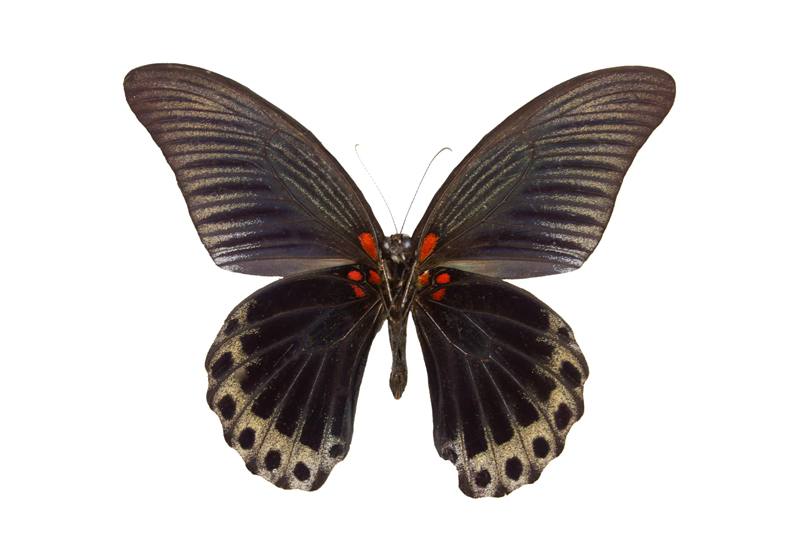
Great Mormon
Papilio memnon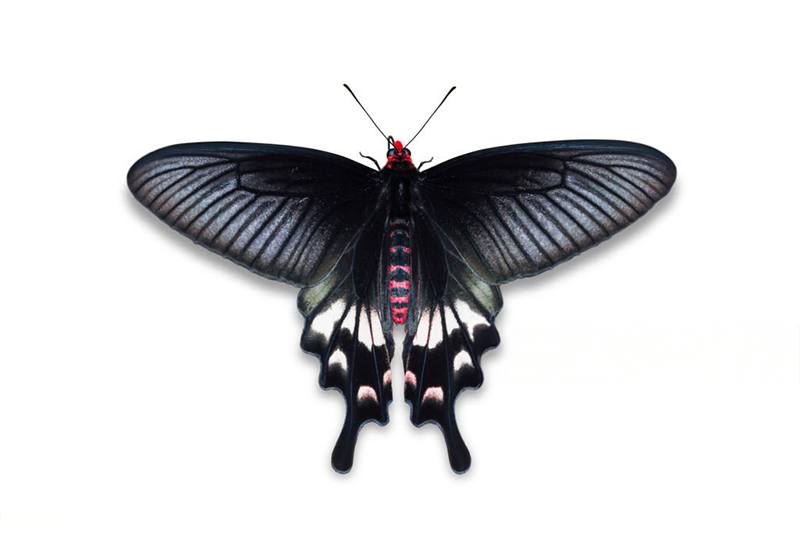 Swallowtails
Common Rose
Pachliopta aristolochiae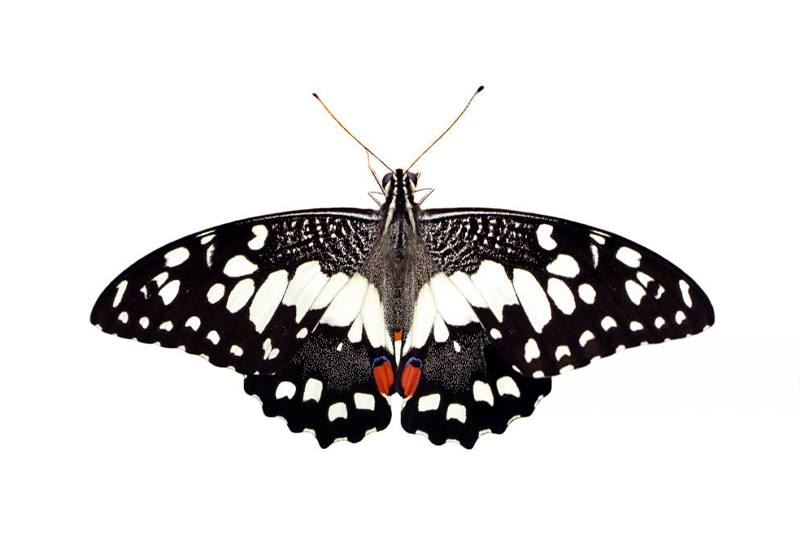 Swallowtails
Lime Butterfly
Papilio demoleus
See the conservatorium yourself
The Butterfly Conservatorium is open daily at Sanggraloka, Bresela. Walk slowly with a guide and see who visits the garden today.