


Vegetable · Organic farm, Bresela
Ambarella, the Crisp Sour Fruit from Our Garden
A golden oval fruit that is crunchy, tangy and a little sweet.
- English
- Ambarella
- Indonesian
- Kedondong
- Botanical
- Spondias dulcis Anacardiaceae
The ambarella at a glance
- Taste
- Tangy and juicy, sour when green and sweeter when ripe, with a hint of pineapple.
- Texture
- Firm and crunchy when green, softer when ripe, with a spiny stone at the centre.
- How to eat
- Peel the skin, cut the flesh away from the spiny stone and eat it fresh, plain or with a pinch of salt and chili.
- In the kitchen
- Green fruit is sliced into rujak with a dressing of palm sugar, chili and tamarind. Ripe fruit is eaten fresh or pressed into juice.
- Season
- Fruits once or twice a year, depending on the tree and the weather.
A fruit filed under vegetables
Ambarella, Spondias dulcis, is a fruit tree, not a vegetable. On our farm it sits in the vegetable and herb list, so that is where we keep it.
In an Indonesian kitchen the line between fruit and vegetable is loose. Unripe fruit is treated as a sour, savoury ingredient, much like green mango.
On the tree
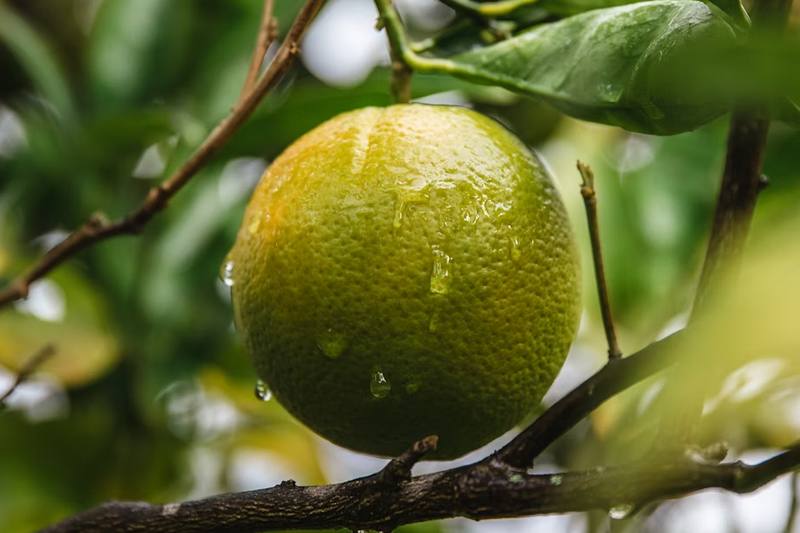
The tree grows tall and fast, with long glossy leaves made of many leaflets. The fruit hangs in small clusters, oval and green at first, turning golden yellow as it ripens.
Inside is one hard stone covered in soft spines. The flesh is cut away from it rather than bitten around.
Sweet, sour and crunchy
Green ambarella is crisp and sharply sour, closer to a green apple than to a plum. As it ripens the sourness softens and a sweeter, pineapple-like note comes through.
In Indonesian kitchens
Known as kedondong, it is a classic in rujak, sliced and tossed in palm sugar, chili and tamarind. Many people eat it simply, with salt and chili.
The young leaves are also eaten in parts of Southeast Asia. They taste sour and are used raw in salads.
Ambarella at Sanggraloka
Ambarella grows in our organic garden at Bresela, 25 minutes north of Ubud, and the farm guide lists it among the vegetables.
Ask us when you book and we will tell you whether there is fruit on the tree.
Taste it on the farm
The Tuesday harvest walk follows the vegetable beds. What is ready changes week to week.

Organic Vegetables
A morning in the vegetable beds to harvest what is ready that week and learn how it is grown.

Farm Taster
A walk through the farm with a goodie bag of herbal drinks, snacks, nuts and cookies, and a guidebook to carry along.

Cooking Class
Three hours that begin with a harvest walk on the farm, then Balinese dishes with our chef. Up to ten guests.
Planning a visit
Come in the morning if you can. The paths are cooler and the leaves still hold dew.
- Who can visit
- Ask us on WhatsApp
- Entry
- Ask us on WhatsApp
- Opening hours
- Ask us on WhatsApp
- Find us
- Jl. Raya Bresela, about 25 minutes north of central Ubud and 63 km from the airport.
- What to bring
- Closed shoes, since the paths are soft after rain, and a hat.
- Booking
- Through the activity booking page, or send your date and number of guests on WhatsApp.
Questions about ambarella
Is ambarella a fruit or a vegetable?
Botanically it is a fruit, the fruit of Spondias dulcis. Our farm lists it with the vegetables because the green fruit is used as a sour, savoury ingredient, and the young leaves are sometimes eaten raw.
What does ambarella taste like?
Green fruit is crisp, juicy and sharply sour. Ripe fruit turns sweeter with a hint of pineapple, though it keeps a tangy edge. The skin is thin and the flesh surrounds a spiny stone.
How do you eat ambarella?
Peel it, cut the flesh from the stone and eat it fresh. In Indonesia it is often dipped in salt and chili or sliced into rujak. Ripe fruit also makes a good juice.
A morning in the vegetable garden
Book a farm experience, or send us your date and we will tell you what is ready to pick that week.