

Field card · Butterfly Conservatorium at Sanggraloka
Tailed Jay (Graphium agamemnon)
Also called the Green Spotted Triangle
A flash of green and black, darting through the air, is likely the Tailed Jay. Its wings carry bright emerald spots on a black ground. It is one of the most active butterflies in the garden, and it rarely holds still.
The plant comes first
The life of the Tailed Jay
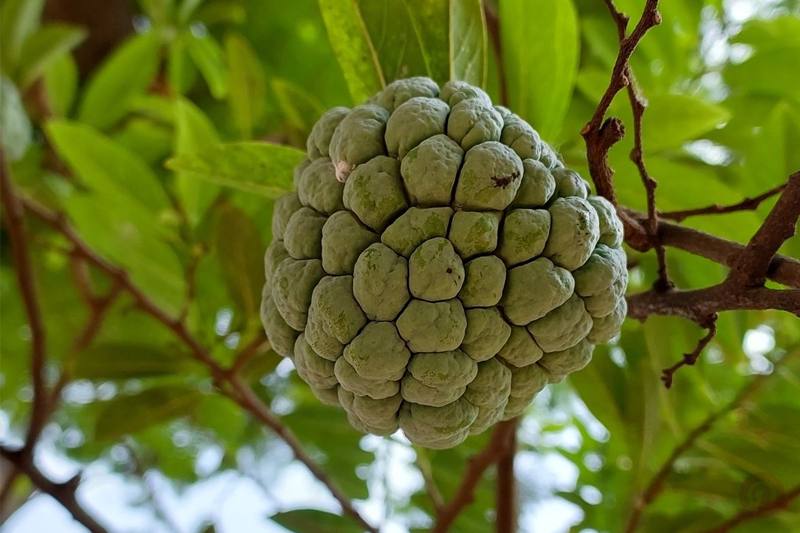 Host plant
Custard apple family (Annonaceae) and magnolia family (Magnoliaceae)
On our farm: Sugar apple
From the Sanggraloka farm
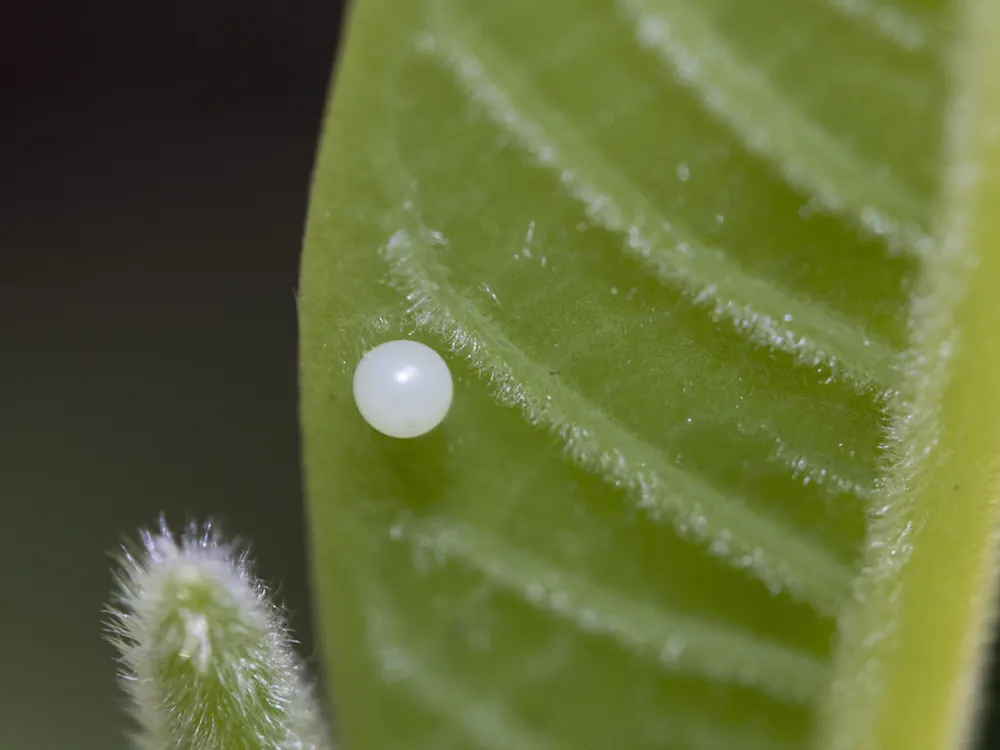 Egg
Laid on young leaves of custard apple and magnolia relatives.
Photographed in India. Ramesh Shenai, iNaturalist, CC BY 4.0
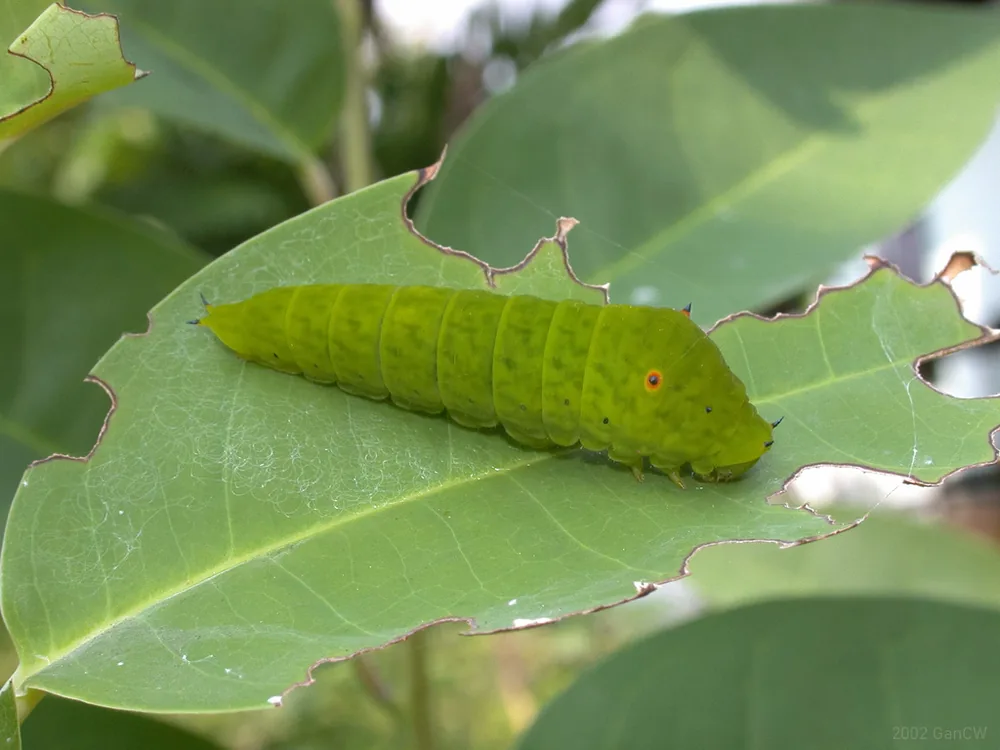 Caterpillar
Green and horned, feeding on the leaves.
Photographed in Singapore. Cheongweei Gan, iNaturalist, CC BY 4.0
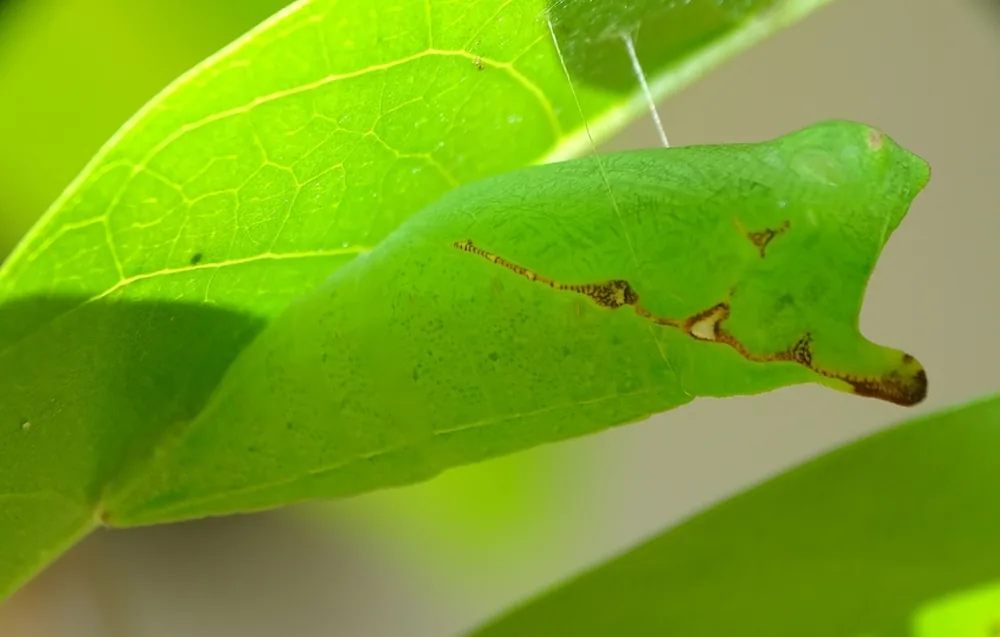 Chrysalis
Held upright by a silk girdle, coloured like a leaf.
Photographed in India. renjus box, iNaturalist, CC BY 4.0
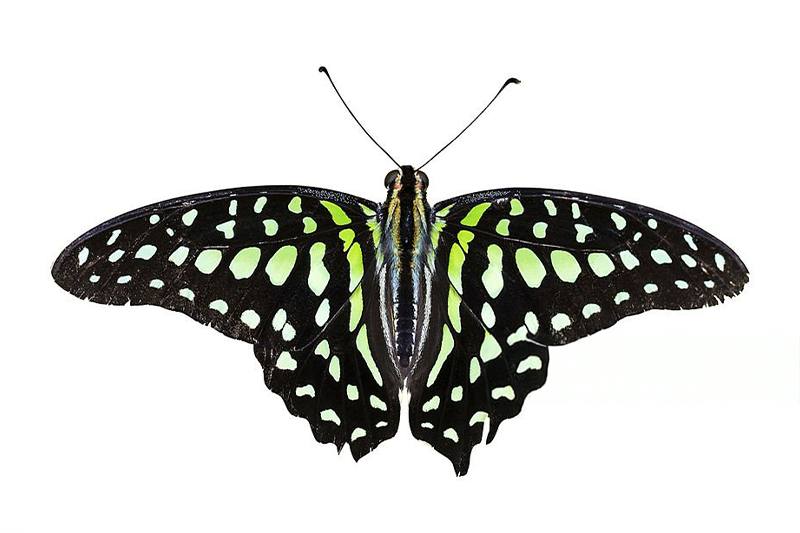 Adult butterfly
Green spots on black. Fast and restless.
Recognising the Tailed Jay
Look for rows of bright emerald-green spots against black, and a short tail on each hindwing. It is also called the Green Spotted Triangle.
Folded at rest, the green spots break up the shape of the butterfly among foliage. It is better camouflaged than its colours suggest.
Its flight is straight, fast and low, and it seldom stays on any flower for long. Patience is the best tool for seeing the colour.
Custard apple, magnolia and the horned caterpillars
The caterpillars feed on plants of the custard apple family, Annonaceae, and the magnolia family, Magnoliaceae. False ashoka and white champaca are widely planted for ornament, and both qualify.
Our garden is rich in native fruit trees and flowering plants, including sugar apple. They feed the adults and the unusual, horned caterpillars, which is why sightings are a frequent delight.
A restless flier
The Tailed Jay is notoriously fast and restless. It keeps its wings moving even while it drinks nectar from flowers such as Ixora and Lantana.
The males often gather on damp soil near streams to take up minerals. Once mainly a forest species, it is now common in gardens and towns as well.
A group of Tailed Jays on a damp patch is easier to look at than a single one in flight. The green spots are in plain view, and they hold their place for a while.
From forest to garden
Once mainly a forest species, the Tailed Jay is increasingly common in gardens and towns. Its host trees are the reason. False ashoka and white champaca are planted along roads and in courtyards across the region.
Gardens such as ours add custard apple and other fruit trees, which give both adults and caterpillars more to eat.
The caterpillars are horned, green and easy to overlook on a leaf. If you find one, please leave it where it is and tell your guide, who will be glad to know.
Where to look at Sanggraloka
Watch the flowering shrubs in the sun, and any damp ground beside the water. Near the sugar apple trees on the farm is a good place to stand still.
A Tailed Jay is usually seen as a green blur before it is seen as a butterfly. We cannot promise one on your visit, but they do pass often.
Questions about the Tailed Jay
Why is it called the Tailed Jay?
Its hindwings end in a short tail, and the green spots on black recall the colours of a jay. It is also called the Green Spotted Triangle.
What do Tailed Jay caterpillars eat?
They eat leaves of plants in the custard apple and magnolia families, such as sugar apple, false ashoka and white champaca. The caterpillars are green and horned, and hard to see.
Why does it never sit still?
The Tailed Jay is a restless flier, and it beats its wings even while feeding on flowers. That makes it a good butterfly to photograph in a moment of rest on damp soil.
Visiting the conservatorium
- Not staying with us?
- Ask us on WhatsApp
- Ticket
- Ask us on WhatsApp
- Opening hours
- Open daily. Ask us on WhatsApp
- How long
- Ask us on WhatsApp
Related species
Same family or the same host plant.
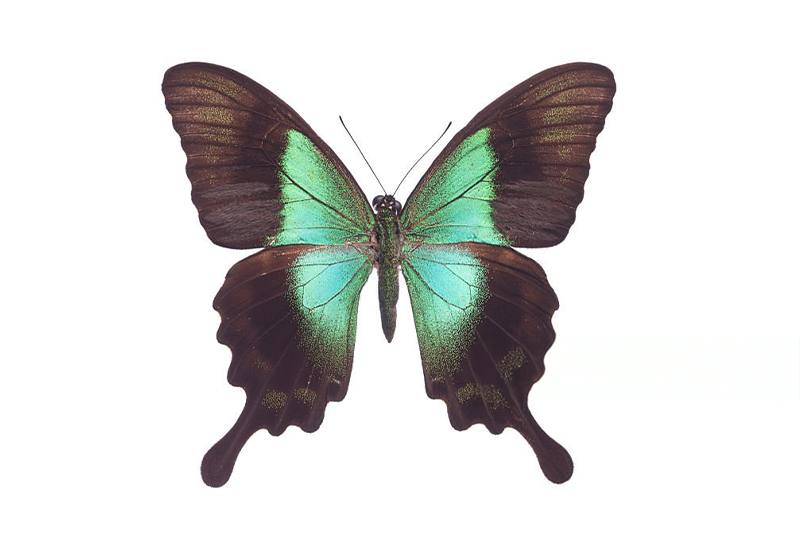 Swallowtails
Bali's Emerald Butterfly
Papilio peranthus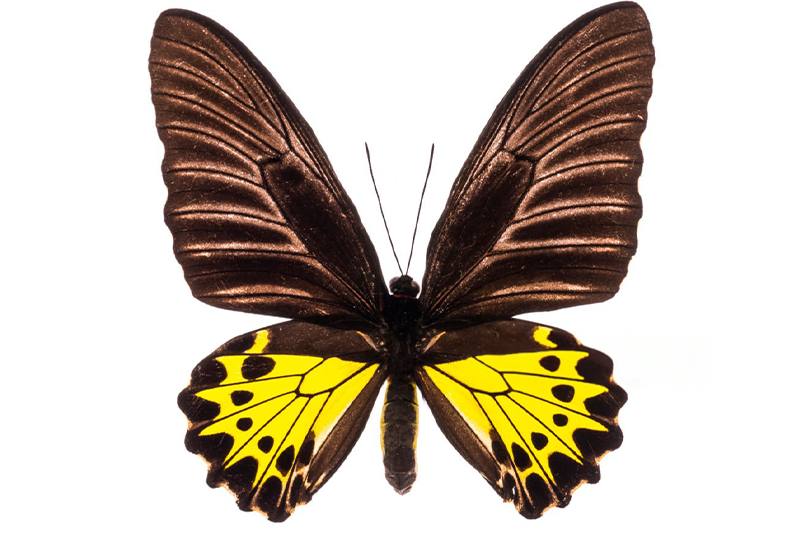 Swallowtails
Common Birdwing
Troides helena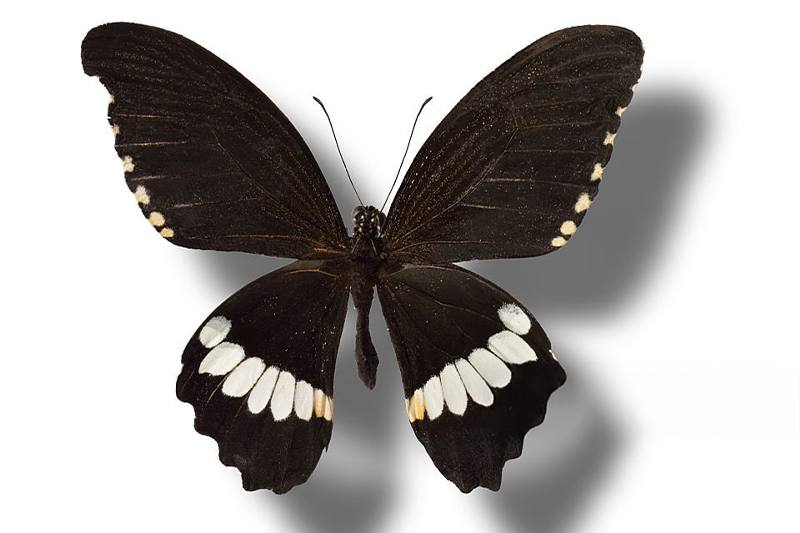 Swallowtails
Common Mormon
Papilio polytes
See the conservatorium yourself
The Butterfly Conservatorium is open daily at Sanggraloka, Bresela. Walk slowly with a guide and see who visits the garden today.