

Vegetable · Organic farm, Bresela
Chili, Picked Fresh from Our Organic Garden
Small bright fruits that turn a plain plate of rice into something alive.
- English
- Chili
- Indonesian
- Cabai / lombok
- Balinese
- Tabia
- Botanical
- Capsicum annuum Solanaceae
The chili at a glance
- Taste
- Hot and fruity, with a sharp heat that varies a lot from one variety to the next.
- Texture
- Thin, crisp skin, juicy flesh and small seeds that carry the most heat.
- How to eat
- Slice or pound it fresh. Remove the seeds for less heat, and wash your hands before touching your eyes.
- In the kitchen
- Pounded into sambal with shallot and tomato, sliced into stir-fries, soups and fried rice, or served raw on the side.
- Season
- Plants fruit for months once established, with heaviest picking in the dry season.
A plant that sets the table
Chili, Capsicum annuum, sits at the centre of Indonesian food. No sambal, and few meals, are complete without it.
Our garden grows small, hot chilies, picked a few at a time as they ripen.
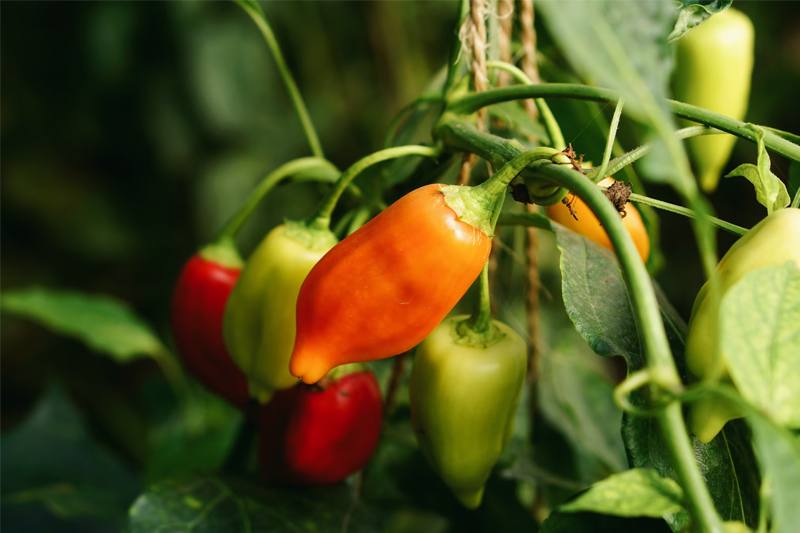
Green, orange, red
Chilies start green and turn orange and red as they ripen. Red fruit is usually a little sweeter and fruitier, while green fruit is sharper and greener.
A single plant carries fruit at every stage, so there is always something to pick.
Chilies in Bali
Sambal is the daily pleasure. The best known is sambal matah, raw sliced shallot, lemongrass and chili dressed with coconut oil and lime.
Chilies also go into stir-fries, soups and spice pastes, and are served whole beside fried dishes.
Heat, and how to handle it
The heat sits mostly in the seeds and the pale ribs inside. Remove them for a milder flavour, and wash your hands well afterwards.
Cooking tames the heat a little, and rice, coconut and lime soften it further.
Chili at Sanggraloka
Chili grows in our organic garden at Bresela, 25 minutes north of Ubud, where the sun is strong.
Ask us when you book and we will tell you what is ripe that week.
Taste it on the farm
The Tuesday harvest walk follows the vegetable beds. What is ready changes week to week.

Organic Vegetables
A morning in the vegetable beds to harvest what is ready that week and learn how it is grown.

Farm Taster
A walk through the farm with a goodie bag of herbal drinks, snacks, nuts and cookies, and a guidebook to carry along.

Cooking Class
Three hours that begin with a harvest walk on the farm, then Balinese dishes with our chef. Up to ten guests.
Planning a visit
Come in the morning if you can. The paths are cooler and the leaves still hold dew.
- Who can visit
- Ask us on WhatsApp
- Entry
- Ask us on WhatsApp
- Opening hours
- Ask us on WhatsApp
- Find us
- Jl. Raya Bresela, about 25 minutes north of central Ubud and 63 km from the airport.
- What to bring
- Closed shoes, since the paths are soft after rain, and a hat.
- Booking
- Through the activity booking page, or send your date and number of guests on WhatsApp.
Questions about chili
How hot are Balinese chilies?
It depends on the variety. Small cabai rawit are the hottest and are used sparingly, while larger, curly chilies are milder. Removing the seeds and ribs also makes any chili less hot.
How do you handle chilies safely?
Wash your hands with soap after cutting them and avoid touching your eyes. Remove the seeds and pale ribs for less heat, and use gloves if you are preparing a large amount.
What is sambal?
A chili-based relish served with most Indonesian meals. Sambal matah is the Balinese classic: raw chili, shallot and lemongrass, dressed with coconut oil and lime juice.
A morning in the vegetable garden
Book a farm experience, or send us your date and we will tell you what is ready to pick that week.