

Vegetable · Organic farm, Bresela
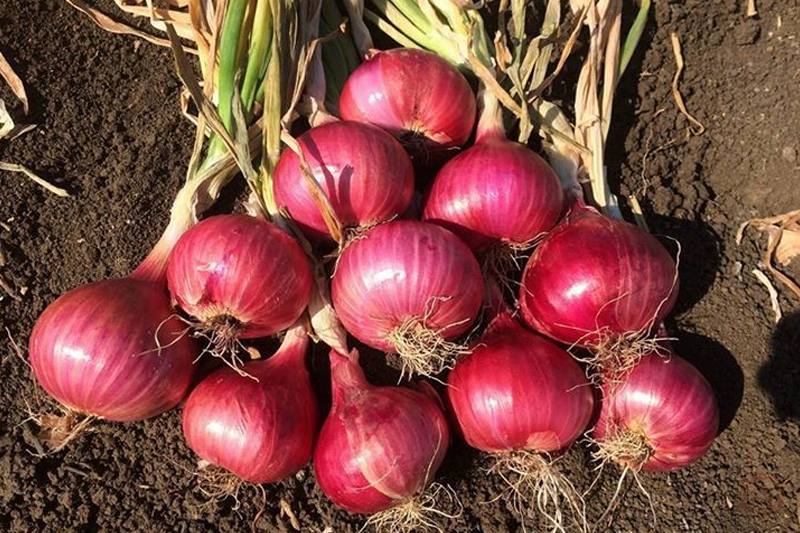
Red Shallot, the Base of Balinese Cooking
Small purple-red bulbs that grow in clusters and sit at the start of almost every Balinese dish.
- English
- Red shallot
- Indonesian
- Bawang merah
- Balinese
- Bawang barak
- Botanical
- Allium cepa var. aggregatum Amaryllidaceae
The red shallot at a glance
- Taste
- Sweet and sharp, milder than onion, and more pungent when raw.
- Texture
- Crisp and juicy when raw, soft and sweet when cooked, golden and crunchy when fried.
- How to eat
- Peel and slice thin. Eat raw in sambal matah, or cook until soft or golden.
- In the kitchen
- Ground into base genep, sliced raw into sambal matah, fried crisp as a topping, and cooked into curries and sate lilit mixtures.
- Season
- Bulbs mature about two to three months after planting and are pulled by hand when the leaf tips fall over.
Many bulbs, one plant
A red shallot is not a single bulb. Each clove planted multiplies into a cluster of five to ten small bulbs, held together at the base.
The botanical name is Allium cepa var. aggregatum. In Bali it is called bawang barak, in Indonesian bawang merah.
Pulled by hand
The slim green leaves are hollow and upright. When their tips begin to bend and dry, the bulbs are ready and are pulled by hand from the loose soil.
They are left to dry in the sun for a few days, until the skins turn papery.
The base of the cooking
Shallot is one of the main parts of base genep, the Balinese spice paste, along with garlic, ginger, turmeric and chili. Almost everything from sate lilit to curries begins with it.
Fried shallots are scattered over rice, soups and noodles.
Raw, in sambal matah
In sambal matah, the shallots are sliced very thin and mixed raw with chili, lemongrass, lime and coconut oil. Nothing is cooked, so the shallot stays crisp and sharp.
It is served with grilled fish, chicken and plain rice.
Red shallot at Sanggraloka
Red shallots grow in the beds of our organic garden at Bresela, 25 minutes north of Ubud.
They are the starting point of the kitchen's spice pastes.
Taste it on the farm
The Tuesday harvest walk follows the vegetable beds. What is ready changes week to week.

Organic Vegetables
A morning in the vegetable beds to harvest what is ready that week and learn how it is grown.

Farm Taster
A walk through the farm with a goodie bag of herbal drinks, snacks, nuts and cookies, and a guidebook to carry along.

Cooking Class
Three hours that begin with a harvest walk on the farm, then Balinese dishes with our chef. Up to ten guests.
Planning a visit
Come in the morning if you can. The paths are cooler and the leaves still hold dew.
- Who can visit
- Ask us on WhatsApp
- Entry
- Ask us on WhatsApp
- Opening hours
- Ask us on WhatsApp
- Find us
- Jl. Raya Bresela, about 25 minutes north of central Ubud and 63 km from the airport.
- What to bring
- Closed shoes, since the paths are soft after rain, and a hat.
- Booking
- Through the activity booking page, or send your date and number of guests on WhatsApp.
Questions about red shallot
What is the difference between a shallot and an onion?
A shallot grows as a cluster of small bulbs and tastes sweeter and milder. An onion grows as one large bulb, and has a sharper, more watery flesh.
What is base genep?
Base genep is the Balinese spice paste. It combines shallot, garlic, ginger, turmeric, galangal, chili and other aromatics, and it is the starting point for many dishes.
How is shallot used in sambal matah?
The shallots are sliced very thin and mixed raw with chili, lemongrass, lime and coconut oil. Nothing is cooked, so the flavour stays crisp and sharp.
A morning in the vegetable garden
Book a farm experience, or send us your date and we will tell you what is ready to pick that week.