

Vegetable · Organic farm, Bresela
Galangal, the Piney Root of Our Garden
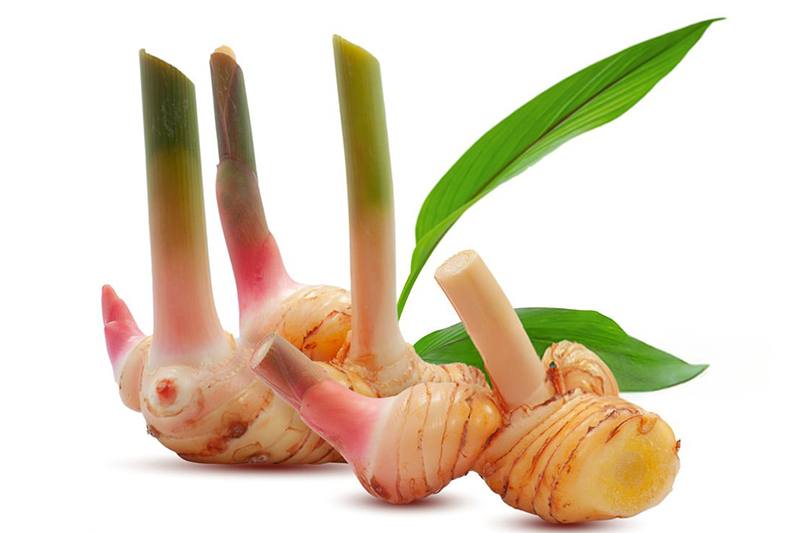
A hard, pale root that smells of pine, citrus and pepper.
- English
- Galangal
- Indonesian
- Lengkuas / laos
- Balinese
- Isen
- Botanical
- Alpinia galanga Zingiberaceae
The galangal at a glance
- Taste
- Sharp and piney, with citrus and pepper notes, more resinous than ginger.
- Texture
- Hard and fibrous, so it is sliced, bruised or grated rather than eaten in pieces.
- How to eat
- Not eaten in pieces. Bruise or slice the root and simmer it in the dish, or grate it into spice pastes.
- In the kitchen
- Pounded into spice pastes, simmered whole in soups and curries, and used with lemongrass and bay leaf in coconut-based dishes.
- Season
- Rhizomes are dug after about a year, and pieces can be taken through the year.
Looks like ginger, tastes differently
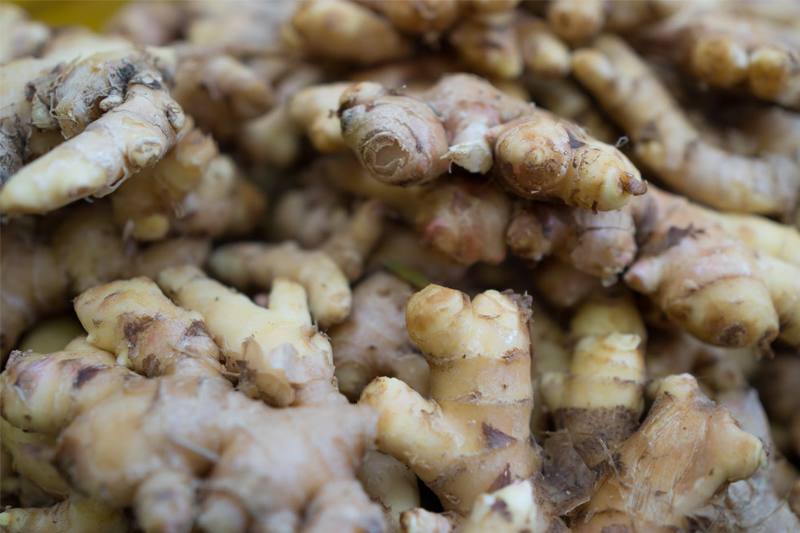
Galangal, Alpinia galanga, is a relative of ginger, with a pale rhizome marked by rings. Its flavour is sharper and more resinous, with a clear note of pine and citrus.
Cooks in Southeast Asia treat the two as separate ingredients.
On the plant
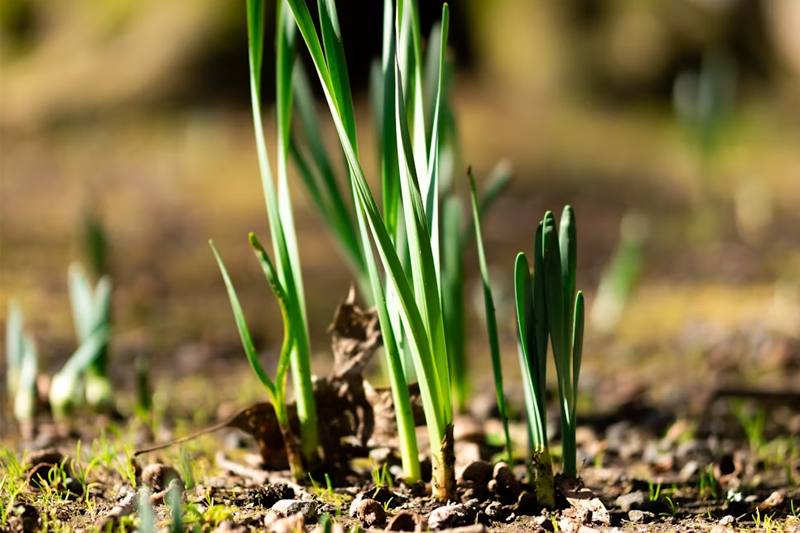
The plant grows tall, with long, upright leaves and clumps of rhizome underground. It is a bigger plant than ginger and can reach the height of a person.
Rhizomes are dug from the edge of the clump, and the plant keeps growing.
In the pot
Galangal is bruised and dropped whole into soups and curries, where it releases its scent slowly. It is often removed or left on the plate, since the pieces stay hard.
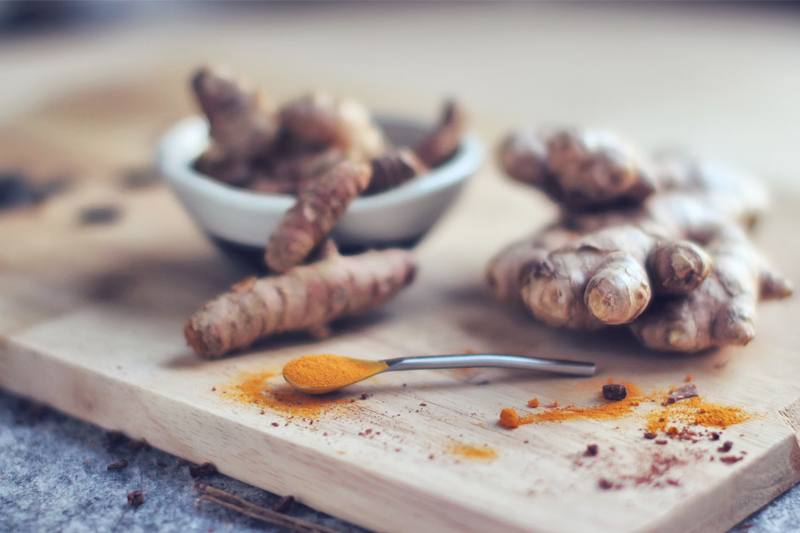
Pounded finely, it goes into the spice pastes behind many Balinese dishes.
Lengkuas, laos
In Indonesia it is called lengkuas, and sometimes laos in Java. It sits with lemongrass, bay leaf, kaffir lime and shallot in the basic aromatic set of the kitchen.
A thumb-sized piece is usually enough for a pot of soup that serves four.
Galangal at Sanggraloka
Galangal grows in our organic garden at Bresela, 25 minutes north of Ubud.
Ask us when you book and we will tell you whether any is ready to dig.
Taste it on the farm
The Tuesday harvest walk follows the vegetable beds. What is ready changes week to week.

Organic Vegetables
A morning in the vegetable beds to harvest what is ready that week and learn how it is grown.

Farm Taster
A walk through the farm with a goodie bag of herbal drinks, snacks, nuts and cookies, and a guidebook to carry along.

Cooking Class
Three hours that begin with a harvest walk on the farm, then Balinese dishes with our chef. Up to ten guests.
Planning a visit
Come in the morning if you can. The paths are cooler and the leaves still hold dew.
- Who can visit
- Ask us on WhatsApp
- Entry
- Ask us on WhatsApp
- Opening hours
- Ask us on WhatsApp
- Find us
- Jl. Raya Bresela, about 25 minutes north of central Ubud and 63 km from the airport.
- What to bring
- Closed shoes, since the paths are soft after rain, and a hat.
- Booking
- Through the activity booking page, or send your date and number of guests on WhatsApp.
Questions about galangal
Is galangal the same as ginger?
No. Galangal is a related plant, Alpinia galanga, with a harder pale root and a sharper, piney, citrus flavour. It is not interchangeable with ginger in a recipe.
Do you eat galangal?
The root is too hard to eat in pieces. It is sliced and bruised to flavour soups and curries, or pounded finely into spice pastes where its fibres break down.
What is galangal called in Indonesian?
Lengkuas, and sometimes laos in Java. In Bali it is used together with lemongrass, bay leaf and shallot to build the base flavour of many dishes.
A morning in the vegetable garden
Book a farm experience, or send us your date and we will tell you what is ready to pick that week.