

Fruit · Organic farm, Bresela
Mango, Sour and Green or Sweet and Ripe
Eaten green with chili and salt, or ripe and dripping at the end of the dry season.
- English
- Mango
- Indonesian
- Mangga
- Balinese
- Poh
- Botanical
- Mangifera indica Anacardiaceae
The mango at a glance
- Taste
- Green: sour and crisp. Ripe: sweet, fragrant and juicy.
- Texture
- Green mango is crunchy; ripe mango is soft and smooth.
- How to eat
- Cut the two cheeks away from the flat seed, score the flesh into squares and push the skin inside out.
- In the kitchen
- Green mango in rujak and sambal; ripe mango in juice, ice and fruit plates.
- Season
- In Bali, roughly September to December.
Two ways to eat a mango
In Balinese a mango is poh, and it is eaten at two moments. Green, it is sharp and crunchy, cut into rujak with chili, salt and palm sugar. Ripe, it is sweet enough to need nothing at all.
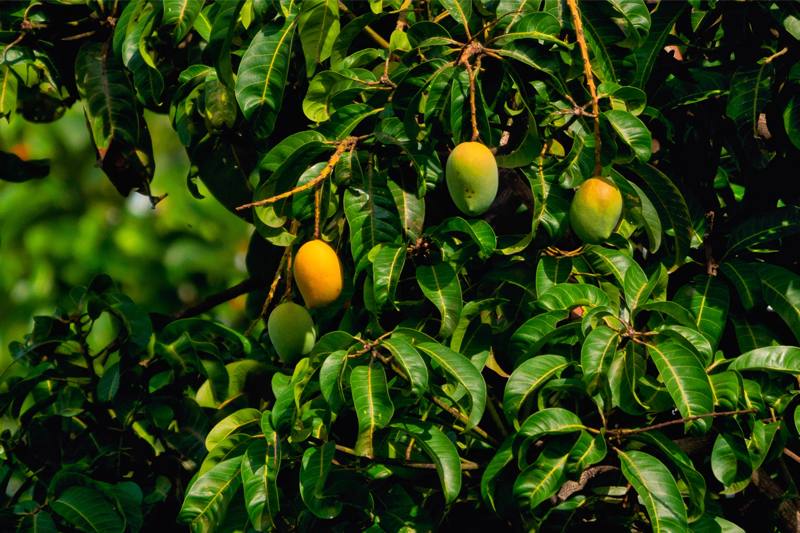
The trees are tall and dense, and the fruit hangs on long stems below the leaves.
The season
Mango ripens at the end of the dry season and into the first rains, roughly September to December in Bali. For those months the markets are full of it.
Several Indonesian varieties grow on the island, from the green-skinned arumanis to the red-blushed gedong gincu.
How to cut one
Stand the mango on its end and slice down either side of the flat seed to take off the two cheeks. Score each cheek into squares without cutting the skin.
Push the skin from underneath and the squares stand up, ready to eat. The flesh around the seed is the cook's share. It is a messy, happy job, best done over a plate or outdoors.
Taste and texture
Ripe mango is soft, fragrant and very juicy, with a sweetness that varies by variety. Some are resinous, some taste of honey.
Green mango is the opposite: firm, sour and crisp, which is why it is so good with chili and salt.
The fibres vary too. Some varieties are smooth as butter; others are stringy near the seed and best eaten over a plate.
In the kitchen
Ripe mango goes into juice, fruit ice and breakfast plates. Green mango is shredded into sambal and salads and sliced for rujak.
Mango sap can irritate the skin of some people, so the fruit is peeled or washed before eating near the stem.
Mango at Sanggraloka
Mango grows in our organic farm at Bresela, 25 minutes north of Ubud.
Taste it on the farm
The Thursday harvest walk follows the fruit trees. What is ripe changes week to week.

Organic Fruits
A morning walk through the fruit trees to harvest what is ripe that week and taste it fresh.

Farm Taster
A walk through the farm with a goodie bag of herbal drinks, snacks, nuts and cookies, and a guidebook to carry along.

Cooking Class
Three hours that begin with a harvest walk on the farm, then Balinese dishes with our chef. Up to ten guests.
Planning a visit
Come in the morning if you can. The paths are cooler and the leaves still hold dew.
- Who can visit
- Ask us on WhatsApp
- Entry
- Ask us on WhatsApp
- Opening hours
- Ask us on WhatsApp
- Find us
- Jl. Raya Bresela, about 25 minutes north of central Ubud and 63 km from the airport.
- What to bring
- Closed shoes, since the paths are soft after rain, and a hat.
- Booking
- Through the activity booking page, or send your date and number of guests on WhatsApp.

Questions about mango
When is mango season in Bali?
Mango in Bali ripens at the end of the dry season and into the first rains, roughly September to December. Ask us when you book and we will tell you whether our trees are fruiting.
How is green mango eaten in Bali?
Green mango is sliced into rujak with chili, salt and palm sugar, or shredded into sambal and salads. Its sour crunch is the point, and it is eaten before the fruit ripens.
What is the Balinese word for mango?
In Balinese a mango is called poh; in Indonesian it is mangga. You will hear both at the morning market, and rujak poh, green mango with chili and salt, is a common snack.
A morning among the fruit trees
Book a farm experience, or send us your date and we will tell you what is ripe that week.