

Fruit · Organic farm, Bresela
Papaya, Sweet at Breakfast and Green in the Kitchen
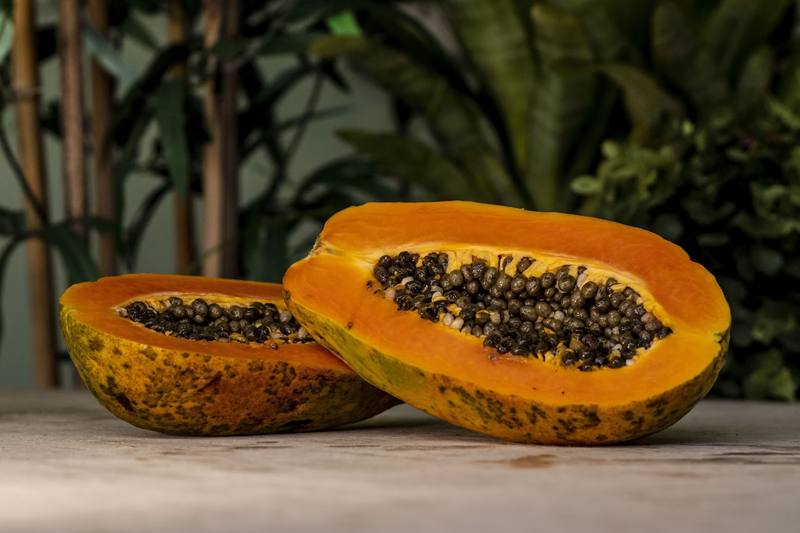
Orange flesh, chilled and sliced at breakfast; the green fruit cooked as a vegetable.
- English
- Papaya
- Indonesian
- Pepaya
- Balinese
- Gedang
- Botanical
- Carica papaya Caricaceae
The papaya at a glance
- Taste
- Ripe: sweet and mellow, sometimes with a musky note. Green: mild.
- Texture
- Ripe flesh is soft and buttery; green papaya is crisp.
- How to eat
- Halve a ripe papaya, scoop out the black seeds and eat the flesh with a spoon, with a squeeze of lime.
- In the kitchen
- Ripe at breakfast; green papaya and young leaves cooked as vegetables in Balinese and Indonesian dishes.
- Season
- All year.
A breakfast fruit
Papaya is gedang in Balinese and pepaya in Indonesian. In most of Bali the day starts with it: chilled, sliced, with a wedge of lime.
The flesh is soft and orange, sweet without being heavy. A squeeze of lime lifts it.
The best papaya is ripe right through, deep orange and almost melting, with no hard pale edge near the skin.
Green papaya
Before it ripens, papaya is a vegetable. Green papaya is shredded, cooked into soups and spiced dishes, and used in lawar in some Balinese villages.
The young leaves are bitter and are blanched and dressed with spiced grated coconut in Indonesian kitchens.
How to eat one
Cut a ripe papaya in half lengthways. Scoop out the black seeds, then eat the flesh with a spoon or slice it into wedges.
A ripe papaya has yellow skin and gives a little under the thumb. If it is still mostly green, give it a day or two. Children usually prefer it without the lime.
An enzyme in the fruit
Papaya contains papain, an enzyme that breaks down protein. Cooks in Indonesia sometimes wrap tough meat in papaya leaves to soften it.
It is the same enzyme that makes papaya a gentle fruit to end a heavy meal.
On the plant
Papaya grows fast on a single soft trunk, with a crown of large, deeply cut leaves. The fruit clusters under the leaves, close to the trunk.
Plants can be male, female or both, and only some carry fruit. It fruits through the whole year in Bali.
Papaya is one of the fastest plants on the farm. A seedling can carry its first fruit within a year.
Papaya at Sanggraloka
Papaya grows in our organic farm at Bresela, 25 minutes north of Ubud.
Taste it on the farm
The Thursday harvest walk follows the fruit trees. What is ripe changes week to week.

Organic Fruits
A morning walk through the fruit trees to harvest what is ripe that week and taste it fresh.

Farm Taster
A walk through the farm with a goodie bag of herbal drinks, snacks, nuts and cookies, and a guidebook to carry along.

Cooking Class
Three hours that begin with a harvest walk on the farm, then Balinese dishes with our chef. Up to ten guests.
Planning a visit
Come in the morning if you can. The paths are cooler and the leaves still hold dew.
- Who can visit
- Ask us on WhatsApp
- Entry
- Ask us on WhatsApp
- Opening hours
- Ask us on WhatsApp
- Find us
- Jl. Raya Bresela, about 25 minutes north of central Ubud and 63 km from the airport.
- What to bring
- Closed shoes, since the paths are soft after rain, and a hat.
- Booking
- Through the activity booking page, or send your date and number of guests on WhatsApp.

Questions about papaya
How is papaya eaten in Bali?
Ripe papaya is eaten chilled at breakfast with a squeeze of lime. Green papaya is cooked as a vegetable in soups and spiced dishes, and the young leaves are blanched and dressed with grated coconut.
How do I know a papaya is ripe?
A ripe papaya has mostly yellow skin and gives slightly under gentle pressure. If it is still green and hard, leave it at room temperature for a day or two.
Is papaya in season all year?
Yes. Papaya fruits through the whole year in Bali, and a single plant carries fruit at several stages at once. There is usually a ripe one on our farm, so ask us when you book.
A morning among the fruit trees
Book a farm experience, or send us your date and we will tell you what is ripe that week.