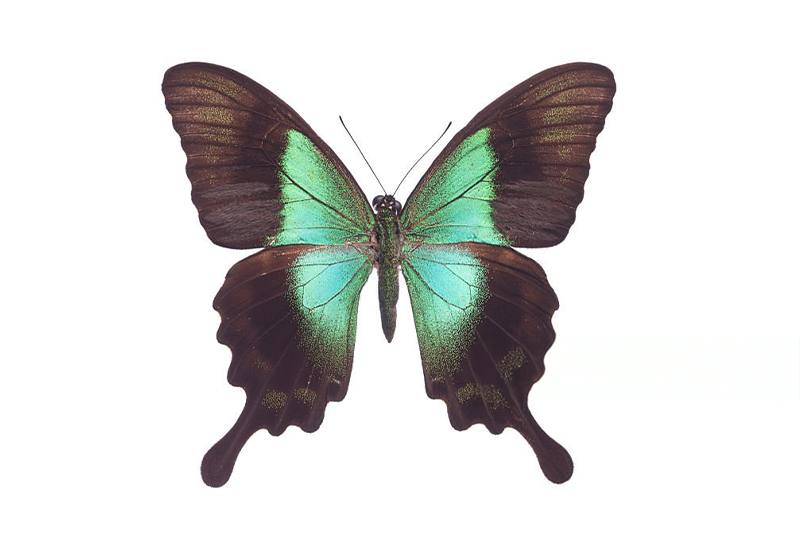
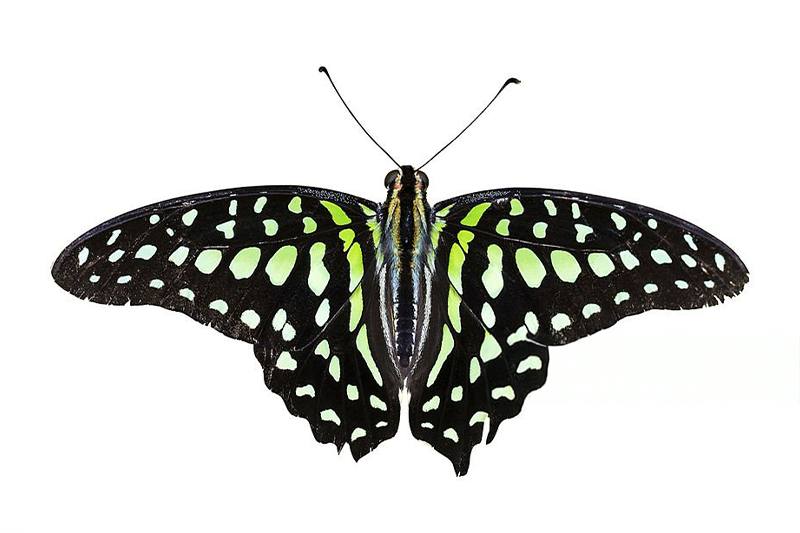
A flash of iridescent green catches the eye in the lush Ubud garden. This is Papilio peranthus, a large, velvet-black swallowtail whose wings carry metallic, jewel-toned scales. It is also called the Sea Green Swallowtail.
Held upright by a silk girdle, coloured like a twig or leaf.
5Adult butterfly
Velvet black with jewel-green scales that flash in the sun.
Recognising Bali's Emerald Butterfly
From a distance the butterfly looks black. Move, or let it move, and metallic green scales shimmer across the wings like light on water.
It is also known as the Indonesian Swallowtail or the Sea Green Swallowtail. The green shifts with the angle of the sun.
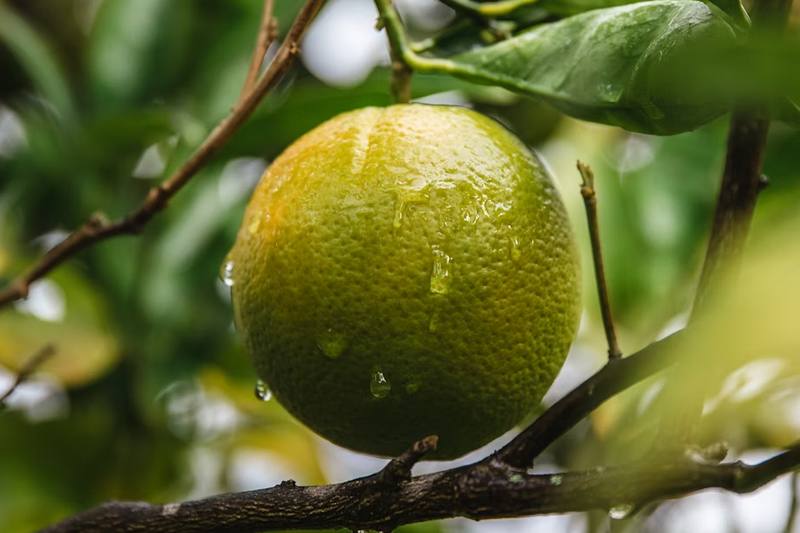
Citrus and the caterpillars
The caterpillars feed only on plants of the citrus family, Rutaceae. Our gardens hold lemon, pomelo and lime-berry trees, planted for the kitchen, and the butterfly has found them.
That is why the Emerald is a good sign. A garden with its host plants growing is one where a generation can complete itself.
Citrus is a large family of fruit and ornamental trees. Besides the pomelo and lemon in our rows, wild relatives such as lime-berry also qualify, so the butterfly may be at home in corners we did not plant for it.
It flutters between citrus leaves and nectar-filled flowers, rarely settling for long. In bright sun the green is easiest to see, and in cloud it is almost lost.
Its presence is a sign of a healthy garden, one where the citrus is left to grow and the flowers stay in bloom through the year.
The caterpillars of citrus swallowtails are small at first and grow quickly. A tree that loses a few leaves in a season usually recovers, and the butterflies it fed move on to other trees.
How to see the green
The green is easiest to catch in direct sun, when the butterfly turns and the scales tilt toward the light. In shade it can pass for a plain, dark swallowtail.
So stand with the sun behind you, and wait. A butterfly that flies straight away from you shows black. One that crosses your view may show green.
A photograph will not always hold the colour. The best view is the one you take with your own eyes. Please keep the flash off and keep your distance, and let it come to the flowers by itself.
Where to look at Sanggraloka
Look around the citrus trees, where the soft new leaves are, and in the sunny gaps beside them. Watch for the green flash before you see the shape.
No one can promise the green flash, and we would not try. In a few minutes it may be in another part of the valley.
Questions about the Bali's Emerald Butterfly
Why is it called Bali's Emerald Butterfly?
The name describes the jewel-green scales on its black wings. Elsewhere the same species is known as the Sea Green Swallowtail or the Indonesian Swallowtail, so you may meet either name.
What does it eat?
The caterpillars eat the leaves of citrus family plants, such as pomelo and lemon. The adults drink nectar from garden flowers, and both stages are usually found close to the citrus trees.
Is it easy to see?
The green flash is easy to notice in sunlight, but we cannot promise a sighting. It is a wild butterfly and moves between the trees at its own pace.


 Adult butterfly
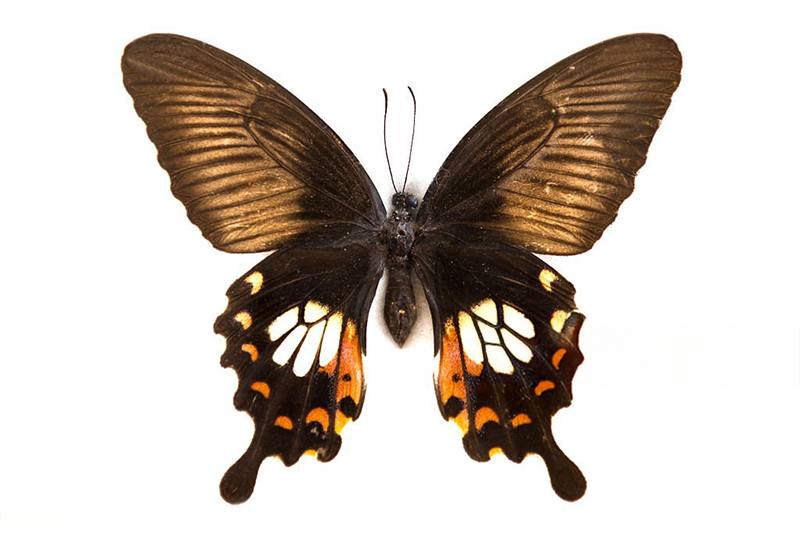 Swallowtails
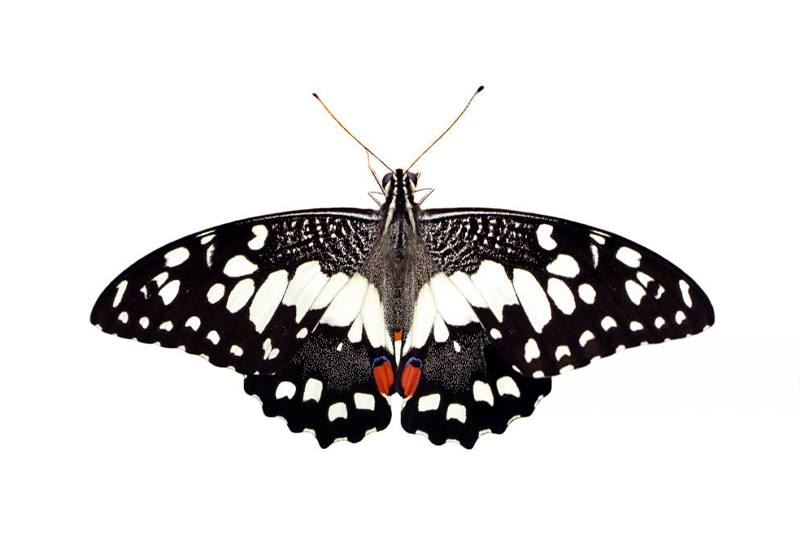 Swallowtails
 Swallowtails