

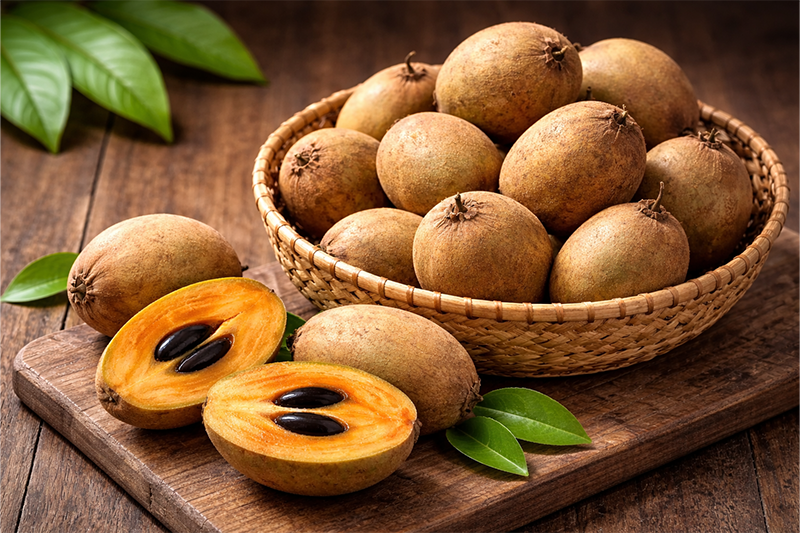
Sawo Manalagi
Sawo Manalagi Tree
1. General Description
The Sawo Manalagi tree is a premium variety of sapodilla well known for its very sweet, rich flavor and pleasant aroma. The name Manalagi reflects its unique taste—the more you eat it, the more delicious it becomes. This variety is widely cultivated in Indonesia as a home garden tree, small-scale orchard crop, and agrotourism plant due to its high productivity and relatively easy maintenance.
Botanically, Sawo Manalagi belongs to the Sapotaceae family, with the scientific name Manilkara zapota.
2. Physical Characteristics
- 🌱 Tree height ranges from 8–15 meters
- 🌿 Leaves are elongated, thick, and glossy dark green
- 🌸 Small flowers, white to pale yellow
- 🍐 Fruits are round to oval in shape
- 🤎 Smooth brown skin
- 🍯 Flesh is reddish-brown, very sweet, soft, and juicy
- 🌰 Seeds are shiny black
- 🌳 Hard woody trunk with white latex sap
3. Growing Conditions and Habitat
The Sawo Manalagi tree grows best in:
- Tropical climates
- Altitude 0–700 meters above sea level
- Fertile, loose, and well-drained soil
- Moderate to high rainfall
- Full sunlight exposure
This tree is relatively drought-tolerant and can bear fruit throughout the year with proper care.
4. Nutritional Content
Sawo Manalagi fruit contains:
- Natural carbohydrates (glucose and fructose)
- High dietary fiber
- Vitamin C
- Vitamin A
- Natural antioxidants
- Minerals such as potassium, calcium, and iron
5. Benefits of the Sawo Manalagi Tree
a. Health Benefits
- ⚡ Natural energy source
Provides quick and sustained energy from natural sugars. - 🍽️ Supports digestive health
High fiber content helps prevent constipation. - 🛡️ Boosts the immune system
Vitamin C strengthens body resistance. - ❤️ Supports heart health
Potassium helps regulate blood pressure. - 👁️ Promotes healthy skin and eyesight
Vitamin A supports cell regeneration.
b. Culinary Uses
- Consumed fresh as a natural snack
- Used in juices, smoothies, jams, and desserts
- Suitable for healthy and wellness-oriented diets
- Ideal for natural and traditional food concepts
c. Uses of Other Tree Parts
- 🌿 Leaves: traditionally used to treat mild diarrhea and inflammation
- 🌳 Bark: contains tannins and is used in herbal remedies
- 🌰 Seeds: traditionally used for external medicinal purposes (not for consumption)
d. Environmental Benefits
- 🌳 Provides natural shade
- 🌱 Helps maintain soil moisture and fertility
- 🦜 Serves as habitat for birds and insects
- 🌍 Supports biodiversity and ecological balance
6. Cultural and Philosophical Value
Sawo Manalagi symbolizes:
- Prosperity
- Patience
- Sweet rewards from perseverance
The fruit represents the idea that hard work and consistency lead to sweet results.
7. Conclusion
The Sawo Manalagi tree is a valuable fruit tree offering high nutritional value, health benefits, and ecological importance. With its distinctive sweetness and strong adaptability to tropical environments, it is highly suitable for home gardens, productive orchards, and wellness-based agrotourism projects.