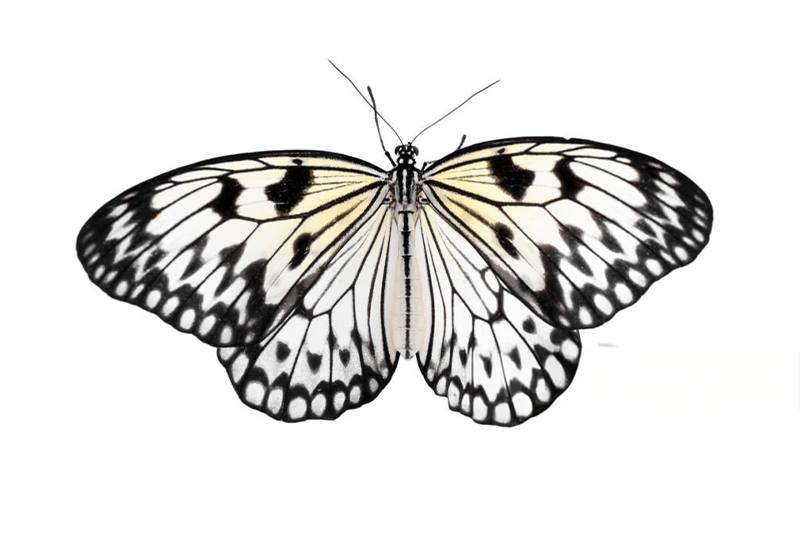
The Malay Lacewing is one of the brightest butterflies in the garden. Its wings are fiery orange-red, edged with a border of black and white like lace. The pattern is a warning, because the butterfly is poisonous.
The plant comes first
The life of the Malay Lacewing
1Host plant
Passionflower family (Passifloraceae), especially Adenia vines
Fiery orange-red with a lace border. Poisonous, and unhurried.
Recognising the Malay Lacewing
Fiery orange-red wings, framed by a delicate, lace-like border of black and white, are hard to miss. The underside is just as intricate, in reds, whites and black.
The pattern is not for show. It tells a predator that this butterfly is poisonous, and a bird that has tried one rarely tries again.
It is a medium-sized butterfly, and from above the colour is so strong that the wings seem to glow against the green leaves.
Passion vines and the spined caterpillars
The caterpillars feed on plants of the passionflower family, Passifloraceae, particularly Adenia vines. They are deep wine-red with long spines, and they are a warning of their own.
We grow passion fruit on the farm, a close relative of the wild host plants. We also let the wild edges of the organic garden grow, because that is where the vines come up.
It floats rather than flies, in no hurry, with the confidence of a butterfly that predators avoid. It stops at flowers, and in warm sun the colour is at its strongest.
A healthy garden is one that feeds both its guests and its wild residents. The Lacewing is one of the residents.
Like many butterflies, it warms itself in the morning sun with its wings spread. That is a good moment to look at the colour, and to see the lace border clearly.
A warning in orange
Bright colours in nature often mean danger. The Malay Lacewing's orange and black is a clear example, and a young bird that tries one rarely tries another.
The poison comes from the host plant. Vines of the passionflower family hold chemicals that protect them, and the caterpillar keeps those chemicals, so the adult is poisonous too.
The warning works only if the butterfly lives long enough to be seen. That is why it flies slowly and settles in plain sight. It can afford to.
Where to look at Sanggraloka
Look along the sunny edges of the garden, where vines climb through the shrubs, and near the passion fruit.
We cannot promise the Malay Lacewing on any given day. It is wild, and it goes where the vines are.
Mornings in a sunny patch are a good time to look for orange wings, opened to the light. The walk is slow, so there is time to wait for one to settle.
Questions about the Malay Lacewing
Is the Malay Lacewing poisonous?
Yes. It stores toxins from the plants its caterpillars eat, and its bright colours warn predators. It is harmless to people, but please look and do not touch.
What does the Malay Lacewing eat?
The caterpillars eat the leaves of passionflower family plants, especially Adenia vines, which grow wild at the edges of warm forest and gardens. The adults drink nectar from flowers.
Where does the name come from?
The wings are edged with a fine black and white pattern that looks like lace. Malay refers to the region where the species lives, which stretches across Southeast Asia.


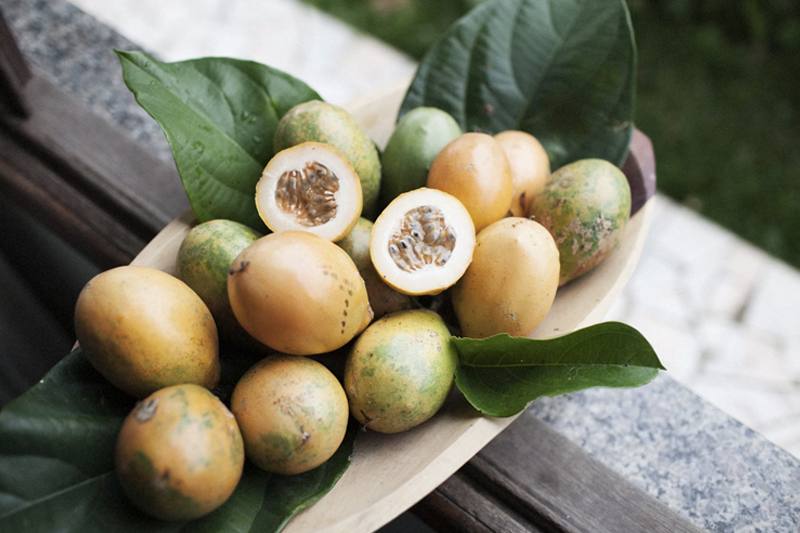 Host plant
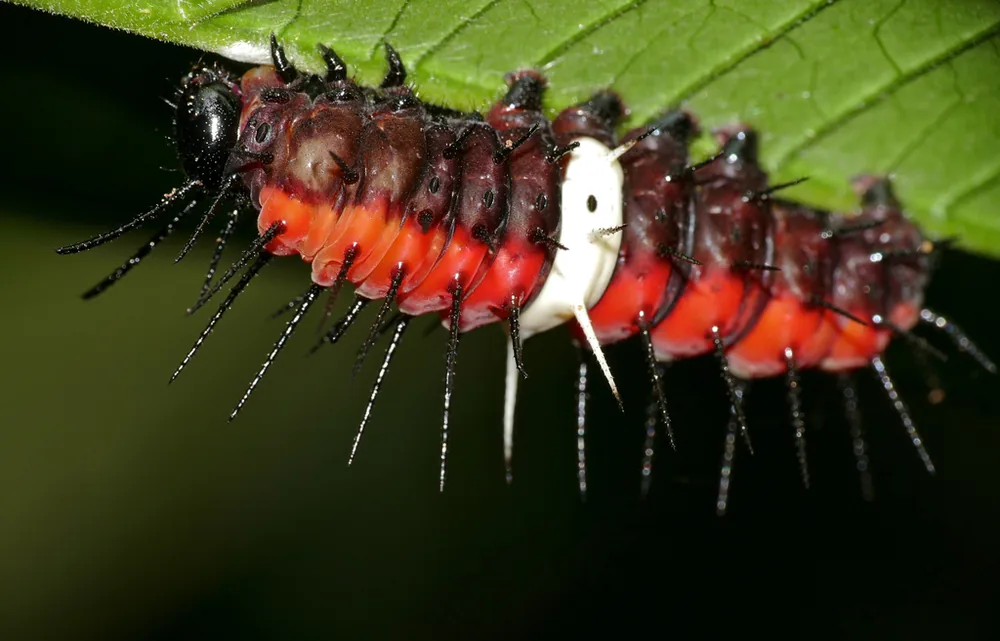 Caterpillar
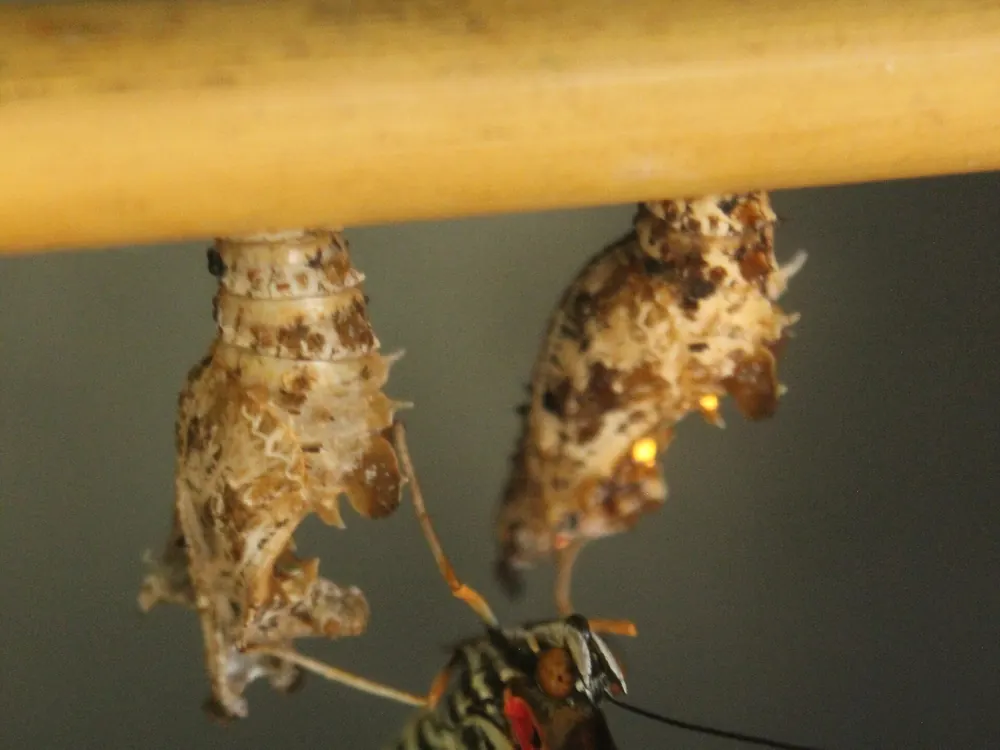
 Adult butterfly
 Brush-footed
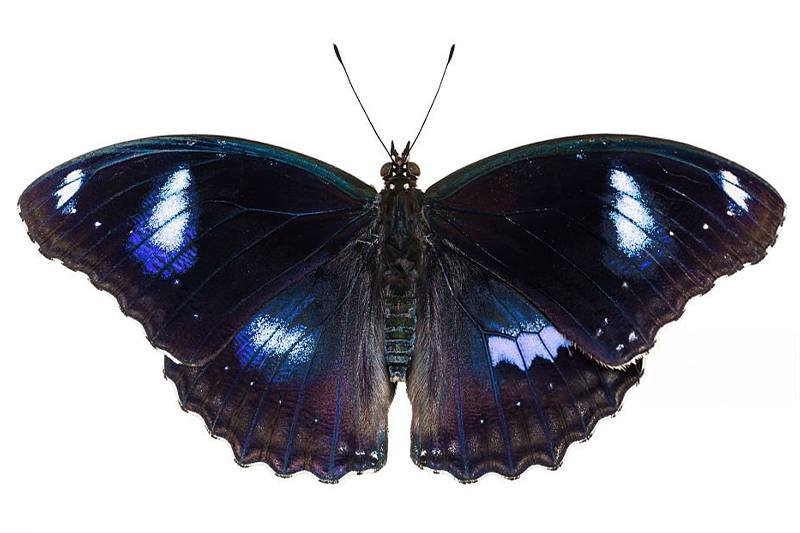 Brush-footed
 Brush-footed