

Field card · Butterfly Conservatorium at Sanggraloka
Common Birdwing (Troides helena)
Papilionidae (swallowtails)
The Common Birdwing is one of the largest butterflies in Bali, with a wingspan that can reach 17 cm. The male is velvet black with silky gold hindwings. We planted the vine its caterpillars eat, and it has made the garden its home.
The plant comes first
The life of the Common Birdwing
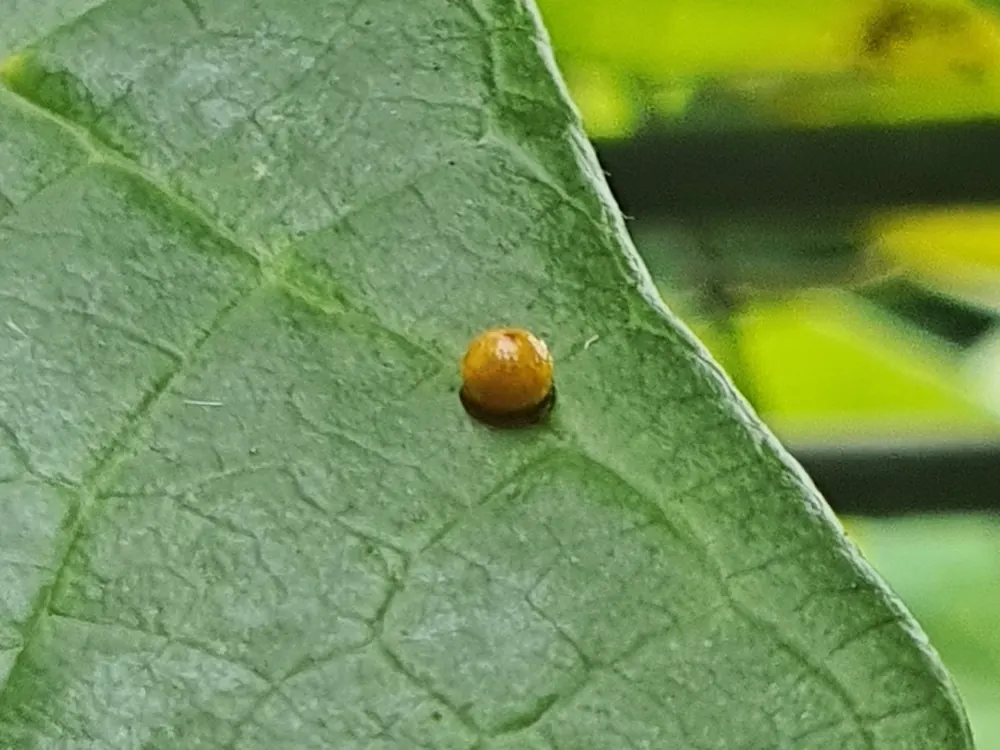 Egg
Laid one at a time on fresh growth of the Aristolochia vine.
Photographed in Singapore. Cheongweei Gan, iNaturalist, CC BY 4.0
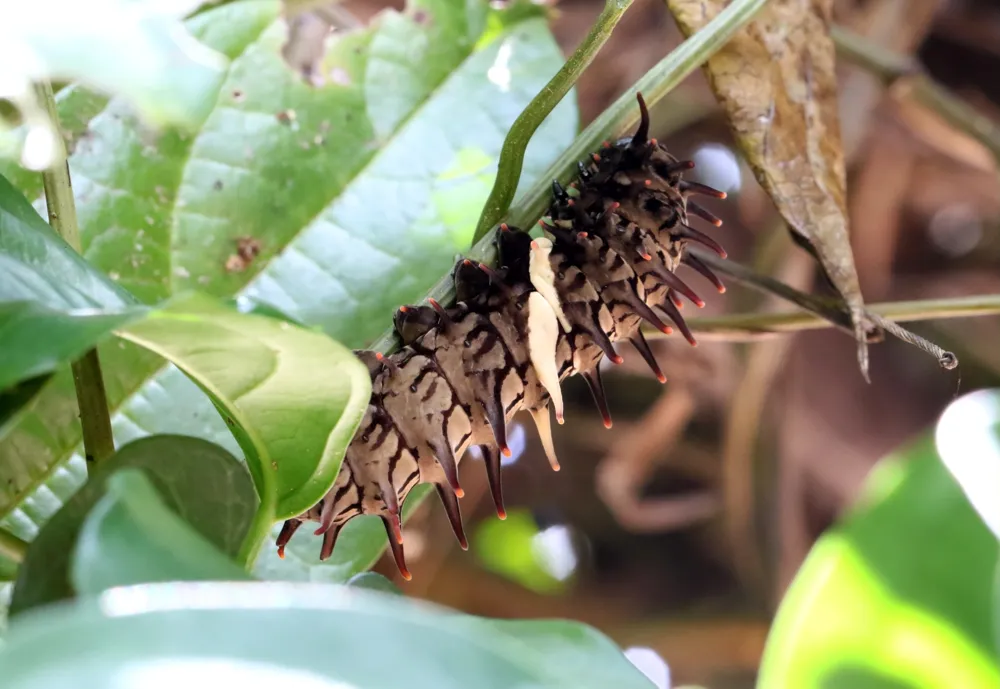 Caterpillar
Dark and fleshy, with soft spines. It eats the toxic vine and keeps the poison.
Photographed in Hong Kong. Agnes Trekker, iNaturalist, CC0
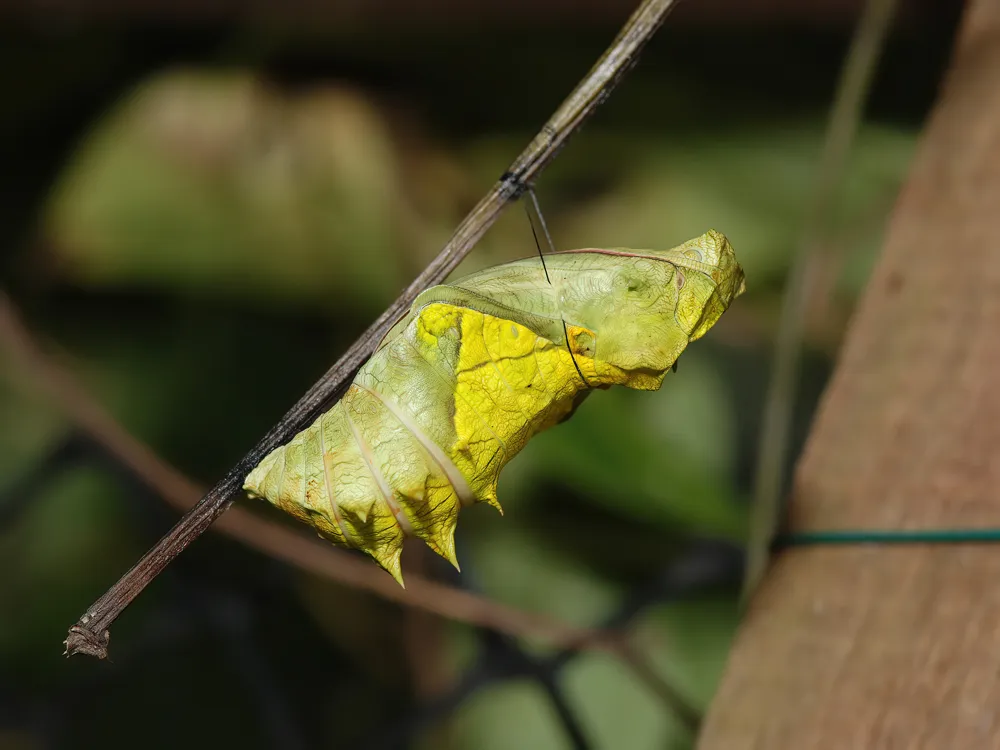 Chrysalis
Hangs upright from a stem, coloured to match its surroundings.
Photographed in Singapore. Cheongweei Gan, iNaturalist, CC BY 4.0
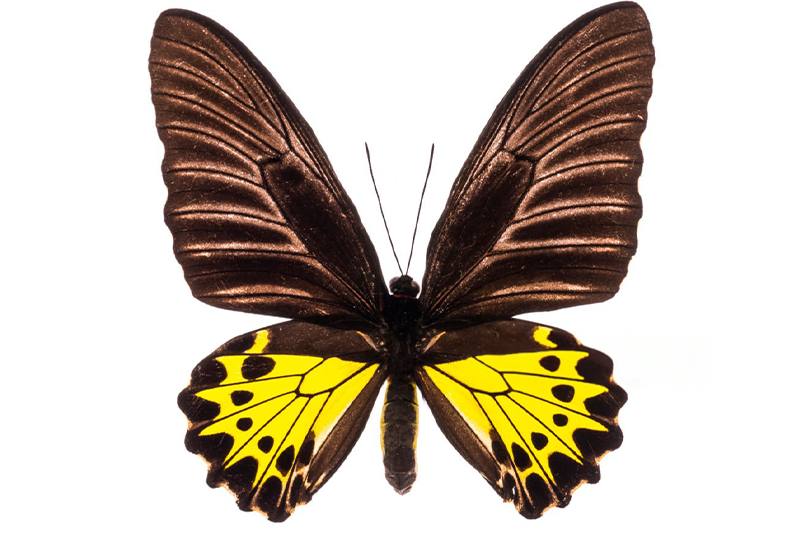 Adult butterfly
A glider of the canopy. Males are black and gold; females larger.
Recognising the Common Birdwing
Look up first. The Common Birdwing glides high, on broad wings that seem too big for its body. In flight you see black forewings and a flash of gold behind them.
The male is velvet black, with pale veins running through the forewing and hindwings of pure, silky gold. The female is larger still. Her golden hindwings carry a row of black spots, so she looks heavier and a little paler than he does.
Few butterflies here come close to its size. If you are unsure, the size alone usually settles it.
The vine and the caterpillars
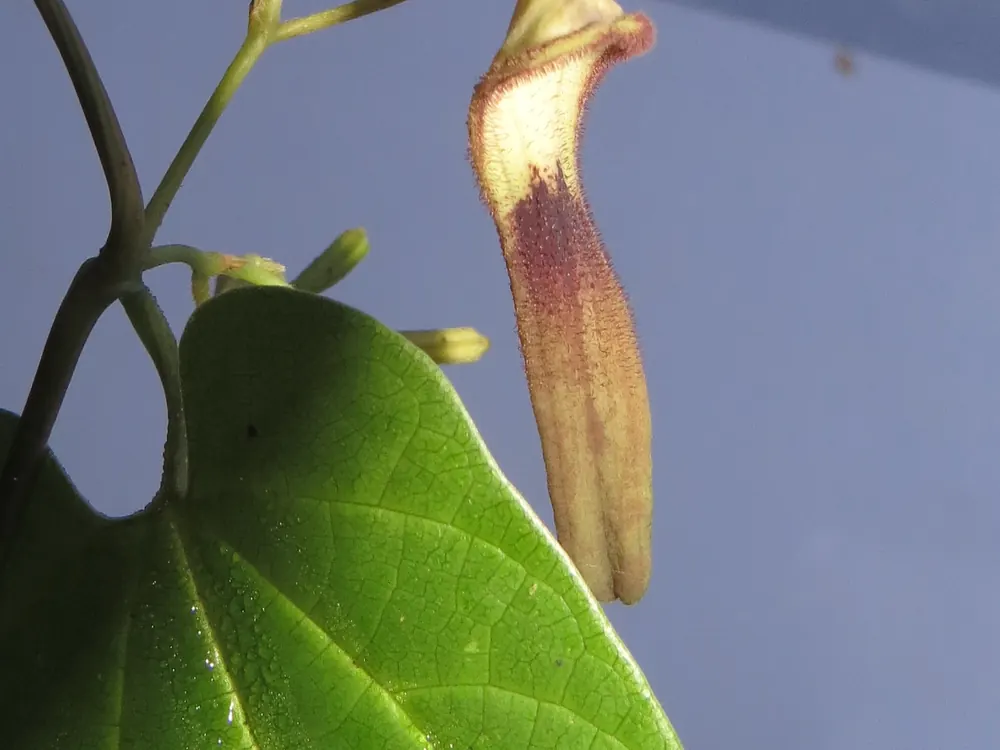
A female birdwing lays her eggs only on Aristolochia, the Dutchman's pipe vine. Without that vine there is no next generation, so we grow it on purpose and leave wild corners uncut.
The vine is toxic. The caterpillars eat it and keep the poison in their bodies, which makes both the caterpillar and the adult unpalatable to predators.
The caterpillars are dark and fleshy, with soft spines along the back, and they eat steadily. The chrysalis hangs upright from a stem, coloured to match the browns and greens around it.
How the Common Birdwing lives
It flies strongly, often high, and rides the warm air above the trees. It comes down to feed on flowers such as hibiscus, Ixora and Lantana.
Once she has mated, the female looks for fresh growth on the vine and lays her eggs one at a time. The garden has to hold the vine and the flowers close together, or the butterfly moves on.
The Common Birdwing is a protected species in Indonesia, and birdwings are listed under CITES, which regulates trade in them. A garden that feeds them is a small help to a species that needs it.
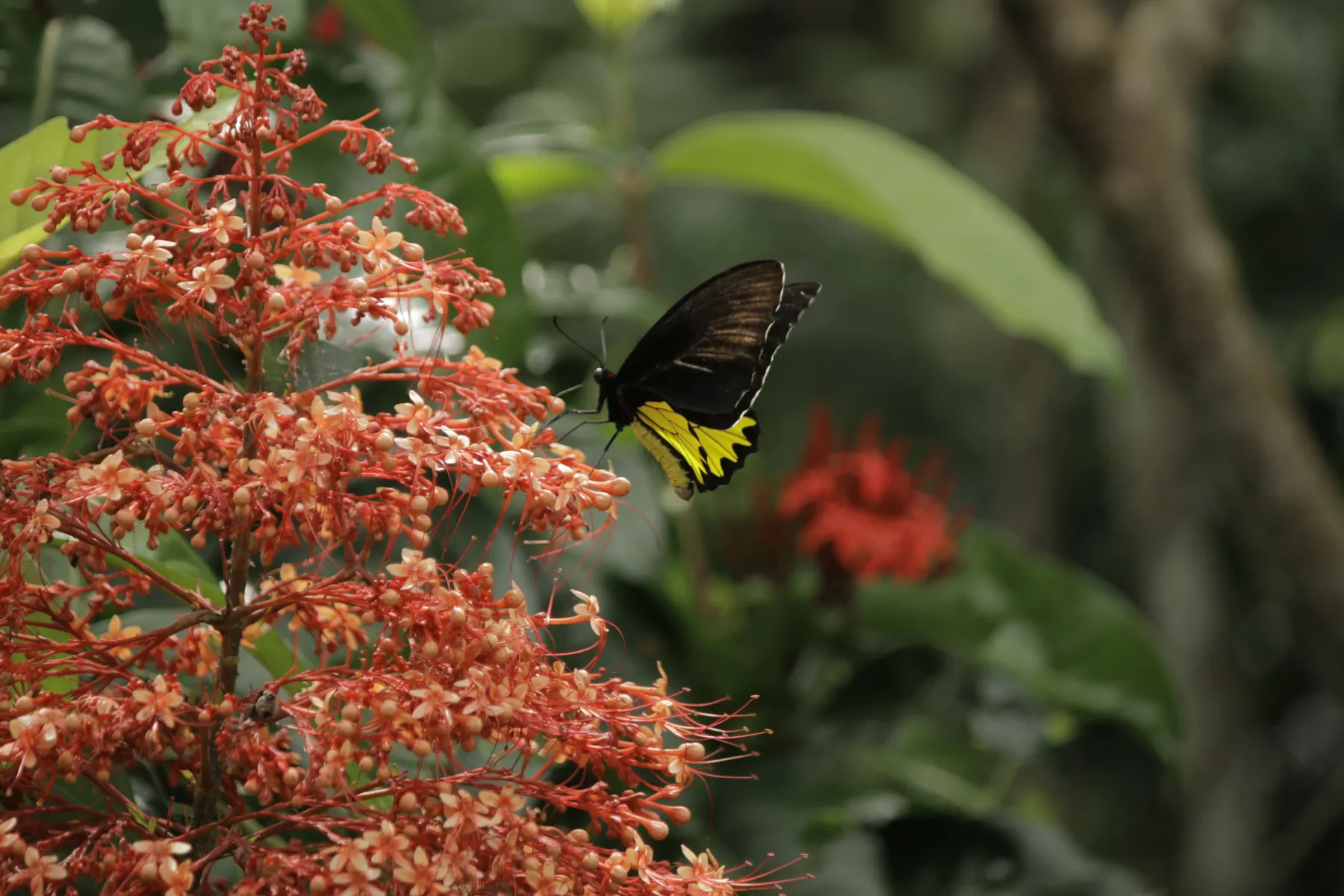
Why we planted the vine
The Common Birdwing is not at Sanggraloka by chance. Birdwings need Aristolochia, and in many gardens that vine is pulled out as a weed. Here we planted it, and we let it climb.
It is the one story in this garden we are quietly proud of. A protected species found what it needed and stayed. We do not breed it or release it, and only keep the vine alive.
A garden of your own can begin the same way, with one Aristolochia and a few flowering shrubs. Check which species are native where you live, and ask a local nursery.
Where to look at Sanggraloka
Of the seventeen species we feature, the Common Birdwing is the one we can very nearly promise. It lives in the conservatorium all year, because the vine grows here.
Look up into the canopy first, then lower, near the vine and the flowering shrubs where it comes to feed. We cannot say where it will be on the day.
The conservatorium is open every day, and a guide walks with you at a slow pace. We would be surprised if you saw none, though we will not call it a promise.
Questions about the Common Birdwing
How big is the Common Birdwing?
A wingspan of up to 17 cm makes it one of the largest butterflies in Bali. The female is larger than the male, so she is often the one that makes people stop and point.
Is the Common Birdwing protected?
Yes. It is a protected species in Indonesia, and birdwings are also listed under CITES. Please never touch, net or take one. At Sanggraloka we only look.
Will I see a Common Birdwing at Sanggraloka?
Very likely, though never guaranteed. It is the one species that lives in the garden all year, because we grow the Aristolochia vine its caterpillars need. Every other butterfly here comes and goes as it pleases.
Visiting the conservatorium
- Not staying with us?
- Ask us on WhatsApp
- Ticket
- Ask us on WhatsApp
- Opening hours
- Open daily. Ask us on WhatsApp
- How long
- Ask us on WhatsApp
Related species
Same family or the same host plant.
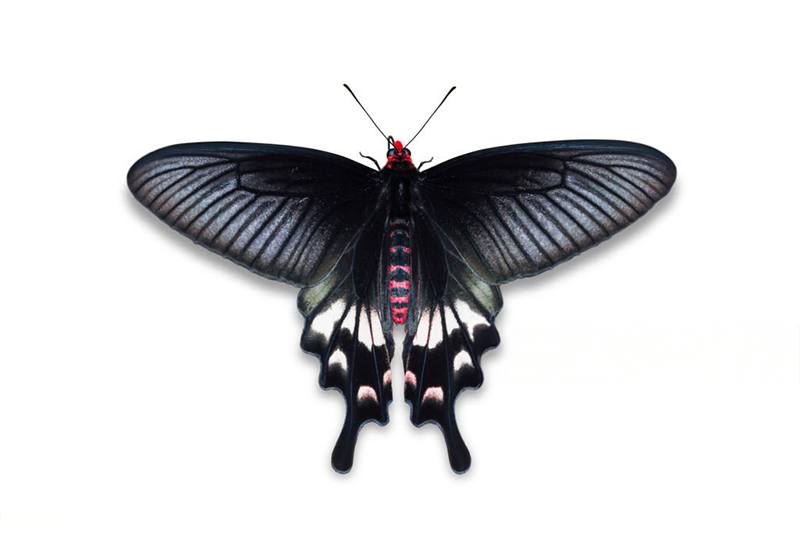 Swallowtails
Common Rose
Pachliopta aristolochiae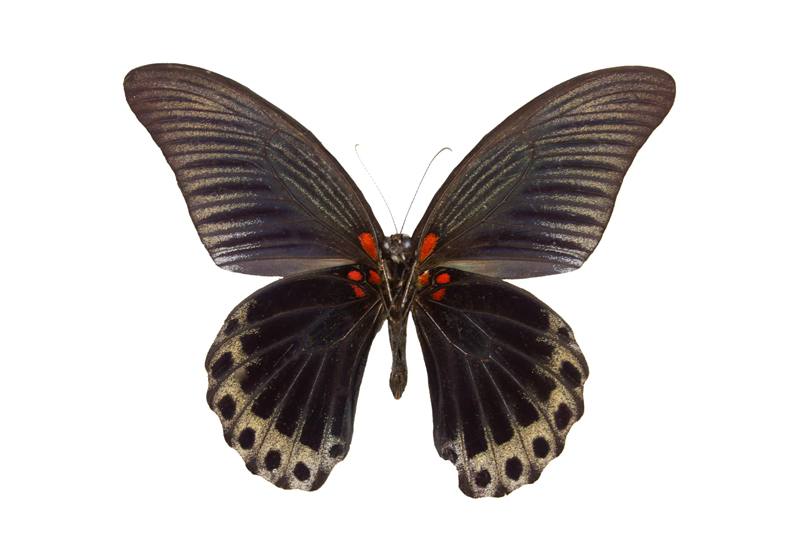 Swallowtails
Great Mormon
Papilio memnon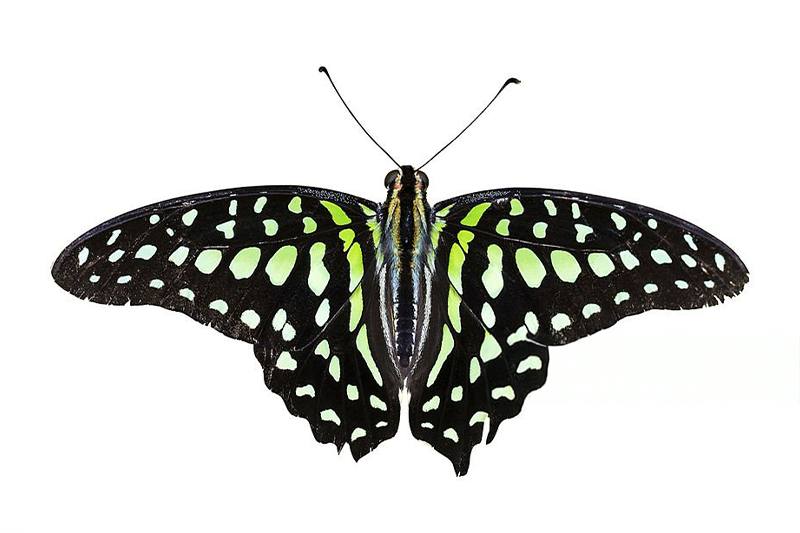 Swallowtails
Tailed Jay
Graphium agamemnon
See the conservatorium yourself
The Butterfly Conservatorium is open daily at Sanggraloka, Bresela. Walk slowly with a guide and see who visits the garden today.