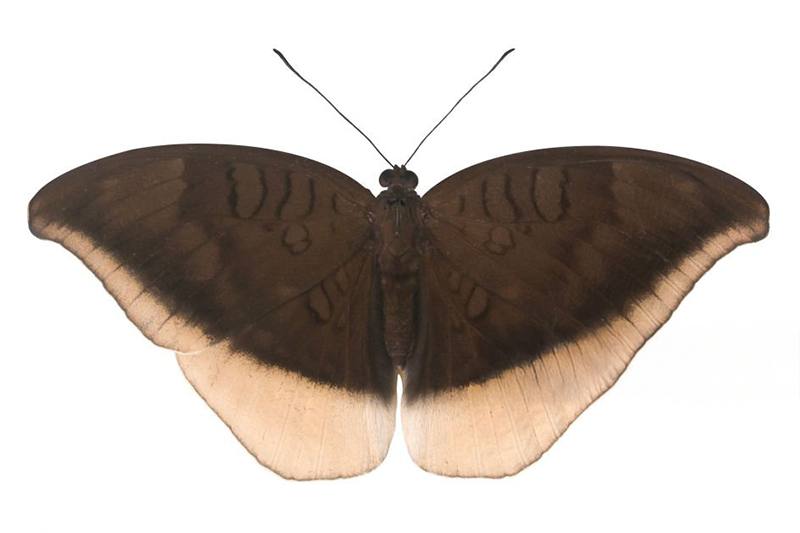
The Giant Crow crosses the garden with a slow, confident flight. It is among the largest of the crow butterflies, with broad, dark brown wings and faint whitish-violet spots. The unhurried flight is a signal that it is unpalatable.
The plant comes first
The life of the Giant Crow
1Host plant
Dogbane family (Apocynaceae), such as Cerbera odollam, the pong pong tree
Look for a large, dark brown butterfly with faint whitish-violet spots, flying leisurely and rather low. It does not dart. It carries on in a straight line.
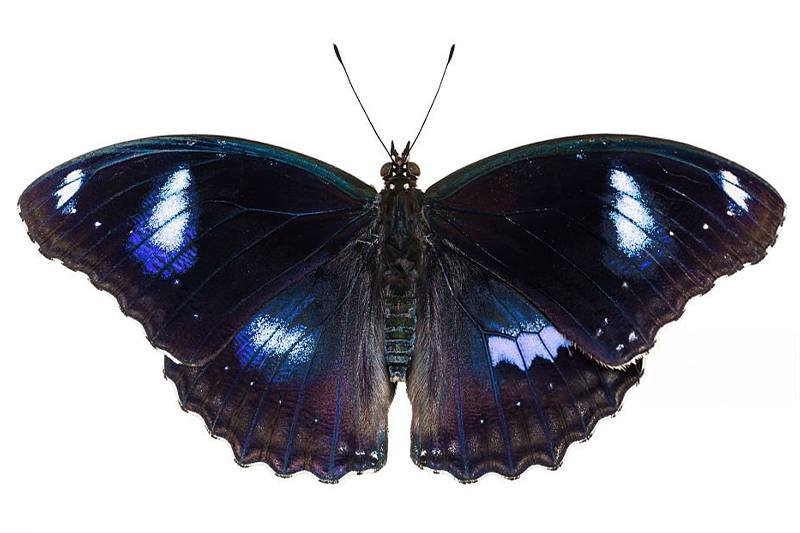
That calm is a signal to predators. Crow butterflies are poisonous, and others, such as the female Great Eggfly, have learned to look like them.
Look at the pale spots. They sit in a loose arc across the dark brown of the upper wing, and in good light they take on a violet tint.
The milkweed family
The Giant Crow is a milkweed butterfly. Its toxic defence comes from its food as a caterpillar, which eats plants of the dogbane family, Apocynaceae, such as the native Cerbera odollam, the pong pong tree.
A wild, organic garden means these host plants are protected, not cleared. We think of them as the quiet work behind a very large butterfly.
How it lives
The flight is slow and sure. Crow butterflies are also known to take up chemicals from certain wilting plants, which is one reason you may see them near ground that others ignore.
The presence of a Giant Crow is a sign of a balanced garden, in which the host plants have been left to grow.
Crow butterflies often glide at the height of a shrub or a low tree, with little effort. They are not shy, so a patient walker can sometimes get close.
The crows of the garden
Crow butterflies are a group of dark, slow-flying butterflies named for their colour. The Giant Crow is one of the largest. Their protection comes from the poison of their host plants, and it is so good that other butterflies copy it.
The female Great Eggfly and some palmfly females borrow the look of a crow to pass unharmed.
This is useful to know in the field. A slow dark butterfly with pale spots, flying steadily, is likely the real thing. A quicker one with the same spots may be a copy.
Where to look at Sanggraloka
Look for a dark shape moving slowly at the height of a person, along the shady edges of paths and near flowering trees.
Where the host trees are is where the Giant Crow will be, but it keeps its own schedule. We make no promise.
Questions about the Giant Crow
Is the Giant Crow poisonous?
Yes. The caterpillars eat toxic plants of the dogbane family and store the poison, so the adult is unpalatable to predators. It poses no danger to people.
Why do other butterflies copy it?
Predators learn to avoid the Giant Crow. Species such as the female Great Eggfly have evolved similar colours and gain protection from that learning, without needing to be poisonous themselves.
What is the pong pong tree?
Cerbera odollam is a tree of the dogbane family. The Giant Crow's caterpillars feed on it, and all parts of the tree are toxic, which is where the caterpillar finds its own protection.


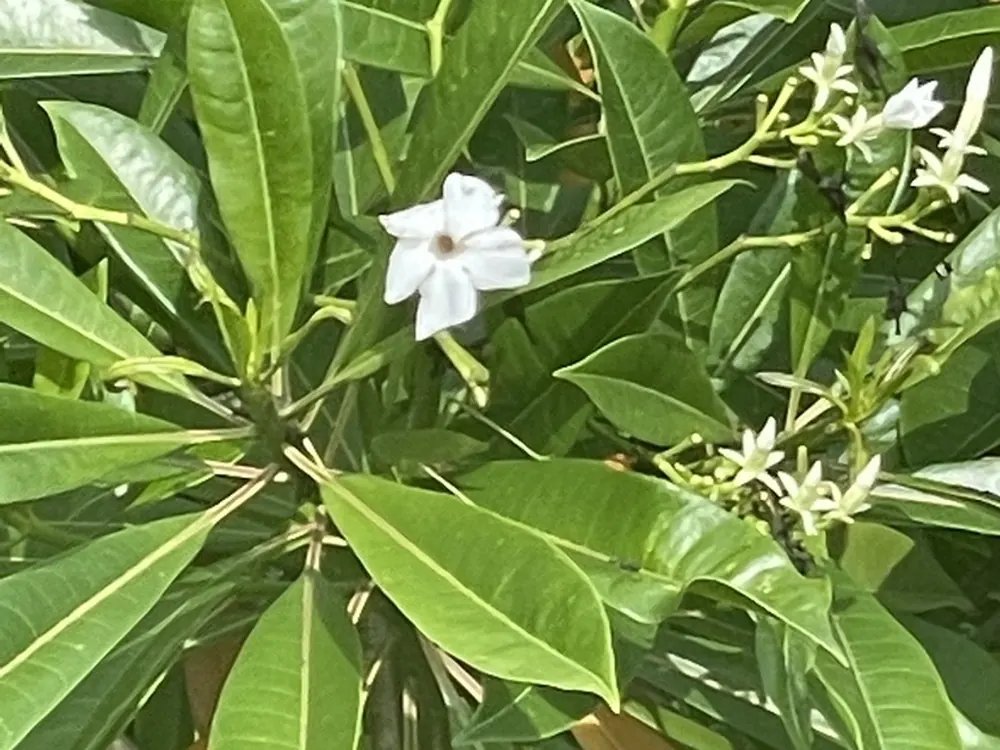 Host plant
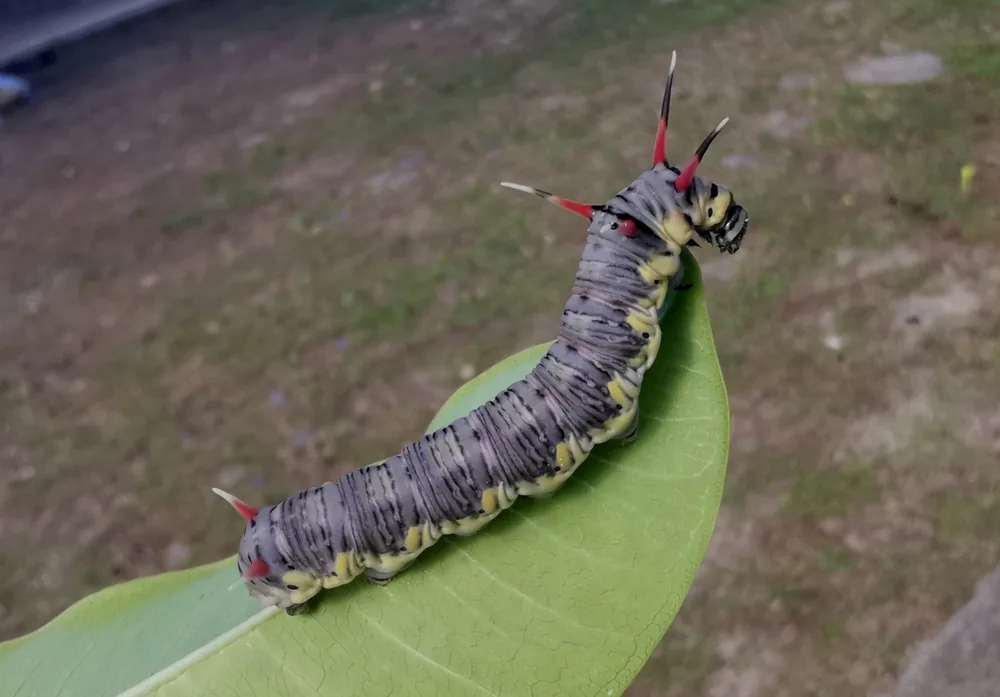 Caterpillar
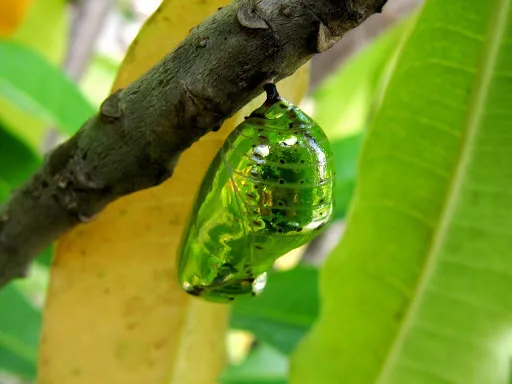 Chrysalis
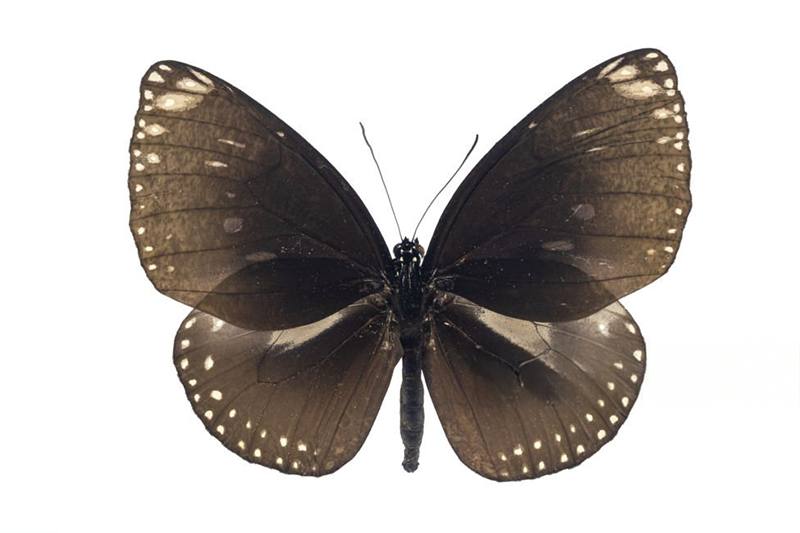 Adult butterfly
 Brush-footed
 Brush-footed
 Brush-footed