

Field card · Butterfly Conservatorium at Sanggraloka
Common Rose (Pachliopta aristolochiae)
Papilionidae (swallowtails)
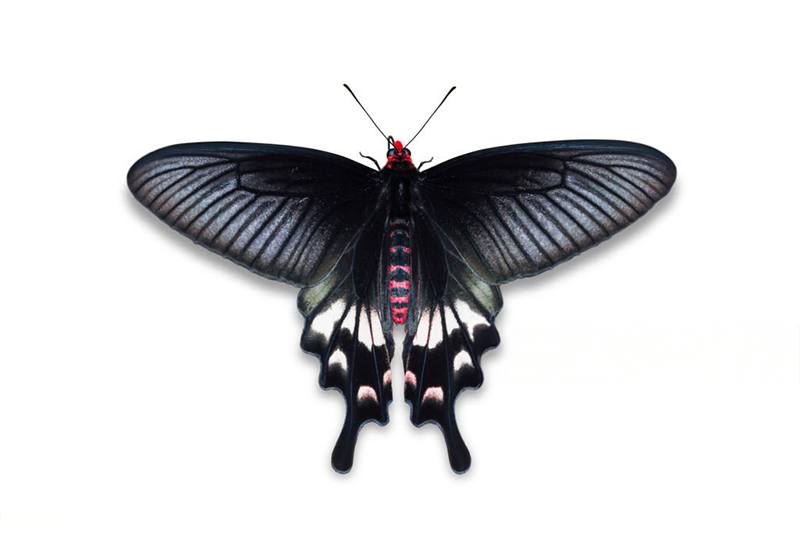
A black-winged butterfly with a red body and red crescents on its hindwings is likely the Common Rose. Its colours are a warning. The Common Rose is poisonous, and predators learn quickly to leave it alone.
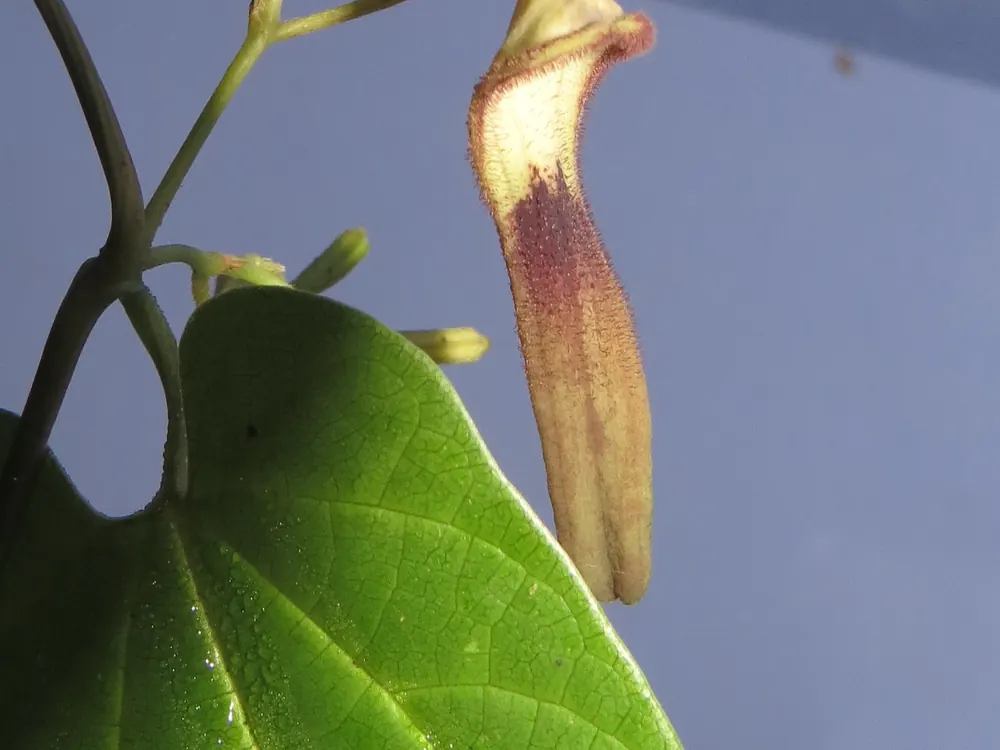
The plant comes first
The life of the Common Rose
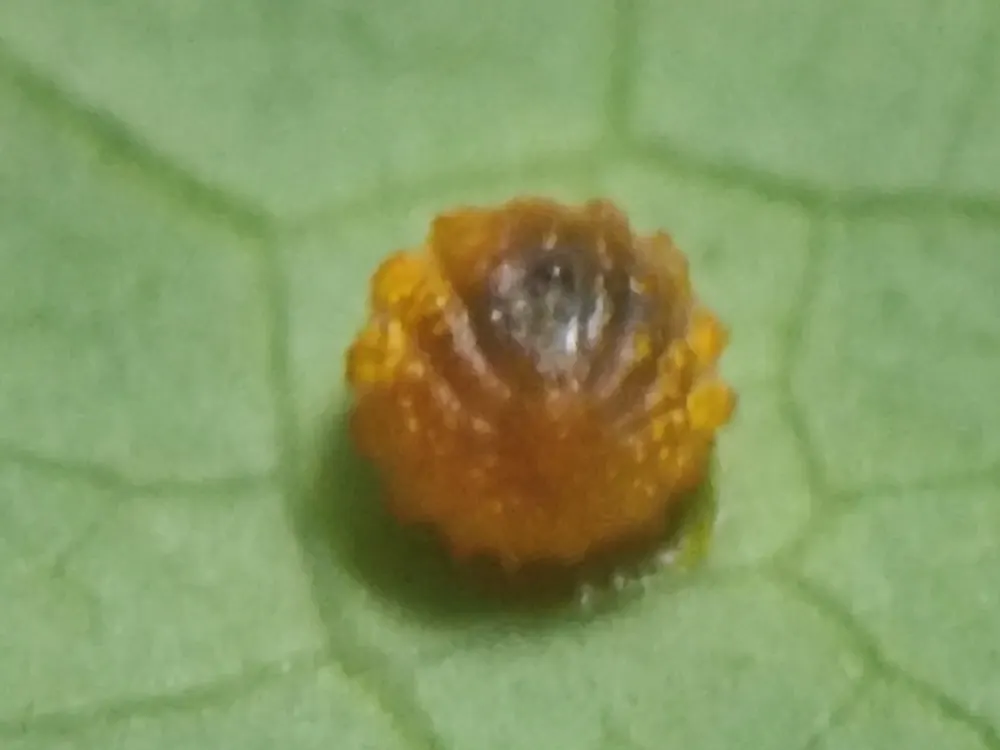
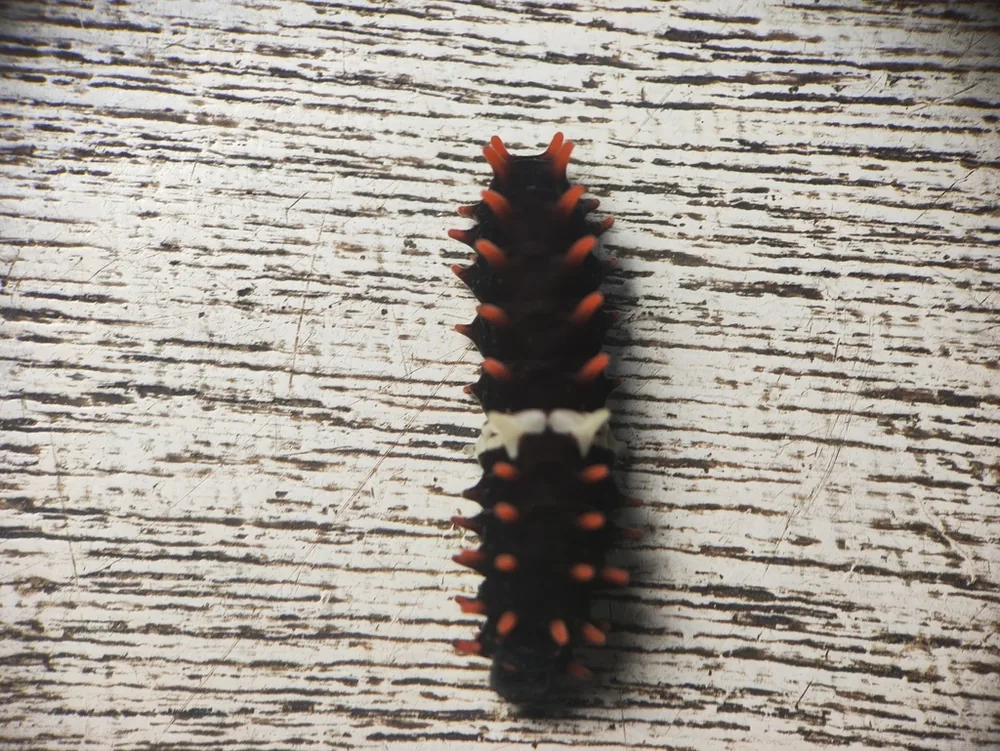 Caterpillar
Reddish, with fleshy tubercles. Stores the vine's toxins for life.
Photographed in India. Ashwin A, iNaturalist, CC BY 4.0
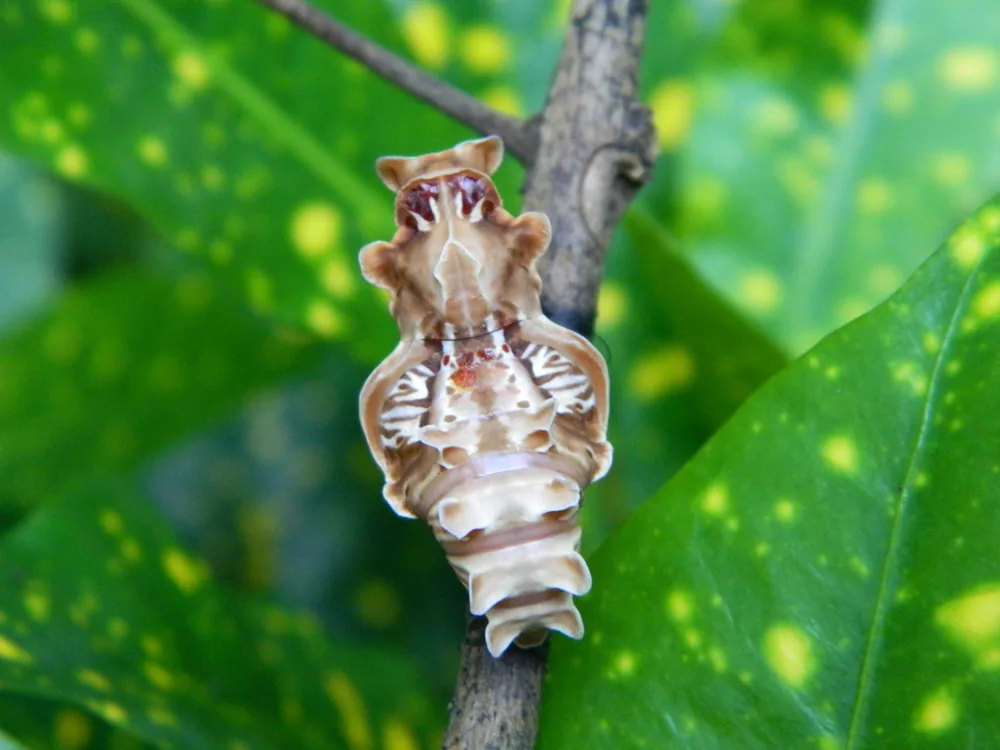
 Adult butterfly
Black, with a red body and red crescents. A slow, unworried flier.
Recognising the Common Rose
Look for black wings, bright red crescents on the hindwings and a red body. The red is the signal. It tells a predator that this butterfly is not worth eating.
It flies without hurry, often in the open and near flowers. A butterfly that is not afraid of being seen is usually a butterfly that has no need to be.
It is a medium-sized swallowtail, smaller than the Common Birdwing, and it takes nectar from flowers at the edge of the garden.
The vine and the poison
The caterpillars feed only on the toxic Aristolochia vine, the same plant the Common Birdwing needs. They store the plant's toxins, and keep them for life.
This butterfly deters predators so well that harmless species have evolved to copy it. One form of the female Common Mormon is among them.
The vine is the only thing the caterpillar will eat, so the butterfly appears wherever Aristolochia grows. A single vine left to climb a fence can be enough to bring it back.
How it lives
Because it is poisonous, it can afford to fly slowly and settle in plain view. You may see it feeding at flowers, quietly, for some time.
It is common in gardens in the region, wherever its vine grows within reach.
The model and its mimics
A poisonous butterfly teaches predators a lesson, and other butterflies profit from it. Biologists call the copies mimics and the original the model. The Common Rose is a well-known model.
One form of the female Common Mormon copies it. So do some forms of the female Great Mormon. A bird that learned to avoid the Rose will usually avoid them too.
That is why a black butterfly with red on it deserves a second look in this garden. It may be the Rose, or it may be one of the butterflies pretending.
Where to look at Sanggraloka
Protecting the wild vines and untouched corners of our organic garden gives it somewhere to live. Look near the Aristolochia and the flowers beside it.
The Common Rose is a regular. Whether one flies past on your visit is up to the butterfly.
Stand quietly near the vine and the flowers beside it. The Common Rose rarely hurries, so there is time to look at the red, and to see whether a female is laying.
Questions about the Common Rose
Is the Common Rose poisonous?
Yes. Its caterpillars eat the toxic Aristolochia vine and keep the poison in their bodies for life, so the adult butterfly is unpalatable to predators.
Why is its body red?
The red body and the red crescents on the wings act as a warning to predators. Other butterflies have evolved to copy that look, so a red mark alone does not prove it is a Rose.
Does it share its vine with other butterflies?
Yes. The Common Birdwing also feeds on Aristolochia, so the two are often found where the vine grows. A garden that keeps the vine alive tends to hold both of them, along with their caterpillars.
Visiting the conservatorium
- Not staying with us?
- Ask us on WhatsApp
- Ticket
- Ask us on WhatsApp
- Opening hours
- Open daily. Ask us on WhatsApp
- How long
- Ask us on WhatsApp
Related species
Same family or the same host plant.
 Swallowtails
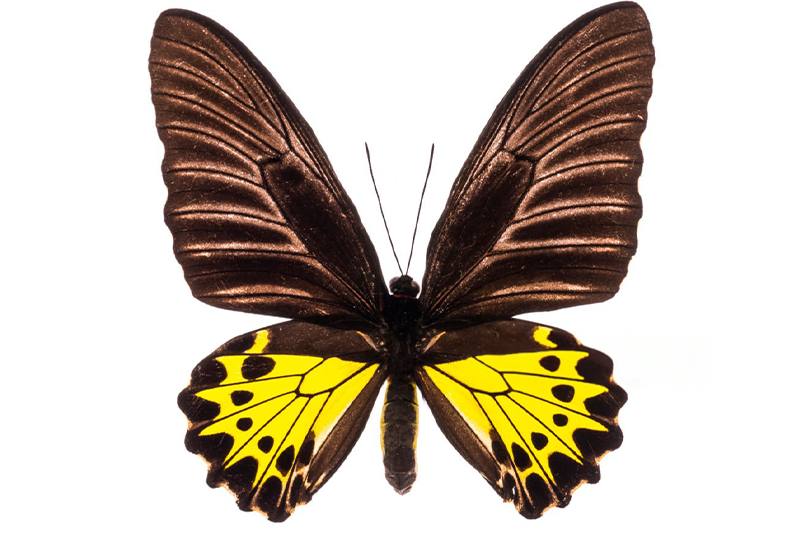
Common Birdwing
Troides helena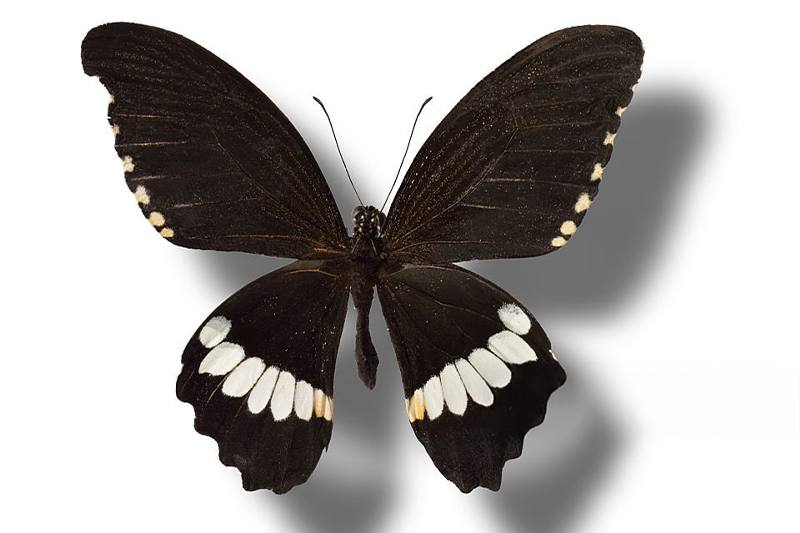 Swallowtails
Common Mormon
Papilio polytes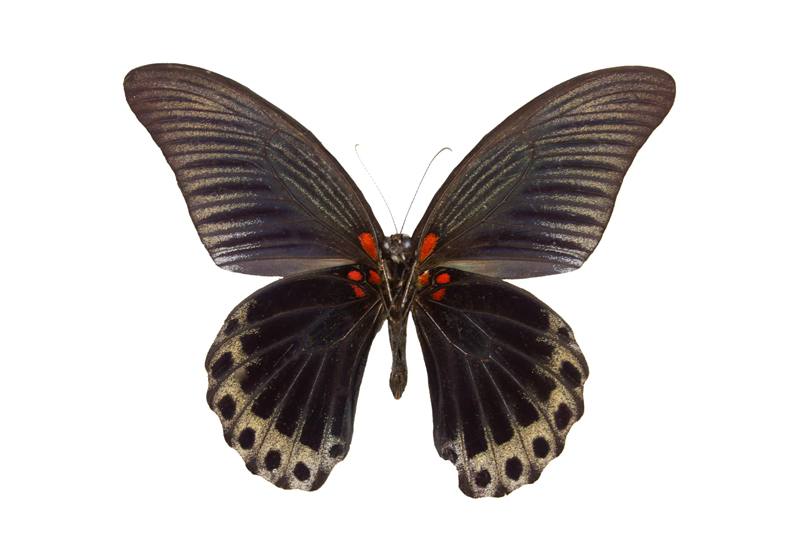 Swallowtails
Great Mormon
Papilio memnon
See the conservatorium yourself
The Butterfly Conservatorium is open daily at Sanggraloka, Bresela. Walk slowly with a guide and see who visits the garden today.