

Field card · Butterfly Conservatorium at Sanggraloka
Lime Butterfly (Papilio demoleus)
Papilionidae (swallowtails)
The Lime Butterfly is one of the most common and active butterflies in the garden. It is a quick swallowtail, black with pale yellow spots, and it has no tails. A red spot sits near the tail end of each hindwing.
The plant comes first
The life of the Lime Butterfly
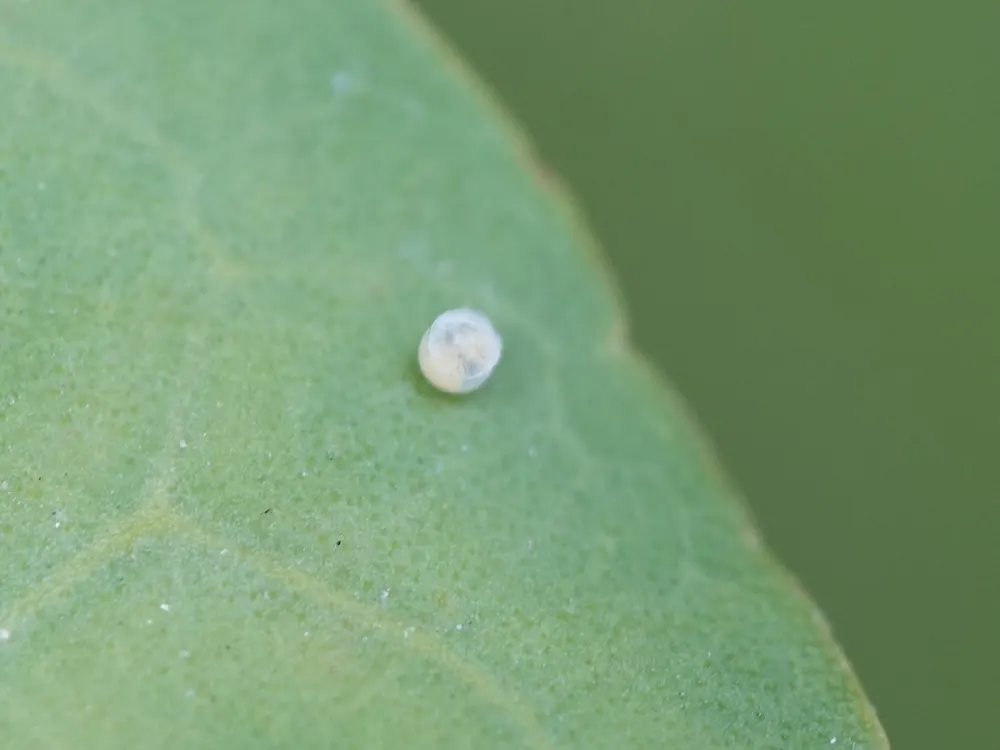 Egg
A single egg on each flush of new citrus leaves.
Photographed in India. Aparna Shyam, iNaturalist, CC BY 4.0
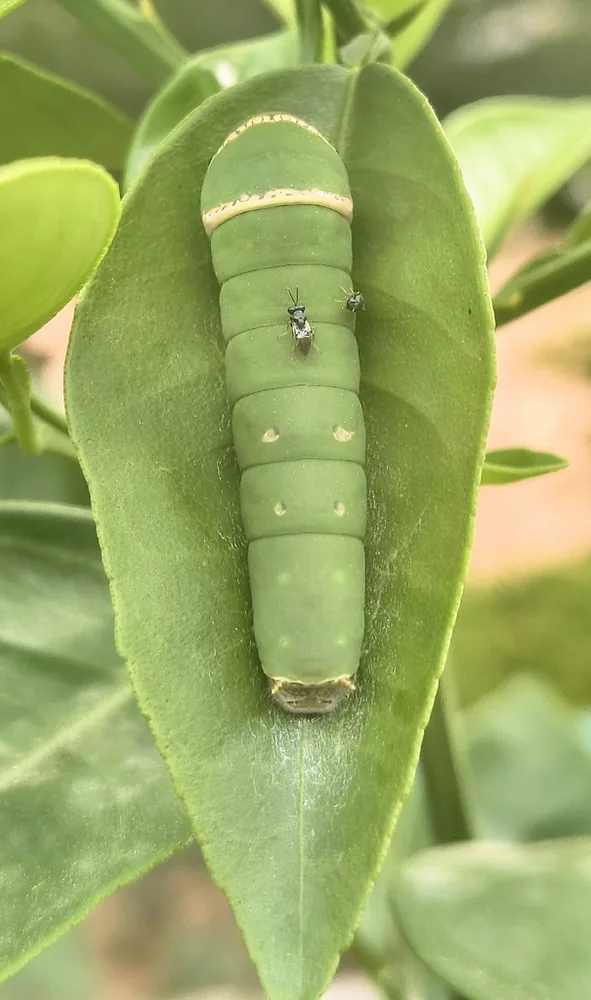 Caterpillar
Bird-dropping look when small. Bright green and snake-like at the end.
Photographed in India. Chandu Bandi, iNaturalist, CC BY 4.0
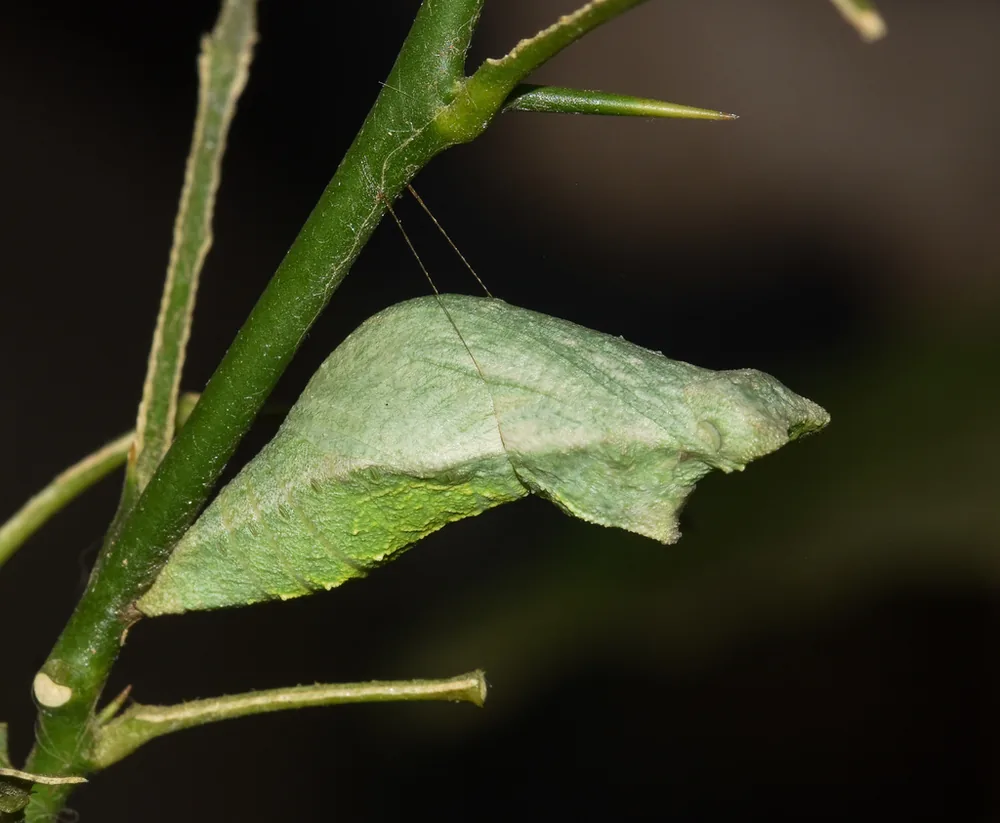 Chrysalis
Held upright by a silk girdle, coloured like a twig or leaf.
Photographed in India. Rejoice Gassah, iNaturalist, CC BY 4.0
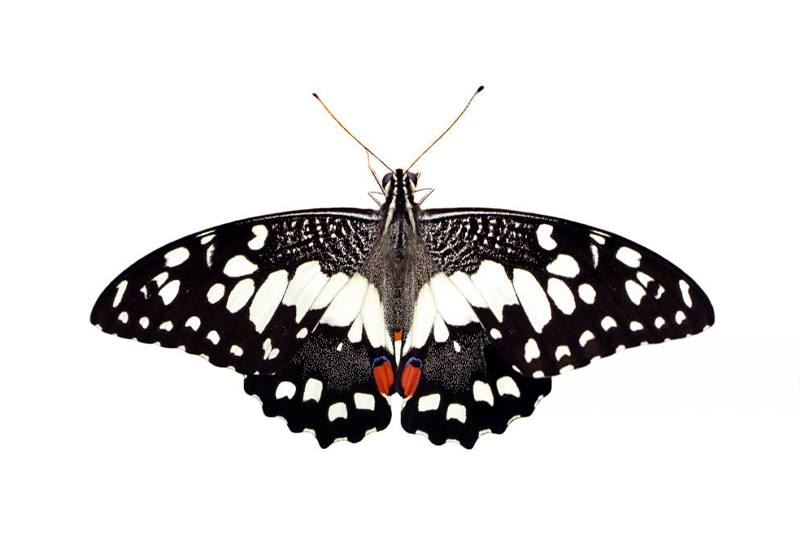 Adult butterfly
Black with pale yellow spots and a red spot on each hindwing. Fast.
Recognising the Lime Butterfly
Look for a complex pattern of black and pale yellow spots, and a swallowtail with no tails at all. On the hindwing there is a striking red spot near the lower edge.
It is also called the Lemon Butterfly. It is a fast flier, rarely still for long, and it often stays low over sunny ground.
Raised on citrus
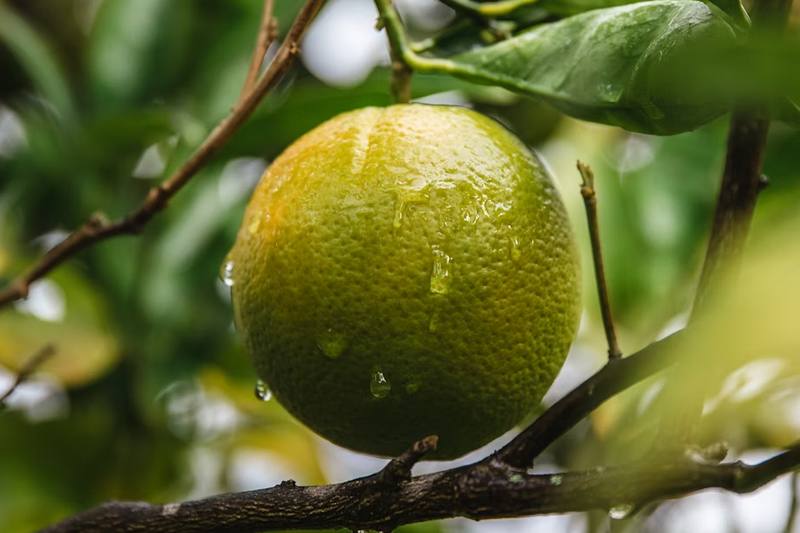
The Lime Butterfly gets its name from its life's passion: citrus. In many parts of the world it is a pest, because its caterpillars can strip the leaves of young lime, lemon and orange trees.
In a mixed organic garden the damage stays small, and we would rather share a leaf. We grow a wide range of citrus for our kitchens, and the same trees host the butterfly.
Young caterpillars look like bird droppings. They then change into the bright green, snake-like caterpillar of the last stage.
How it lives
It flies fast and low, and it comes to flowers in full sun. A female moves from tree to tree, laying a single egg on each flush of new leaves.
It tends to appear when new citrus leaves open, so a freshly flushed tree is worth a look.
A female may lay many eggs over several days, one on each new shoot. A single tree can carry caterpillars of different sizes at the same time, from tiny to fully grown.
Telling it from the Common Mormon
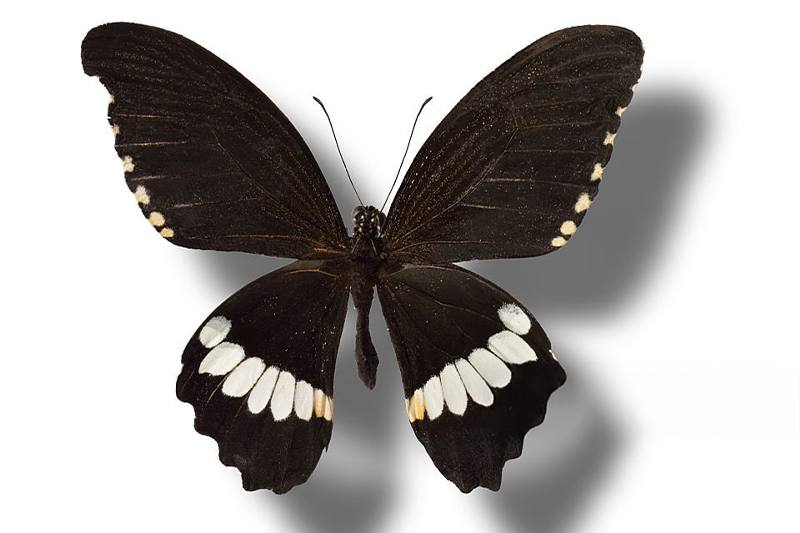
From a distance the Lime Butterfly can be mistaken for a Common Mormon, since both are black and both love citrus. The Lime Butterfly is spotted with pale yellow, not banded with white.
It also has no tails, while the male Common Mormon has short ones.
If a small black and yellow swallowtail is working its way over the new leaves of a lime tree, laying a single egg on each, it is almost certainly this one. Watch which leaves it chooses, and look for the egg afterwards.
Where to look at Sanggraloka
Look in the open, sunny parts of the farm, near the lime and the other citrus trees. Watch for small, fast, yellow-spotted shapes at the height of your knees.
It is one of the likelier butterflies on any day, though we do not promise it. It is wild, and it goes where the new leaves are.
Questions about the Lime Butterfly
Why is it called the Lime Butterfly?
Its caterpillars feed on citrus, and lime is a favourite, along with lemon and orange. In orchards, where young trees stand close together, it can strip the new leaves.
Is the Lime Butterfly harmful in the garden?
In orchards it is treated as a pest, but in a mixed organic garden like ours the damage stays small. We would rather share a few leaves than spray them.
How can I tell it from the Common Mormon?
The Lime Butterfly has no tails and is spotted with pale yellow. The Common Mormon is black with a white band on the hindwing, and the male has short tails.
Visiting the conservatorium
- Not staying with us?
- Ask us on WhatsApp
- Ticket
- Ask us on WhatsApp
- Opening hours
- Open daily. Ask us on WhatsApp
- How long
- Ask us on WhatsApp
Related species
Same family or the same host plant.
 Swallowtails
Common Mormon
Papilio polytes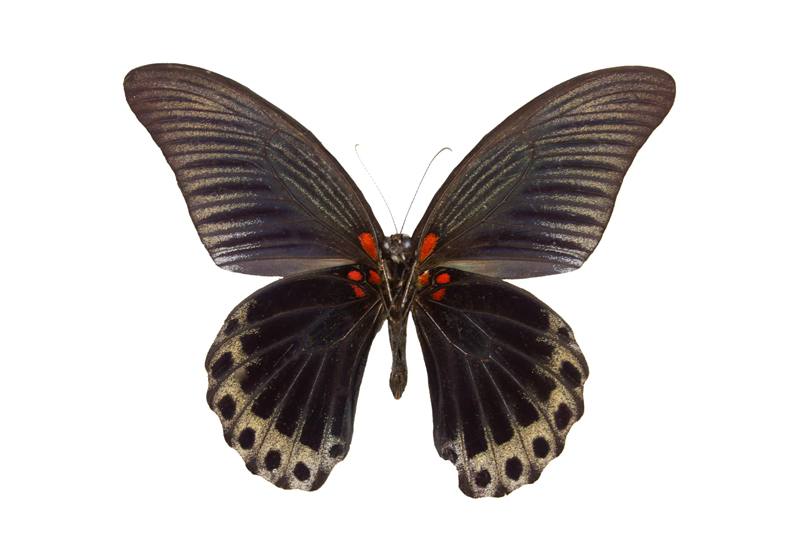 Swallowtails
Great Mormon
Papilio memnon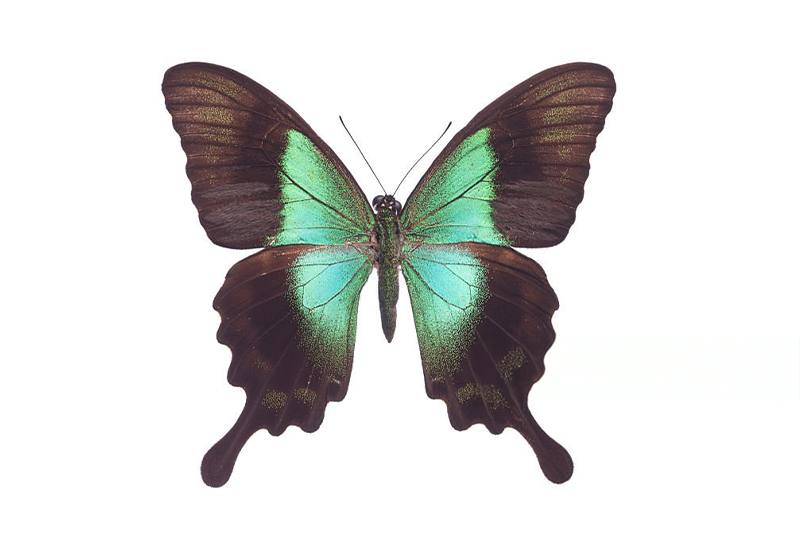 Swallowtails
Bali's Emerald Butterfly
Papilio peranthus
See the conservatorium yourself
The Butterfly Conservatorium is open daily at Sanggraloka, Bresela. Walk slowly with a guide and see who visits the garden today.