

Field card · Butterfly Conservatorium at Sanggraloka
Red Helen (Papilio helenus)
Papilionidae (swallowtails)
The Red Helen is a large, dark swallowtail that moves through the shade without hurry. Its red is hidden. It shows as crescent-shaped marks on the underside of the hindwings, and you see it when the butterfly rests.
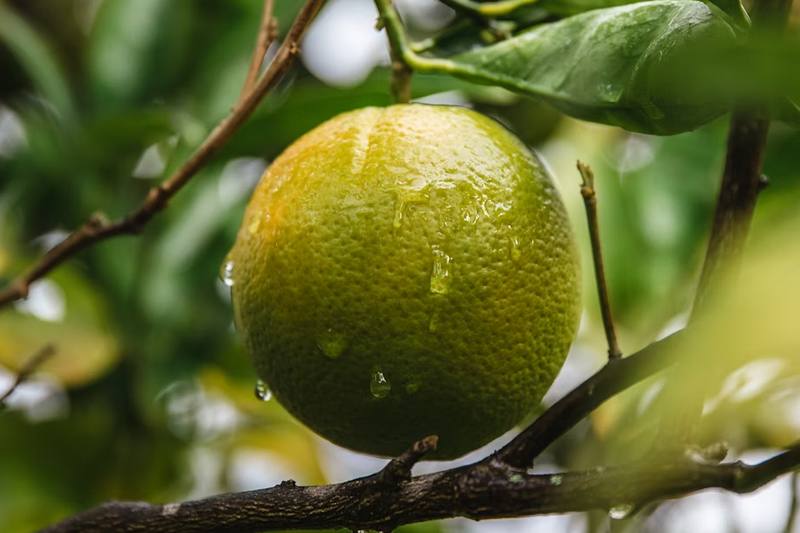
The plant comes first
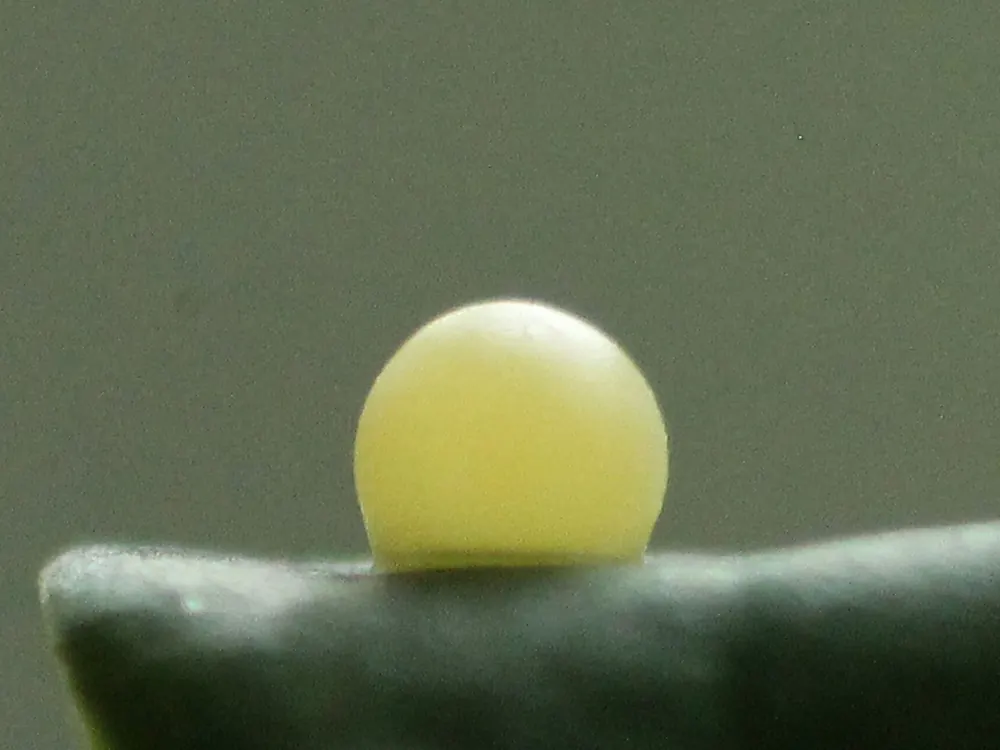
The life of the Red Helen
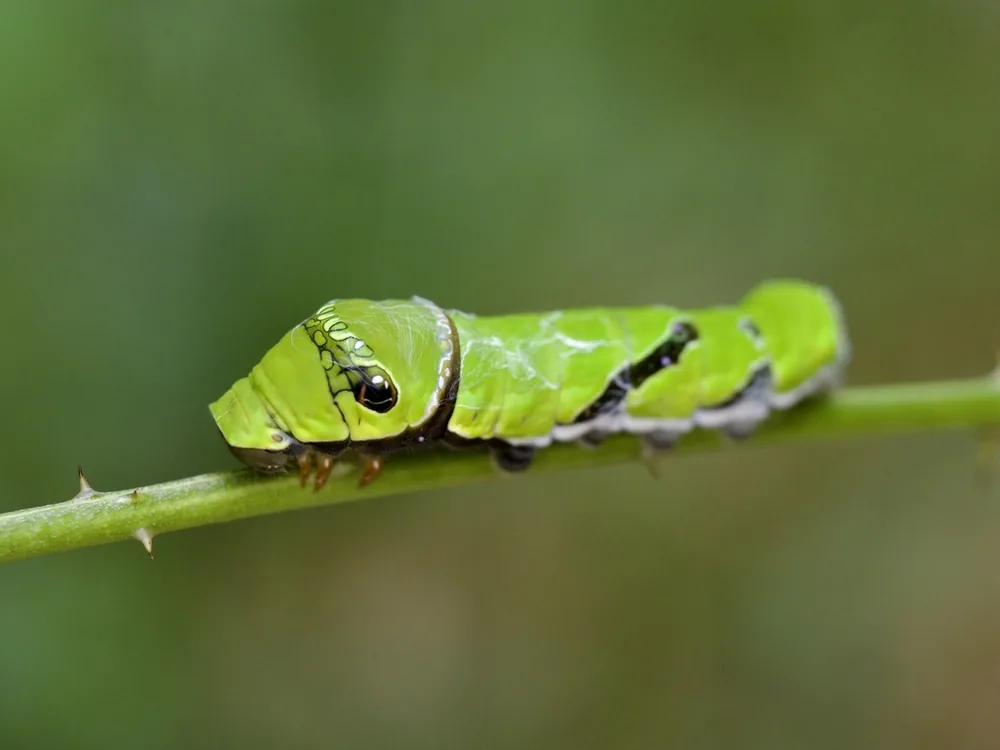 Caterpillar
Bright green, shaped like a leaf or a small snake's head.
Photographed in Japan. りなべる, iNaturalist, CC BY 4.0
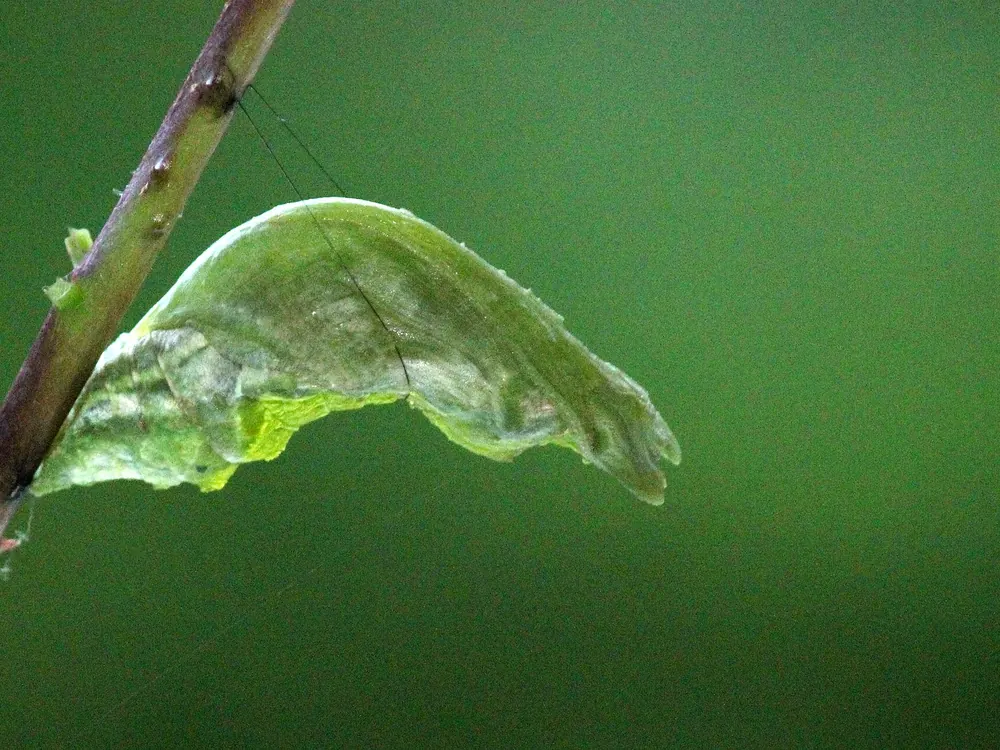 Chrysalis
Held upright by a silk girdle, coloured like a twig or leaf.
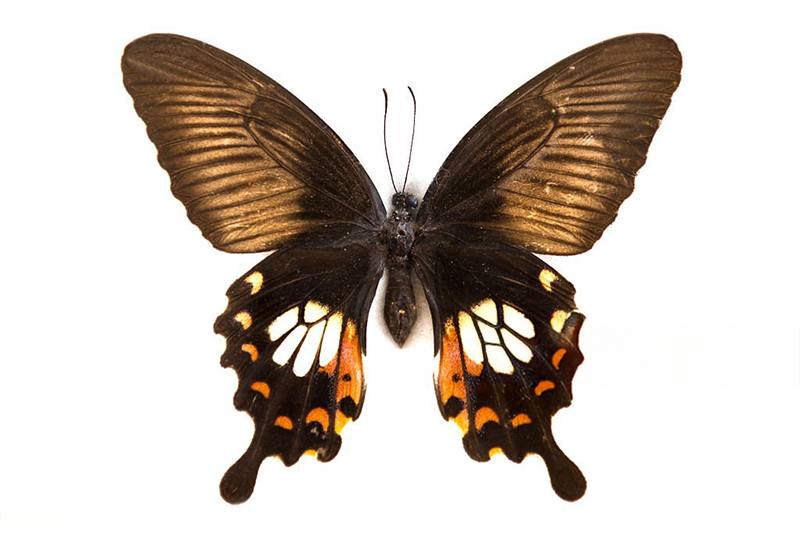 Adult butterfly
Dark and large. Red crescents show on the underside when it rests.
Recognising the Red Helen
At first glance the Red Helen is a large, elegant, brownish-black swallowtail. From above there is little to see, apart from a pale patch on the hindwing.
Its name comes from the underside. Deep red crescents mark the hindwing, and they become visible only when the butterfly rests with its wings closed.
It is a relative of the Great Mormon and the Common Mormon, and the three often share a garden.
In flight, the pale patch on the hindwing shows as a small flash against the dark body. It is the first thing the eye catches in the shade.
Citrus and the leaf-green caterpillar
The Red Helen is another species that depends on the citrus family, Rutaceae. Our citrus, pomelo and lime trees, planted for the kitchen, serve as its nursery.
The caterpillars are bright green and disguised as a leaf, or as the head of a small snake. Predators hesitate, and a hesitation is often all a caterpillar needs.
How the Red Helen lives
It floats silently through the garden, often in the shade of the trees. It visits flowers, and it flies with a calm that is easy to mistake for ease.
Seen at rest, it shows the red crescents and looks like a different butterfly from the dark glider that arrived.
The Red Helen is large enough to be seen from some distance, though its dark colour makes it easy to lose against the shadows. A butterfly that disappears as you look at it is often this one.
Telling it from the Great Mormon
Dark, large and tailless, the Red Helen looks very like the male Great Mormon at first. The difference is on the hindwing, where the Red Helen carries a pale patch.
If the butterfly rests with its wings closed, turn to the underside. The red crescents settle the question at once.
The two share more than looks. The Red Helen and both Mormons lay their eggs on the same citrus trees, so the farm rows are a good place to compare them.
Where to look at Sanggraloka
Look in the shade around the citrus trees and along the edges of the garden, where the light is broken. Watch the flowers on the path as well.
The Red Helen keeps its own hours, and some days it does not appear. A guide will point it out if one passes.
Questions about the Red Helen
Why is it called the Red Helen?
The name comes from the deep red crescents on the underside of the hindwings. They stay hidden while the wings are open and show when the butterfly rests.
What do Red Helen caterpillars look like?
They are bright green and shaped to look like a leaf, or like the head of a small snake. The disguise works best while the caterpillar sits still on a citrus leaf.
Is the Red Helen related to the Mormons?
Yes. It belongs to the same genus as the Great Mormon and the Common Mormon, and its caterpillars eat the same citrus family plants. That is why the three are often found in the same trees.
Visiting the conservatorium
- Not staying with us?
- Ask us on WhatsApp
- Ticket
- Ask us on WhatsApp
- Opening hours
- Open daily. Ask us on WhatsApp
- How long
- Ask us on WhatsApp
Related species
Same family or the same host plant.
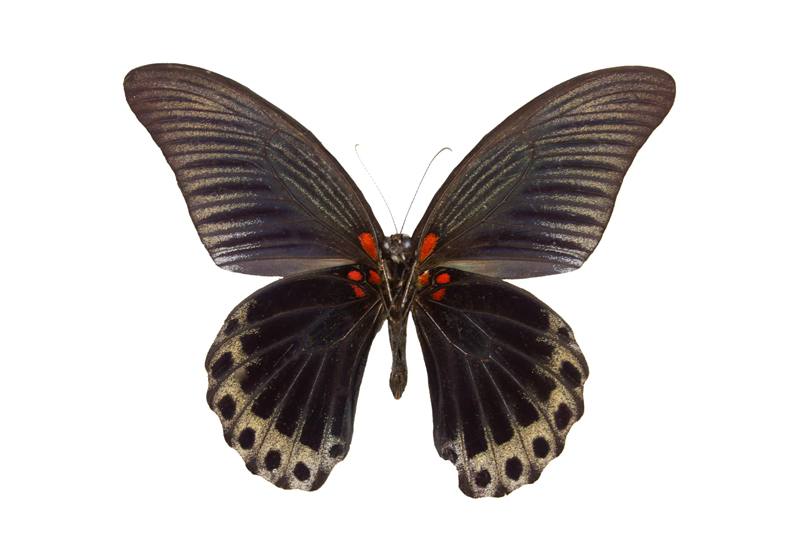 Swallowtails
Great Mormon
Papilio memnon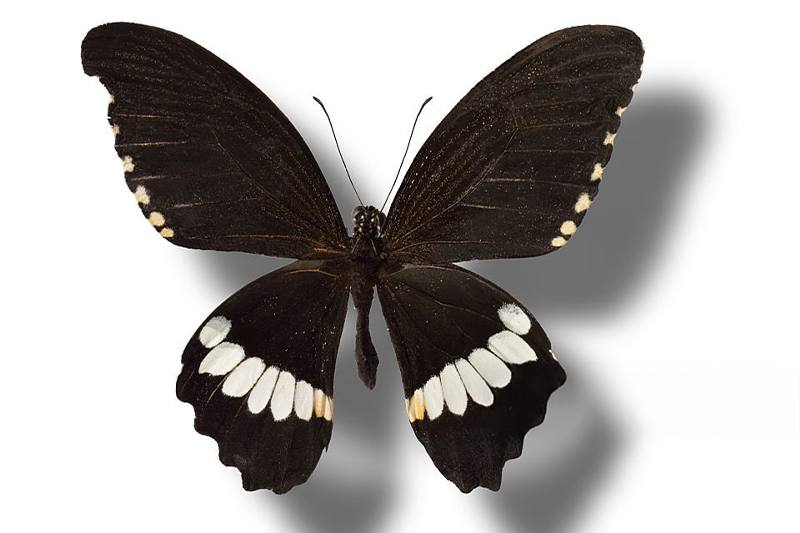 Swallowtails
Common Mormon
Papilio polytes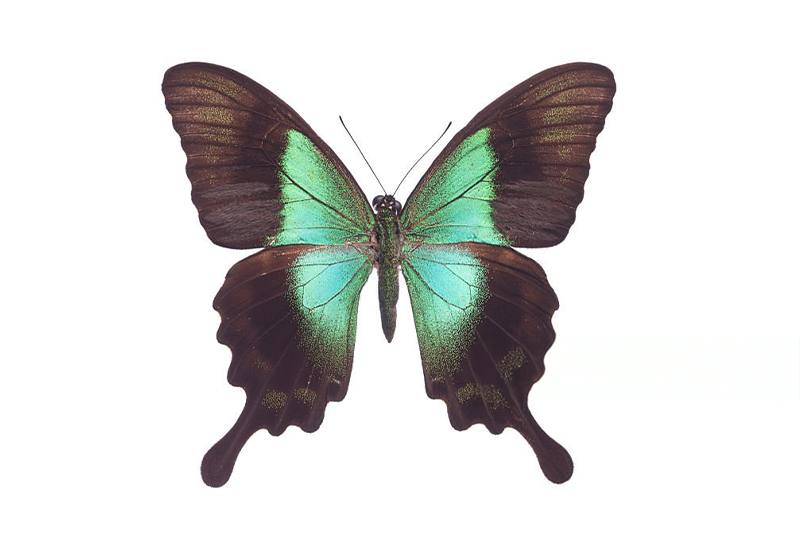 Swallowtails
Bali's Emerald Butterfly
Papilio peranthus
See the conservatorium yourself
The Butterfly Conservatorium is open daily at Sanggraloka, Bresela. Walk slowly with a guide and see who visits the garden today.