

Field card · Butterfly Conservatorium at Sanggraloka
Common Palmfly (Elymnias hypermnestra)
Nymphalidae, Satyrinae (brush-footed)
Flitting through the shaded understory and among the palm groves is the Common Palmfly. It is a butterfly of disguises. The male is dark brown with touches of blue, while the female dresses as a poisonous butterfly.
The plant comes first
The life of the Common Palmfly
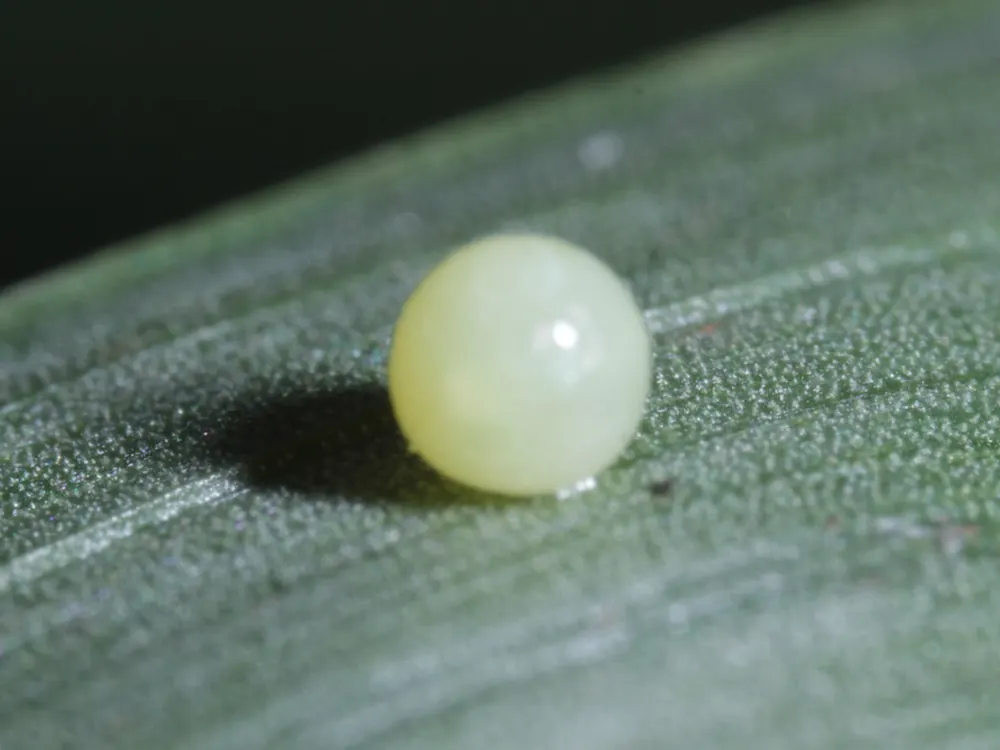 Egg
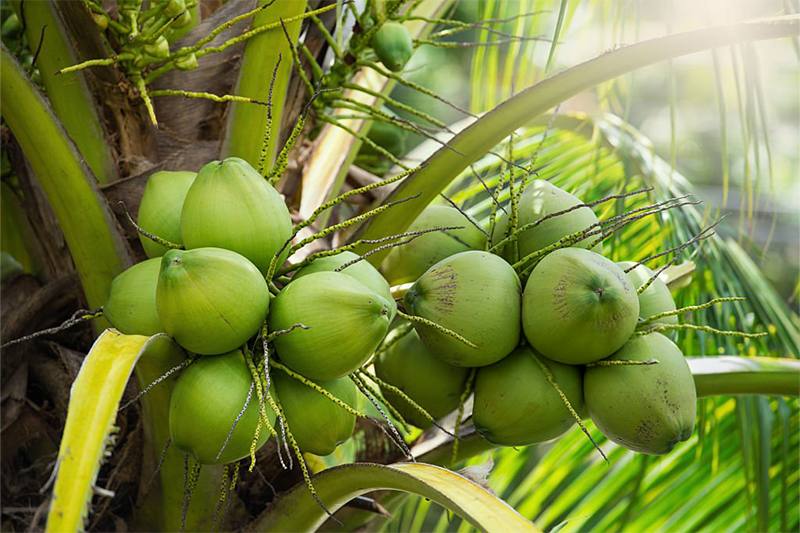
Laid on the fronds of palms, including coconut.
Photographed in Indonesia. Franz Anthony, iNaturalist, CC BY 4.0
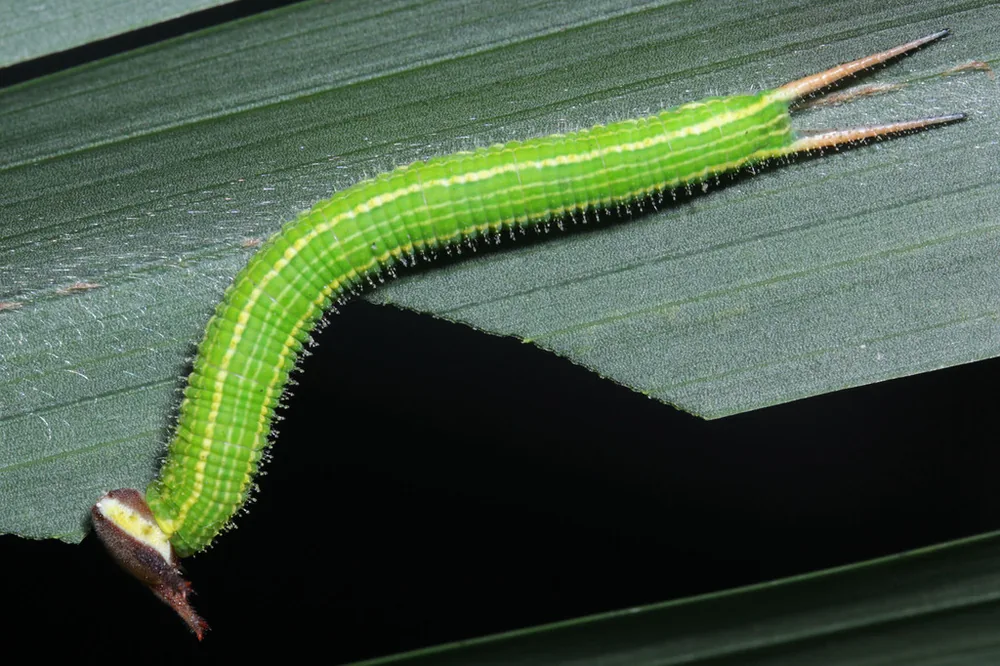 Caterpillar
Green, with a forked tail. Eats palm leaflets.
Photographed in Indonesia. Franz Anthony, iNaturalist, CC BY 4.0
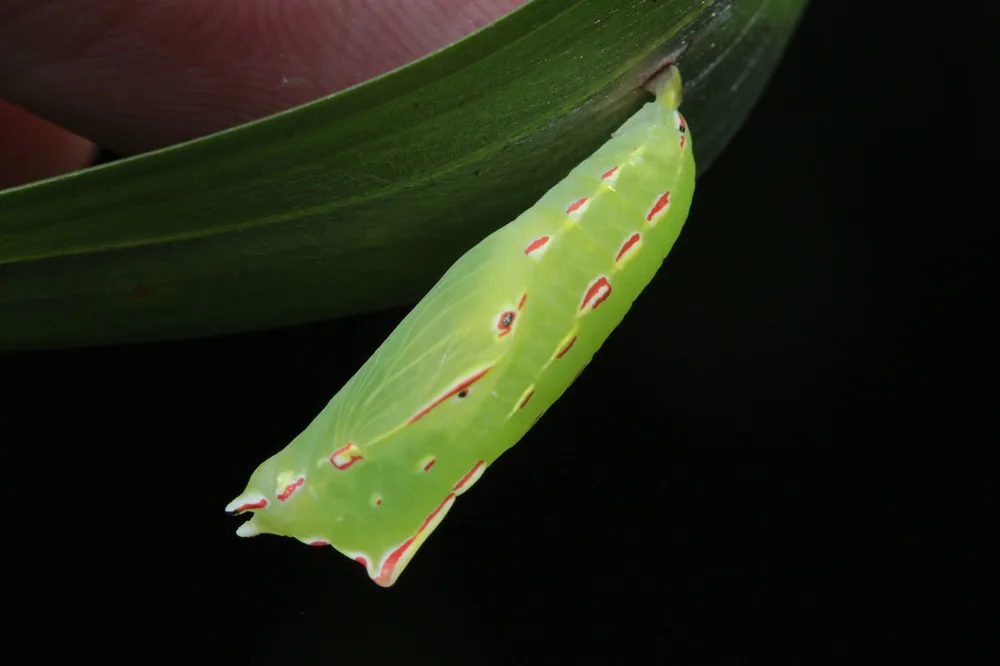 Chrysalis
Hangs head down, green or brown among the fronds.
Photographed in Indonesia. Franz Anthony, iNaturalist, CC BY 4.0
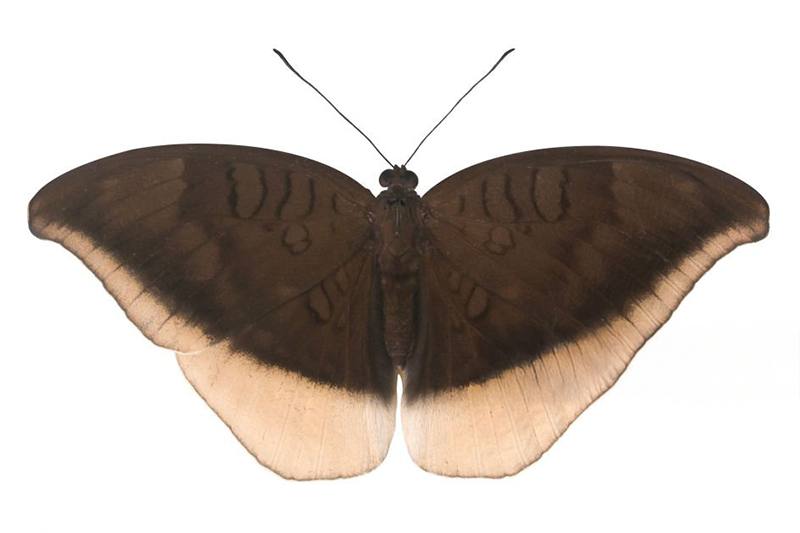 Adult butterfly
Dark males with blue touches. Females mimic poisonous butterflies.
Recognising the Common Palmfly
The male is typically dark brown, with bluish patches near the wingtips and sometimes small orange markings on the hindwings.
The female is the true master of disguise. She mimics toxic danaid butterflies such as the Plain Tiger or the Common Crow, in tawny orange with black borders and white spots, or in dark brown with white spots.
The mimicry is a survival strategy. A predator that has learned to avoid the model passes over the copy.
Palms and the caterpillars
As its name suggests, the Common Palmfly relies on palms of the family Arecaceae. Its caterpillars eat the fronds of palms, including coconut and the ornamental kinds common in Balinese gardens.
The caterpillar is green, with a forked tail, in the manner of its relatives the browns. It sits along the palm leaflet, and it is hard to see.
Palms are a feature of Balinese gardens, and a butterfly that depends on them depends on us to leave the palms to grow. We do.
How it lives
It prefers the shade, and it flits between the palm fronds rather than along open paths. Like other palmflies, it is attracted to fermenting palm sap and fruit.
That habit means it is often seen low, near the ground beneath the palms.
Finding a mimic
Mimicry works only if the copy is convincing, and the female Common Palmfly is convincing. Seen quickly, she is a Plain Tiger or a crow, and a predator thinks so too.
The male gives the key. If you see a dark butterfly with blue touches under the palms, the tawny one nearby may be his mate.
Look closely at the shape of the wing and at the way the butterfly moves. Ask your guide to point out the difference. It is much easier to learn beside someone who knows it.
Where to look at Sanggraloka
Look in the shade under the coconut palms and the garden palms, and low along the edges where the light is broken.
We cannot promise the Common Palmfly on any visit. It is wild, and it stays where the palms are. If you see an orange butterfly that flies strangely, ask your guide.
Stand still under the palms for a few minutes. The Common Palmfly rewards patience, and the shade is cooler than the open garden anyway.
Questions about the Common Palmfly
Why does the female look like another butterfly?
She mimics toxic danaid butterflies, such as the Plain Tiger and the Common Crow. Predators avoid the model, so they avoid her as well, though she is not poisonous herself.
What do Common Palmfly caterpillars eat?
They eat palm leaves. That includes coconut palms, and the ornamental palms found in many Balinese gardens. The caterpillar is green and sits along the leaflet, where it is hard to see.
Is the Common Palmfly easy to see?
Not always. It prefers shade and palm groves, and it flies low, so it is often missed. Looking beneath the palms, and standing still for a few minutes, gives the best chance.
Visiting the conservatorium
- Not staying with us?
- Ask us on WhatsApp
- Ticket
- Ask us on WhatsApp
- Opening hours
- Open daily. Ask us on WhatsApp
- How long
- Ask us on WhatsApp
Related species
Same family or the same host plant.
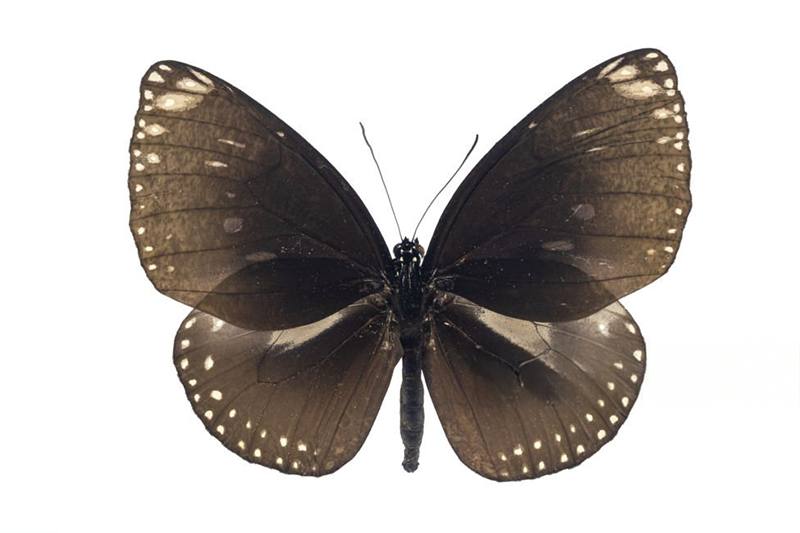 Brush-footed
Giant Crow
Euploea phaenareta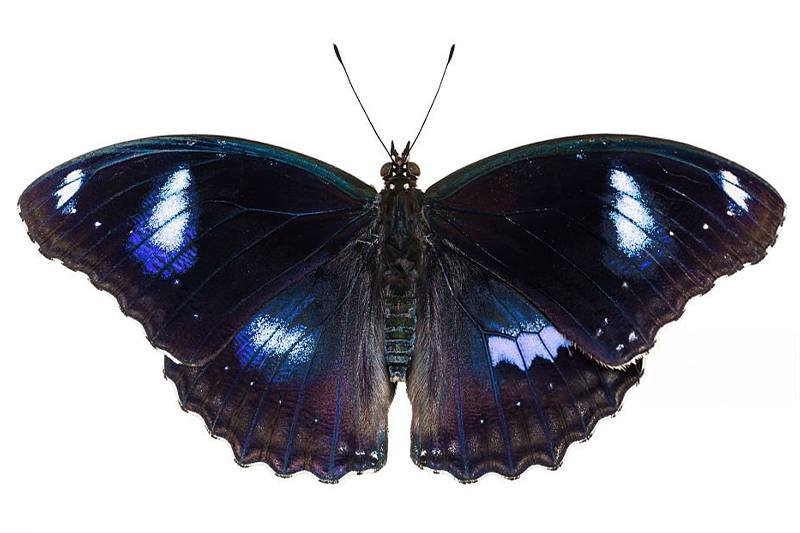 Brush-footed
Great Eggfly
Hypolimnas bolina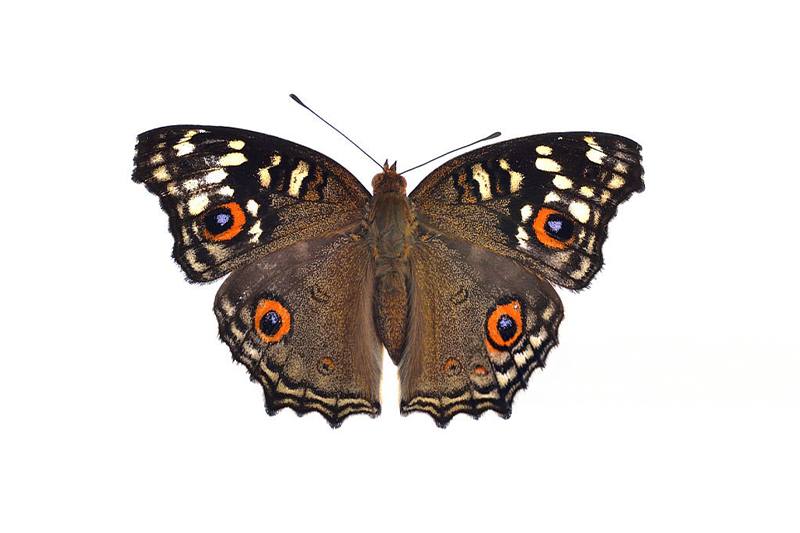 Brush-footed
Argus Ring
Ypthima argus
See the conservatorium yourself
The Butterfly Conservatorium is open daily at Sanggraloka, Bresela. Walk slowly with a guide and see who visits the garden today.