

Field card · Butterfly Conservatorium at Sanggraloka
Great Mormon (Papilio memnon)
Papilionidae (swallowtails)
The Great Mormon is a big, tailless swallowtail with a wingspan up to 15 cm. The male is velvet black and easy to know. The female is harder, because she wears several different costumes, and some of them borrow the warning colours of poisonous butterflies.
The plant comes first
The life of the Great Mormon
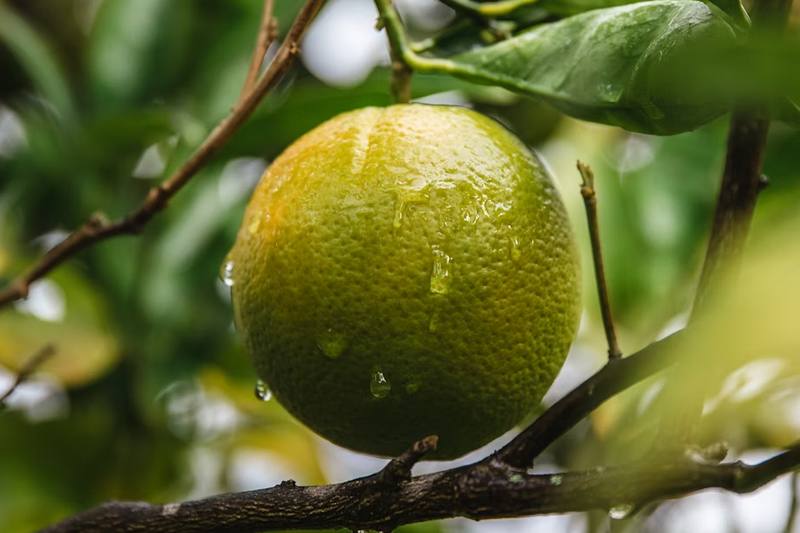 Host plant
Citrus family (Rutaceae): pomelo, lime and relatives
On our farm: Lime
From the Sanggraloka farm
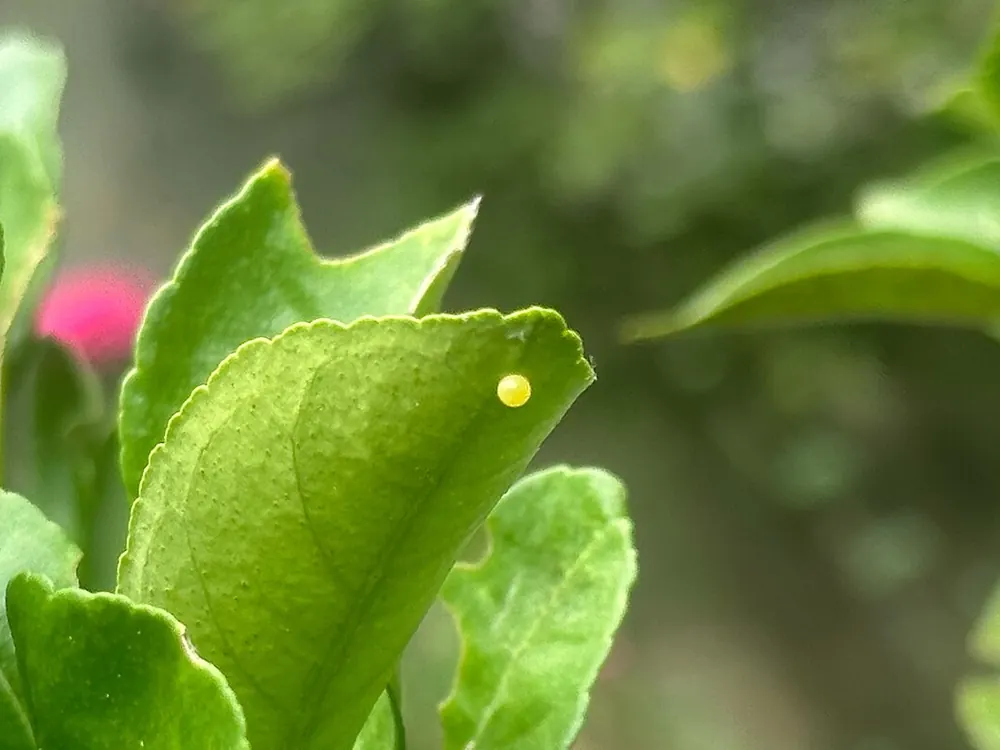 Egg
Laid on young citrus leaves, where tender growth is easy to chew.
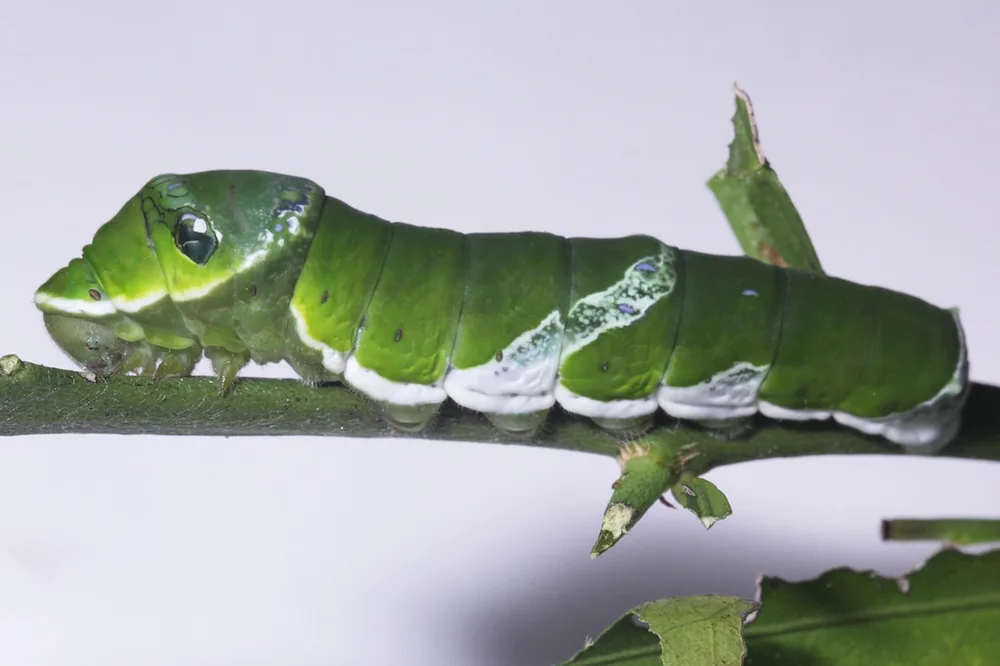 Caterpillar
Bird-dropping brown when small. Plump and green when grown.
Photographed in Indonesia. Franz Anthony, iNaturalist, CC BY 4.0
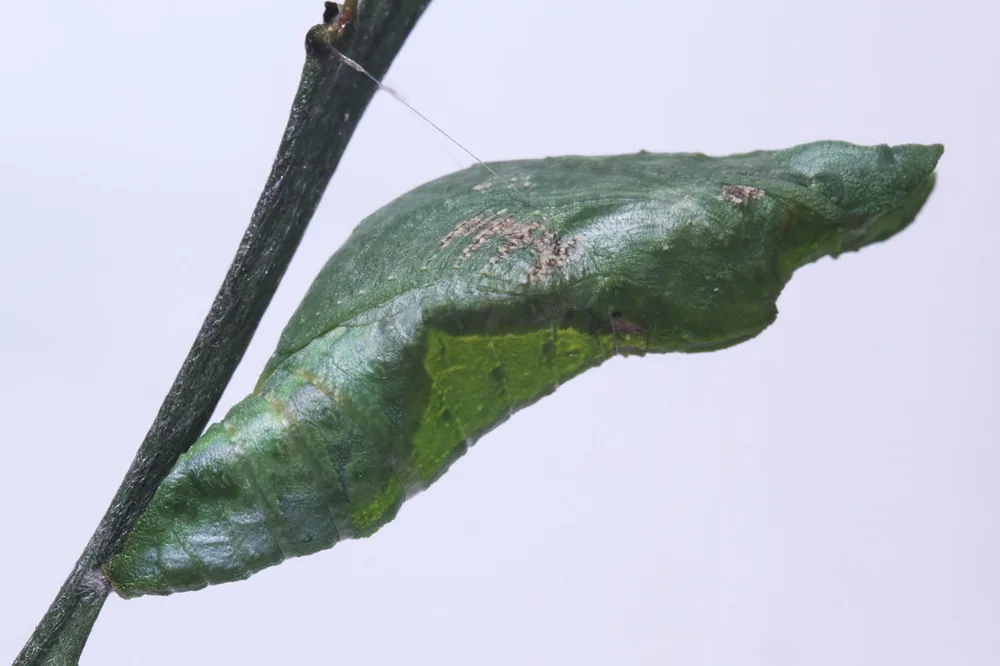 Chrysalis
Held upright by a silk girdle, coloured like a twig or leaf.
Photographed in Indonesia. Franz Anthony, iNaturalist, CC BY 4.0
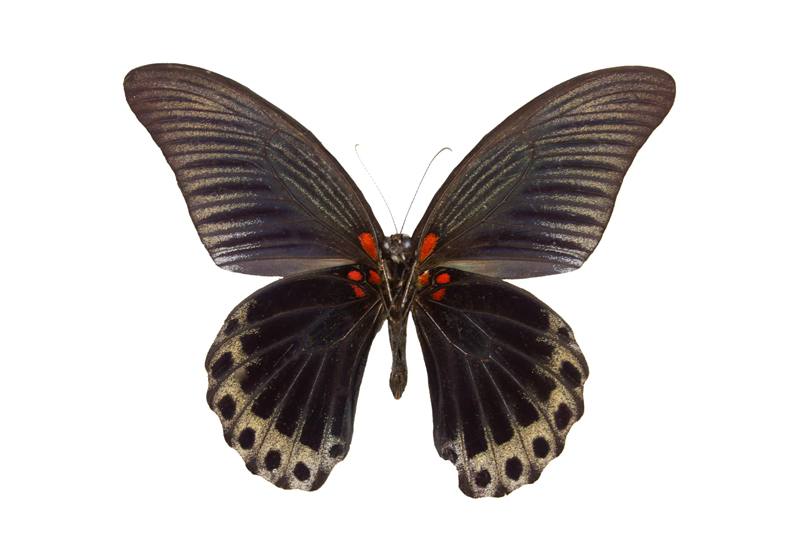 Adult butterfly
Velvet-black males. Females in many forms, some copying poisonous species.
Recognising the Great Mormon
A large, tailless, velvet-black butterfly crossing the garden is most likely a male Great Mormon. Look for the broad, rounded wings and the plain hindwing, with no tails.
The female is the surprise. Her form changes from one butterfly to the next, a trait called polymorphism. You may see her with white, red or yellow markings, and each one is a different costume.
Many of these forms copy poisonous butterflies, such as the Common Rose. Predators learn to leave the model alone, and the copy is left alone too.
Citrus and the caterpillars
Great Mormon caterpillars eat the leaves of the citrus family, Rutaceae: pomelo, lime and their relatives. The female lays her eggs on young leaves, where the tender growth is easiest for a tiny caterpillar to chew.
The youngest caterpillars look like bird droppings, which is a good way to be ignored. Later they turn green and plump, and sit still on a leaf of the same colour.
The same limes and pomelos feed our kitchen. A tree with a few chewed leaves is a tree doing two jobs.
Life in the garden
The Great Mormon is a strong flier. It comes down to flowers such as Lantana and Ixora, and the male also visits damp ground for minerals.
Because the female takes so many forms, two Great Mormons can look like different species. A photograph helps: compare the patches on the hindwing, then ask your guide.
It is a common and welcome resident of the garden, and one of the reasons the citrus rows are never quite tidy.
Telling it from its relatives
Three black swallowtails share this garden, and they are easy to confuse. The Great Mormon and the Red Helen are both large and tailless, while the male Common Mormon is smaller and has short tails.
The Red Helen carries a pale patch on the hindwing, which the male Great Mormon lacks. That one mark usually settles the question.
Females are harder, because each form has its own pattern. When in doubt, check the tails, look at the hindwing and take a photograph to show your guide.
Where to look at Sanggraloka
Begin with the citrus. Walk the farm rows where the lime and pomelo trees stand, and watch the soft young leaves at the tips of the branches.
The Great Mormon is a regular in the garden, but we cannot promise a sighting. It is wild, and it comes and goes as it likes. If it does not show, another swallowtail often will.
Questions about the Great Mormon
Why do Great Mormon females look so different?
The female is polymorphic, so she comes in several forms. Many copy the colours of poisonous butterflies, and predators that avoid the model avoid the copy as well.
What does the Great Mormon eat?
The caterpillars eat the leaves of citrus trees, such as pomelo and lime. The adults drink nectar from garden flowers, and the males also visit damp soil.
Is the Great Mormon rare?
No. It is common across much of Southeast Asia and a regular in our garden. We still cannot promise you one on the day, because every butterfly here is wild.
Visiting the conservatorium
- Not staying with us?
- Ask us on WhatsApp
- Ticket
- Ask us on WhatsApp
- Opening hours
- Open daily. Ask us on WhatsApp
- How long
- Ask us on WhatsApp
Related species
Same family or the same host plant.
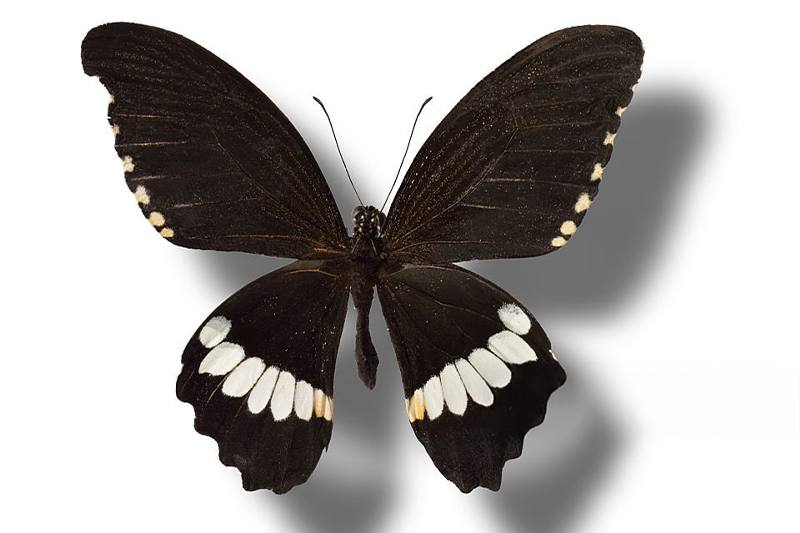 Swallowtails
Common Mormon
Papilio polytes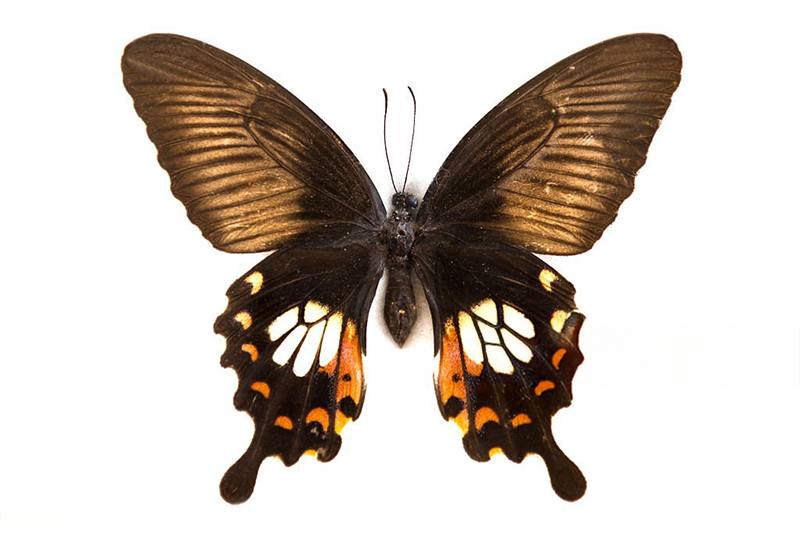 Swallowtails
Red Helen
Papilio helenus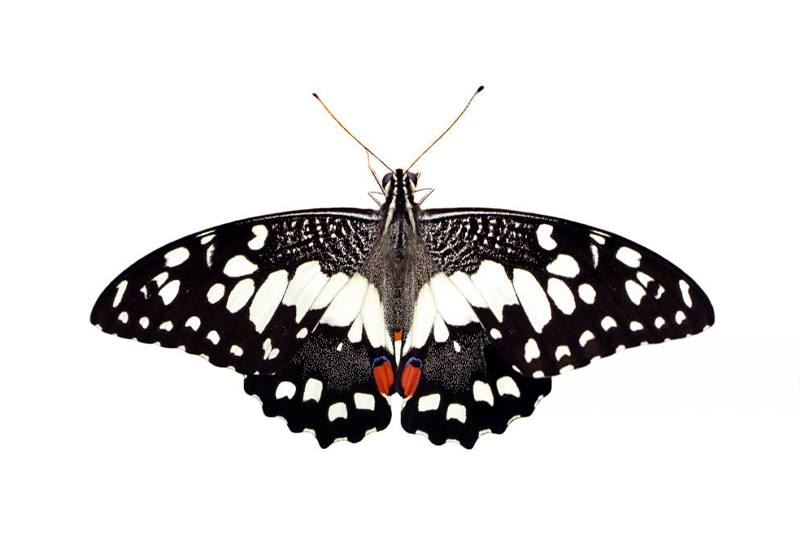 Swallowtails
Lime Butterfly
Papilio demoleus
See the conservatorium yourself
The Butterfly Conservatorium is open daily at Sanggraloka, Bresela. Walk slowly with a guide and see who visits the garden today.